
400kW Diesel Generator Factory: Key Factors for Choosing a Reliable Manufacturer
2026-10-16
A 400kW diesel generator is a serious investment, and the factory you choose will decide whether it runs flawlessly for decades or becomes a maintenance headache. Most buyers focus on horsepower and price, but the real story is in manufacturing discipline—welding quality, component sourcing, testing rigor. Here's what to look for, and how DINGBO POWER measures up on every front.
Reading the Factory Floor: What to Look for Beyond the Showroom
When you step onto a factory floor, the showroom polish fades and the real operating rhythm takes over. Look first at how materials move: do components wait in tangled queues, or does the flow have a quiet logic? The distance a part travels between stations, the placement of tools, even the wear patterns on the floor reveal whether production is truly lean or just dressed up for visitors.
Pay attention to the people, not just the machines. Are operators glancing at a shadow board that is actually used, or is it a dusty fixture? Do they pause to inspect their own work without being told? A floor where experienced workers linger near critical steps, answering questions with short nods, usually indicates deep process knowledge that no brochure can capture.
Finally, watch for small signals: the age of the maintenance logs, the condition of spare parts shelves, the way a supervisor reacts when a line stops. In a healthy plant, a stoppage is treated as information, not blame. Those unscripted moments tell you more about quality culture than any polished presentation.
The Engine-Alternator Match: Why It Makes or Breaks a 400 kW Unit
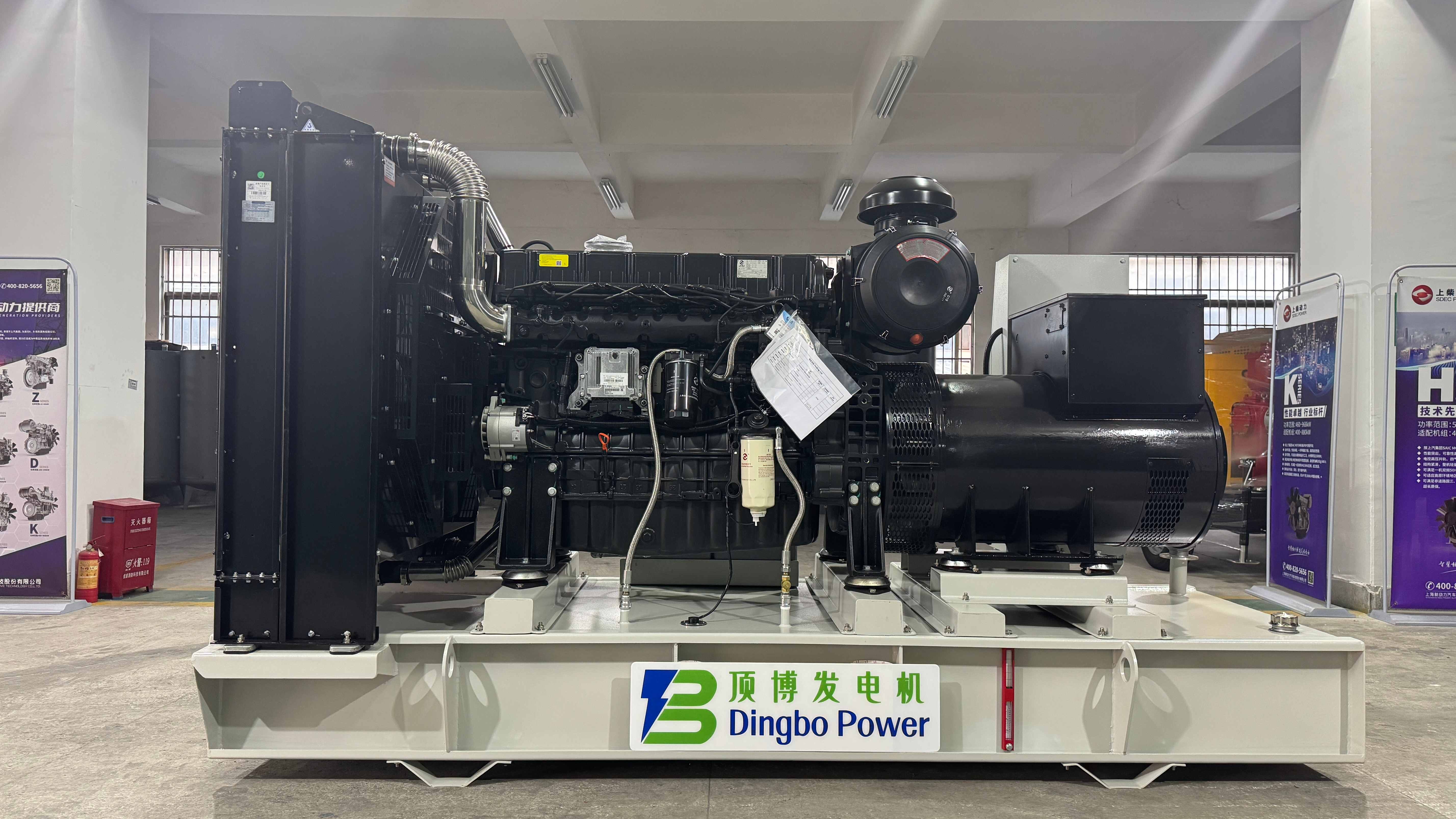
A 400 kW genset only performs as well as the marriage between its engine and alternator. This isn't about brand names or rated output on paper—it's about how the torque curve, governor response, and alternator excitation system work together. When they're poorly matched, you'll notice it first during block loading: the engine may bog down, the frequency dips too far, and the AVR fights to recover, causing visible flicker and stress on connected equipment.
The real damage from a mismatch often shows up later. An alternator that's too large for the engine's available torque can force the prime mover to run constantly at high load, driving up fuel burn and cylinder temperatures. Conversely, an undersized alternator can be pushed into thermal overload every time the site load peaks. Both conditions accelerate wear on bearings, windings, and engine internals—shortening service intervals and inviting unexpected downtime.
A well-matched pair, in contrast, keeps the engine operating in its most efficient rpm band and lets the alternator maintain voltage within tight limits even when large motors start. That means fewer nuisance shutdowns, cleaner power for sensitive electronics, and a unit that actually delivers close to its rated 400 kW under real-world conditions rather than just on a spec sheet.
Load Testing and Quality Gates That Separate Serious Builders
Anyone can ship code that works on a developer's laptop. The moment you push real traffic through the system, the cracks appear. Serious builders treat load testing not as a one-off checkbox before launch, but as a continuous interrogation of their architecture. They simulate peak-hour spikes, slow database connections, and sudden cache failures—then watch how the application degrades. It's the difference between assuming a bridge will hold and driving a convoy of trucks across it in a storm.
Quality gates are where this mindset becomes enforceable. Instead of letting a pull request merge because it passes unit tests, serious builders chain together a sequence of hard stops: load thresholds, error budgets, latency percentiles, and recovery time objectives. If a change pushes the p99 latency above 800 milliseconds under synthetic load, the gate fails. No exceptions, no manual overrides by a tired lead developer at 2 a.m. The pipeline itself becomes the reviewer that doesn't care about deadlines.
The subtle shift is cultural. Teams that adopt these gates stop viewing performance as a feature to be added later. They bake it into the definition of done. When a junior developer asks why the staging environment runs a nightly soak test with 10,000 concurrent virtual users, the answer isn't "because best practices say so." It's because the last production incident cost three hours of sleep and a customer. That scar tissue is what separates serious builders from everyone else.
Customization Without the Back-and-Forth: Engineering That Gets It
Most projects stall when a dozen small assumptions get discovered one email at a time. We replace that loop with a short, structured intake that forces clarity early: materials, tolerances, load paths, finish expectations, legacy tooling constraints. The result reads less like a spec sheet and more like a brief a seasoned engineer would hand to a colleague.
From there, the design work follows a decision log, not guesswork. Every non-obvious call gets documented with the reasoning attached, so you can see why a bracket was thickened or a clearance was moved. If you spot something that runs against your intent, one comment is enough to adjust the record and the model together.
What used to take six revisions often closes in two, because the engineering starts from how your team actually builds and maintains the product. That shift makes customization feel less like translation and more like listening.
After the Sale: Warranty Depth and Spare Parts Reality
A warranty can look generous on paper until you read the fine print. Many brands highlight a five- or seven-year term, but the actual depth varies sharply: sealed systems and motors might be covered, while control boards, sensors, and wear items like gaskets or filters fall outside the promise after the first year. Registration deadlines and proof of maintenance can quietly narrow the coverage window too.
Spare parts tell a different story once a claim is approved. Even when a component is technically under warranty, the replacement may sit on backorder for weeks, or a discontinued part number can turn a simple repair into a waiting game. Regional warehouses don't always stock the same inventory, so a unit sold in one country may rely on parts shipped from another, adding cost and delay that the warranty doesn't absorb.
Before buying, ask for the actual parts list and average lead times for common failures. A long warranty with no local spare stock is a paper shield; a shorter one backed by a robust service network often keeps the machine running longer in practice.
Certifications and Emissions Paperwork Worth Checking Twice
A missing or mismatched certification sticker can derail a sale or registration faster than a failed inspection. Pull the actual EPA and CARB labels—don't rely on a photo from the listing—and match the engine family number, model year, and displacement against the paperwork in front of you. If the engine was swapped or the exhaust modified after the original build, those numbers often don't line up, and that's exactly the kind of discrepancy that triggers a rejected application or a fine down the road.
Emissions documents age differently depending on where the machine will live. A truck that's compliant in one state might need an extra executive order number or a heavy-duty diesel retrofit verification in another. Check the date on the certificate, the test group or family name, and the vehicle identification number on every page—not just the cover sheet. One transposed digit in the VIN on a smoke test report can send you back to the inspector for a duplicate copy, eating up a full afternoon.
If the seller hands you a folder full of faded receipts and a handwritten note saying "all good," treat that as a starting point, not proof. Scan the original documents, save them under the vehicle's VIN, and call the local air quality office if the registration checklist mentions anything you don't recognize. Ten minutes of verification beats a two-week hold at the DMV because a certificate expired three months before the sale date.
FAQ
Beyond basic assembly, look for a factory that runs every unit through a full load bank test at 100% rated output before shipping. A dependable manufacturer will also document voltage and frequency regulation under step loads, not just steady-state performance. Ask about their tolerance for voltage dip during a 0 to 100% load step—if they cannot give you a concrete number, keep looking.
ISO 8528 is the foundational standard for generator set performance, and ISO 9001 shows the factory has repeatable quality processes. More importantly, check if the alternator and engine carry their own certifications like CE or UL, depending on your region. A factory that openly shares test certificates for major components is less likely to hide weak links in the supply chain.
Ask for a recent factory acceptance test report from a unit with a similar configuration—not a brochure. The report should list ambient temperature, altitude derating, and actual kW delivered during a sustained run. If the factory hesitates to share this, treat the rating as marketing rather than engineering.
A well-matched pair keeps the engine operating in its prime power range without overloading the alternator's insulation class. Reputable factories tend to stick with established brands like Perkins, Cummins, or Volvo for the engine and Stamford or Leroy-Somer for the alternator. Be wary of unbranded or "equivalent" components sold without full performance curves.
It decides whether the unit survives hot climates or frequent starts. Look for a factory that calculates airflow for worst-case ambient temperature and uses a radiator with at least 10-15% extra cooling capacity. Enclosures should be designed for sound attenuation without choking the engine—poor airflow causes overheating faster than most people expect.
Reliable manufacturers offer a documented commissioning checklist, local spare parts stock, and a defined response time for technical support. They also train your operators on load management and fault codes. If the sales conversation ends once payment clears, that factory is not a partner for a 400kW asset.
Most established factories can configure for 50Hz or 60Hz, and common voltages like 220/380V or 277/480V, but custom winding or control logic should be tested at the factory before dispatch. Confirm that the warranty covers the customized setup under your operating profile, not just under ideal lab conditions.
Consistently low pricing, vague component origins, refusal to allow third-party inspection before shipment, and no mention of a load bank test are red flags. Also watch for lightweight enclosures or undersized circuit breakers. A reliable factory will invite you or an inspector to witness the test run rather than hiding behind a polished catalog.
Conclusion
When you step onto a real factory floor, the first thing that separates a serious 400kW diesel generator builder from a rebrander is the amount of raw assembly and testing work happening in front of you. Don't get distracted by polished showrooms. Walk the line and look for how they pair engines with alternators—getting that torque curve and voltage regulation right is what keeps a 400kW unit from sagging under sudden load steps. The best shops run every generator through a full load bank test before it ships, checking not just rated output but also transient response, temperature rise, and fuel consumption. If they can't show you that test bay with a real resistive or reactive load, keep looking.
Beyond the hardware, pay attention to how they handle customization and post-sale support. A factory that truly understands 400kW applications will ask about your specific site conditions—altitude, ambient temperature, expected duty cycle—and adjust cooling, enclosures, or control logic without endless back-and-forth emails. Then check the warranty language: does it actually cover the alternator windings and engine electronics for a meaningful number of hours, or is it padded with exclusions? Ask to see a spare parts price list for common wear items like injectors, belts, and filters. Finally, verify the emissions certification paperwork against the engine serial number. Too many units show up with generic certificates that don't match the actual configuration, and that can cost you dearly at permit time.
Contact Us
Contact Person: Rita
Email: [email protected]
Tel/WhatsApp: +8613481024441
Website: https://www.dbdieselgenerator.com/