

Air Circuit Breaker Factory: Essential Considerations for Choosing a Dependable Power Protection Partner
2026-08-30
Choosing an air circuit breaker factory is a decision that quietly shapes the safety and uptime of your entire power system. Too many buyers focus on price tags, only to discover later that inconsistent tripping, weak arc quenching, or missing certifications were hiding behind a polished catalog. At Chang Song, reliability is built into every breaker—and in this article, we outline the practical checks that separate a dependable partner from a costly gamble.
Why the Factory Floor Reveals More Than Any Spec Sheet
Walk any production line and you'll notice things that never make it into a datasheet: a slight change in fastener torque after the third shift, a hand-scrawled revision number on a bin of brackets, the faint scuff marks where a robotic arm drifts out of alignment over a week. Spec sheets freeze a product at its design intent; the floor records what actually happens when materials arrive late, operators improvise, and machines wear in. That gap is where hidden risks and unexpected strengths live.
Ask a line supervisor why a housing gets an extra bead of sealant and you might hear about a batch of castings that came in three thousandths undersized. No document mentions it, yet every unit since March carries that adjustment. A spec sheet will list the sealant type and nominal thickness, but not the quiet workaround that prevents leaks under thermal cycling. These unwritten fixes accumulate into a second, more honest version of the product—one that only becomes visible if you stand close enough to see the worn spots on the fixtures.
That's why a site visit beats any PDF. Documents summarize decisions; floors reveal habits. The real specification is written in tooling marks, leftover parts bins, and the rhythm of the line itself.
Testing Protocols That Separate Breaker Builders from Box Assemblers
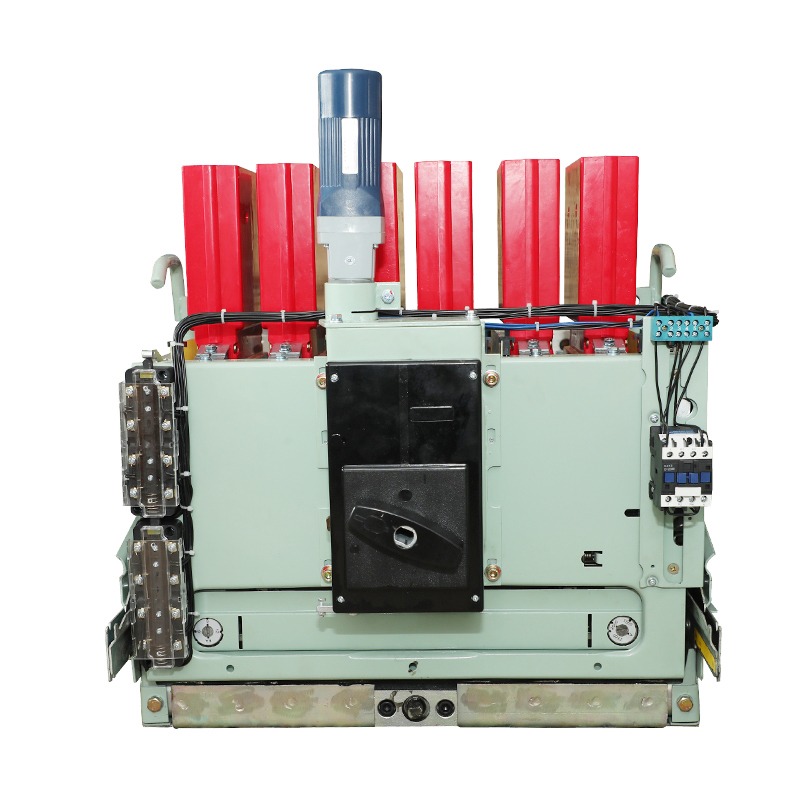
In most fabrication shops, the difference between a breaker builder and a box assembler shows up long before the first weld is laid. The assembler follows the print, checks the boxes, and moves on. The breaker builder does the same, but then asks a question the print can't answer: what happens when this thing gets pushed past its limit? That single question changes every test that follows. Fatigue cycles get extended beyond the spec. Load paths get deliberately misaligned just to see where the first crack appears. Thermal shock gets applied unevenly, not because the design demands it, but because the real world rarely heats or cools anything uniformly.
A telling protocol involves destructive teardown of finished assemblies after controlled overloading. Box assemblers tend to stop at the specified proof load, tick the box, and send it out. Breaker builders will run the same joint to failure and then cut it open to examine the fracture surface. They look for beach marks, ratchet lines, or signs of brittle propagation that only show up after the yield point has been left far behind. This isn't about being reckless with materials; it's about learning where the design actually gives up, not just where the datasheet says it should.
Another separator is the use of instrumented environmental cycling combined with real-time strain mapping. Anyone can put a part in a humidity chamber for a week. The builder who matters attaches strain gauges in awkward corners, logs the data at odd intervals, and then reverses the loading direction mid-cycle just to see if the crack closure behaviour changes. That kind of testing doesn't produce a clean pass/fail report. It produces a messy, annotated map of weaknesses, which is exactly why box assemblers avoid it. Breaker builders treat that mess as the only honest blueprint for the next revision.
Customization Requests Expose the Depth of Engineering Support
When a client asks for something that falls outside the standard feature set, the response reveals more about an engineering team than any marketing brochure ever could. A request for a non-standard voltage tolerance, an unusual mounting pattern, or compatibility with a legacy protocol isn't just a checklist item. It forces the team to confront real constraints: thermal budgets, signal integrity at odd frequencies, firmware changes that ripple through the boot sequence. Teams with genuine depth treat these moments as a chance to prove their worth. They probe the underlying intent, sketch out tradeoffs on a whiteboard, and often identify a simpler alternative the customer hadn't considered. The best engineering support doesn't just say yes or no to a custom request—it reshapes the question.
That depth shows up in small, telling ways. A quick reply with measured calculations instead of vague promises. A willingness to run a simulation overnight just to see if the idea is physically plausible. A phone call where the engineer asks about the operating environment, the failure modes they've seen in the field, the actual margin they need. These are not scripted behaviors. They come from teams that have built and broken enough prototypes to know where the real risks hide. When a custom request exposes a gap in the team's knowledge, mature engineers don't bluff. They say what they don't know, then go find out—often returning with a test plan rather than an excuse.
Perhaps the clearest signal of engineering depth is how a team handles vague or contradictory requirements. A customer might ask for a waterproof connector that must also be tool-free to disconnect, or a firmware update that must not interrupt data logging for more than ten milliseconds. These demands collide in practice. Shallow teams will either silently pick one to ignore or push back with a flat refusal. Depth means pulling the conflict into the open, proposing a staged trial, and giving the customer a decision matrix based on measured data. It's the difference between a vendor who follows instructions and an engineering partner who knows why the instructions were written and when they should be rewritten.
The Honest Math Behind Lead Times and Inventory Buffers
Most people treat lead time as a single number—say, two weeks—and then wonder why stockouts keep happening. The math doesn't forgive that. If your supplier's average lead time is 10 days but the standard deviation is 3 days, then roughly a third of orders will arrive after day 13. Your reorder point has to cover the entire tail, not just the average. So instead of reordering when you have 10 days of demand left, you need to add a buffer that reflects both the variability in demand and the variability in lead time itself.
The standard formula is not friendly, but it works: safety stock = Z × √(lead time × demand variance + average demand² × lead time variance). Here Z comes from your target service level—1.65 for 95%, 2.33 for 99%. What trips people up is that the lead time variance term gets multiplied by the square of average demand, which means a modest increase in lead time uncertainty can force a huge jump in buffer stock. That's honest math: you cannot buy a 99% fill rate with average assumptions.
After-Sales Response: The Safety Margin No One Quotes
Most procurement checklists obsess over unit price, lead time, and spec sheets. After-sales response gets a quick glance at best. That is a strange blind spot, because the real test of a supplier begins when something breaks, not when the contract is signed.
Consider a failed bearing on a packaging line. Supplier A offered a 9% lower price but typically takes three days to acknowledge a service request. Supplier B costs more but has a local engineer on-site within four hours. The price difference looks decisive on a spreadsheet; the downtime difference does not appear anywhere on the quote.
Smart buyers treat response time as a negotiated spec, not a pleasant surprise. They stage a test failure before awarding the contract and write penalty clauses around guaranteed response windows. That unreported margin may determine whether a single breakdown becomes a minor hiccup or a week of lost output.
Legacy Compatibility and the Long View on Spare Parts
The temptation to chase the next generation of hardware is constant, yet a quieter discipline separates brands worth trusting from those that simply ship product. Legacy compatibility means treating a ten-year-old machine not as a retired asset but as a living system with predictable wear points. When a manufacturer archives CAD files, keeps casting molds in storage, and trains service technicians on discontinued models, spare parts stop being an afterthought and become a strategic buffer against forced obsolescence.
The long view on spare parts starts long before the first unit ships. Designers who standardize fasteners, avoid custom ICs with short fab runs, and leave physical clearance for future sensor upgrades are quietly buying years of operational life for their customers. It's not glamorous work; it rarely appears in marketing decks. Yet the difference shows up a decade later, when a facility manager can still source a replacement pump seal from a distributor instead of being told to scrap the entire line.
Real legacy support also means honest communication about end-of-life timelines. Some companies quietly extend production of critical components in small batches, knowing they'll lose money on each order—but preserve a relationship that spans decades. Others publish open repair manuals or make 3D-printable files available for non-safety parts. These choices don't fit quarterly earnings cycles, but they build the kind of trust that turns a one-time buyer into a multi-generation customer.
FAQ
A trustworthy factory doesn't just run standard routine tests; they should also perform temperature rise, short-circuit, and endurance testing on every design before it ships. Ask for test reports from independent labs when possible.
It matters more than most people realize. High-purity copper contacts, flame-retardant thermoset casings, and precision-machined mechanisms can add years to service life. Cheaper materials often fail under repeated fault interruption.
Yes, but not all of them will. If you deal with high harmonics, extreme temperatures, or special trip curves, you need a partner with in-house engineering who can adjust settings, terminals, or even enclosure sizing without outsourcing everything.
Look beyond the basic ISO 9001. IEC 60947-2 compliance is essential for low-voltage ACBs, and regional marks like CCC, CE, or UL depending on your market add another layer of confidence.
Ask about spare parts availability for models that are ten years old, response time for technical inquiries, and whether they offer on-site commissioning help. A factory that hesitates on these questions is likely to disappear after the sale.
Neither is automatically better. Large factories often have more resources for R&D and global logistics, while smaller specialists may offer more flexible custom work and closer communication. Match the factory's strengths to your actual project needs.
A factory dependent on a single supplier for critical components can stall your project if that supplier has trouble. Ask how they manage inventory, whether they dual-source key materials, and what their lead times look like during peak demand.
A site visit reveals things no catalog can, like how they organize assembly lines, whether workers follow torque specs, and how they handle reject parts. You can also watch a real breaker being tested rather than just seeing a polished demo.
Conclusion
Walking through an air circuit breaker plant tells you things a datasheet never will. You see whether assembly areas are organized or chaotic, how workers handle components, and whether test stations are integrated into the line rather than tucked away as an afterthought. A builder that subjects every unit to rigorous routine checks—such as contact resistance measurement, insulation testing, and mechanical endurance cycling—demonstrates a commitment beyond basic compliance. Customization requests often reveal the depth of engineering support. A factory that can adjust trip settings, terminal layouts, or communication modules without long delays proves it understands real-world distribution challenges, not just catalog models.
Lead times and buffer stock deserve honest scrutiny. Some factories quote short delivery dates but carry almost no semi-finished inventory, leaving buyers exposed to supply-chain hiccups. Ask how much buffer they keep and how they handle rush orders. After-sales response is the safety margin nobody quotes in a tender. A partner with local service engineers, clear escalation paths, and a defined response window protects you long after installation. Finally, legacy compatibility matters. The best factories maintain drawings, tooling, and spare parts for older breaker generations, so a product bought today won't become unserviceable in ten years. These practical checks separate a dependable power protection partner from a simple box assembler.
Contact Us
Contact Person: Tonglun Chen
Email: [email protected]
Tel/WhatsApp: 8618906642555
Website: https://www.cncsele.com