

Best Paving Tiles for Durable and Stylish Outdoor Living
2026-08-17
Outdoor living looks effortless in magazines, but the right paving tiles are what keep it that way. Too many options fade, crack, or become slick after a downpour—turning a stylish patio into a maintenance headache. This guide cuts through the noise to focus on tiles that truly handle the outdoors. Along the way, you’ll see why Beata Ceramics keeps earning a spot in durable, design-forward outdoor projects: their collections are engineered for real weather and real use, without flattening the aesthetic. Here’s what to look for before you commit to a surface you’ll walk on for years.
What Your Local Freeze-Thaw Cycle Does to the Wrong Tile
Water finds its way into the microscopic pores of a tile long before the first hard frost. When the temperature drops, that trapped moisture freezes and expands roughly nine percent, turning each tiny void into a pressure point. A tile rated for indoor use or mild climates simply cannot absorb that repeated stress, so the first visible sign is often a hairline crack running just beneath the glaze, invisible until a winter morning makes it widen into a full split.
Over a single season, the damage moves beyond surface cracks. Edges start spalling, small chips and flakes break away along grout lines, leaving rough, sharp corners. In some cases the glaze develops a crazed, spider-web pattern as the underlying body swells and contracts at a different rate than the surface. A tile that looked perfectly flat in October may be slightly cupped or lifted by February, and foot traffic can snap the weakened piece entirely.
What makes the freeze-thaw cycle so unforgiving is that it rarely announces itself. The water collects in the bond coat beneath the tile, or seeps into the biscuit through a worn glaze, then waits. During the day it thaws and drains, only to refreeze after sunset. Each cycle works like a slow-motion pry bar, gradually separating the tile from its setting bed and from its own layers. Choosing a tile that is not frost-proof for exterior or unheated installations means that pattern of expansion, contraction, and decay continues until the surface fails.
Slip Resistance Without the Rough, Hard-to-Clean Surface
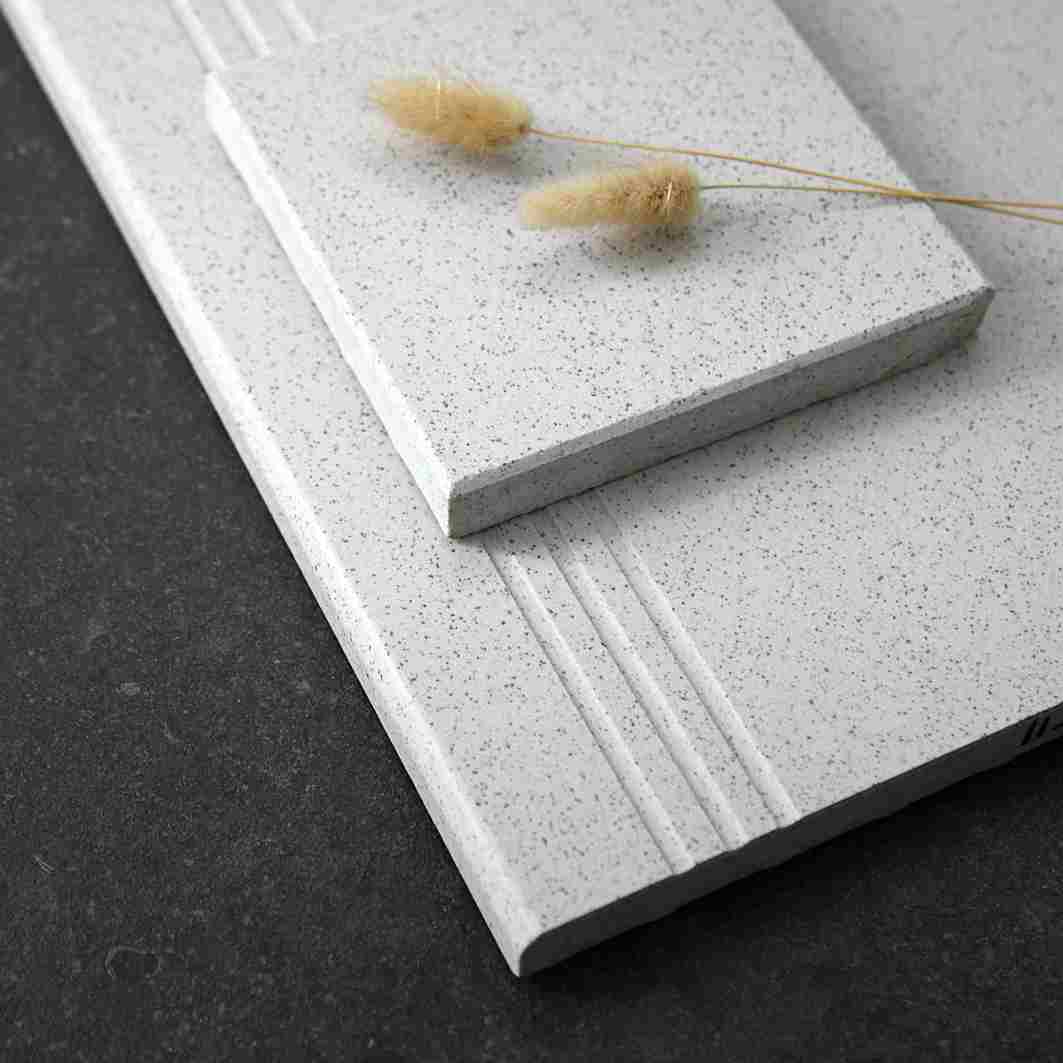
Achieving reliable slip resistance usually meant choosing a surface with pronounced texture—sharp ridges, grit, or deep embossing. Those features bite into shoe soles but also trap dirt, grease, and cleaning residue. Over time, the floor becomes a maintenance burden, especially in high-traffic commercial spaces. A different approach focuses on micro-scale friction instead of macro roughness.
Advanced polymer formulations can create a surface that feels smooth to the touch yet generates high traction when wet or dry. Microscopic particles or engineered undulations, far smaller than traditional anti-slip profiles, disrupt the water film underfoot and increase contact area. Because the peaks and valleys are tiny, they don't collect grime the way sandpaper-like finishes do. Daily mopping or automated scrubbing removes most contaminants without leaving dull residue.
This balance changes how designers and facility managers specify flooring. Restaurants, hospital corridors, and pool decks no longer need to sacrifice aesthetics or hygiene for safety. The result is a floor that stays cleaner between deep cleanings, reduces labor costs, and still meets slip-resistance standards in independent testing. It's a practical shift: safety without the rough, hard-to-clean surface.
Using Tile Size and Layout to Shape an Outdoor Room
Large-format pavers tend to make a compact terrace feel less chopped up, simply because there are fewer grout lines interrupting the sweep of the surface. In a more expansive garden, switching to a smaller tile or setts can introduce a finer grain that helps the space feel intimate rather than empty.
The direction you run rectangular tiles also changes how a room reads. Laying them parallel to the longest wall pulls the eye outward and can stretch a narrow side yard, while a running bond or herringbone pattern adds movement and gives a plain patch of paving more visual weight.
Borders and inset bands are another quiet trick. A contrasting frame around the edge of a seating area marks the boundary without putting up a wall, and a subtle change in tile size under a dining table can define that zone as separate from the circulation path around it.
Earth Tones and Matte Finishes That Age Gracefully
There is a reason certain rooms feel settled rather than decorated. Colors pulled from raw clay, dried moss, or sun-warmed stone tend to recede just enough, letting the light shift across walls instead of demanding attention. A matte finish helps here—gloss bounces highlights into every imperfection, while a flat or low-sheen surface softens edges and lets small scuffs blend into the overall texture. Over time, this combination does not look worn so much as lived in, the way a linen sofa or a wooden handrail picks up character without losing its appeal.
What often gets missed is how forgiving these finishes are in real rooms. A subtle umber or chalky olive will hide fingerprints near switches, minor dings from furniture, and the uneven settling that happens in older homes. Rather than trying to keep a wall pristine, the surface accepts small marks as part of its story. That is the difference between a finish that simply fades and one that actually improves with age—it asks less upkeep and gives back a quieter, more grounded backdrop for everything else in the space.
Keeping Joints Weed-Free with the Right Grout and Spacing
The real trick to stop weeds from popping up between joints isn't just pulling them when they appear—it starts with the gap you leave and the material you pack into it. Too wide, and you're giving windblown seeds a comfortable bed; too narrow, and the grout can't lock the edges firmly, leaving cracks that open up after a few seasons. A consistent joint width, usually something in the 3 to 6 mm range for most paving, lets the grout fill fully without shrinking into voids.
Once the spacing is right, use a fine-grained grout designed for exterior joints, mixed a touch drier than you'd use for indoor tile. Press it in firmly and tool the surface so water runs off instead of collecting in tiny recesses where seeds germinate. Keeping the top of the joint slightly below the paver edge also helps, because any loose dirt that blows in stays shallow and can be swept or washed out before it becomes a rooting spot.
Why Spending More Upfront Often Means Fewer Replacements Later
There's a quiet arithmetic to buying better at the start. A tool that costs twice as much but lasts four times longer isn't an expense—it's a bargain hiding in plain sight. Yet most of us reach for the cheaper option and then wonder why we're back in the checkout line a year later.
The hidden cost isn't just the second purchase. It's the time spent re-researching, the trip to the store, the frustration of a failed item at the worst possible moment. Higher upfront quality removes those repeated interruptions. It buys back hours and spares you the slow drip of minor aggravations that cheaper products leak into daily life.
Think of it as paying for absence—the absence of breakdowns, of replacements, of that nagging feeling that you should have bought the better one. When a product fades into the background and simply works for years, the initial price tag becomes irrelevant. The real cost was always the one you kept paying every time the bargain failed.
FAQ
Porcelain tiles are denser and less porous than most natural stone, so they resist moisture, staining, and frost damage far better. They also come in a wider range of wood, concrete, and stone looks without the maintenance headaches.
Look for tiles with a textured surface or a high slip resistance rating, often listed as R11 or higher for outdoor use. Matte finishes and slightly raised patterns give feet more grip, especially around pools or in rainy climates.
Yes, if you choose tiles with a high breaking strength, typically 20mm thick porcelain is tough enough for regular foot traffic and patio furniture. For heavier loads like built-in kitchens, make sure the base is solid and the tiles are fully supported underneath.
You can lay them directly on a clean, level concrete slab using a flexible tile adhesive, as long as the concrete is in good shape. For drainage, you might also consider pedestal systems, which lift the tiles slightly and make repairs easier.
Quality porcelain tiles are fired at very high temperatures, so their color is baked all the way through and won't fade like dyed concrete or some natural stones. Always check that the tile is rated for UV exposure if it will sit in full sun.
Most spills and dirt can be washed away with a hose and a soft brush. For tougher stains, use a pH-neutral cleaner made for porcelain or stone. Avoid harsh acids or wire brushes, which can dull the surface over time.
Use large-format tiles in a light color and lay them in a diagonal or running bond pattern to draw the eye outward. Keeping grout lines thin and matching the tile color also creates a more seamless, open look.
Yes, choose tiles specifically rated for wet areas with a textured, anti-slip surface. Porcelain pool copings and paver tiles resist chlorine and salt water, and they stay cooler underfoot than many concrete pavers.
Conclusion
Choosing paving tiles that actually hold up outdoors means paying attention to how they behave when water seeps in and freezes. A tile that absorbs too much moisture will crack or spall after the first hard winter, so dense, low-absorption porcelain or natural stone is worth seeking out. At the same time, you do not have to settle for a surface that feels like sandpaper just to get grip underfoot. Modern textured finishes offer reliable slip resistance while still being easy to sweep or hose down. Think about the size and layout too: large-format tiles can make a small patio feel wider, while a running-bond pattern can lead the eye toward a seating area and give the whole yard a more intentional structure.
Earthy colors and matte surfaces tend to hide dust, footprints, and the slow fade of sun exposure far better than glossy or stark white options, so the space keeps looking good as it ages. To stop weeds from poking through, match the grout to the tile and keep joints narrow but well-filled, which also reduces movement during temperature swings. And while it is tempting to save money on cheaper tiles, spending a bit more upfront on a high-quality, frost-resistant product almost always means fewer cracked replacements and less hassle down the road. That combination of practical durability and understated style is what makes an outdoor living area genuinely low-maintenance and inviting year after year.
Contact Us
Contact Person: Emma
Email: [email protected]
Tel/WhatsApp: 8618064423698
Website: https://www.beataceramics.com/