Best Smart Street Furniture for Modern Urban Spaces
2026-09-06
Cities are getting smarter, but too many sidewalks still feel stuck in the last decade. The right street furniture can change that—think benches that charge your phone, lighting that adapts to foot traffic, and waste bins that signal when they're full. In this guide, we're looking at the options that actually deliver, with a close eye on how zemso is setting a high bar for durable, connected design.
Solar Benches That Don't Look Like Sci-Fi Props
Most solar benches fail because they try too hard to look "green." You get glossy black panels, brushed aluminum arms, and a shape that belongs in an airport terminal. The better approach hides the tech entirely. A slatted teak seat with a narrow photovoltaic strip running along the backrest edge can read as a design accent rather than a gadget. From a few feet away, it just looks like a well-made outdoor bench.
Comfort matters more than wattage. People avoid hard, angled benches even if they charge a phone. A solar bench that gets daily use needs a slight recline, armrests at the right height, and a surface that doesn't burn bare legs in summer. One clever model uses recycled composite slats that stay cooler than metal while letting light through to the cells underneath. The result is a bench that invites you to sit, not one that screams "installation."
The real test is whether you notice it at all. If a solar bench blends into a tree-lined path or a brick plaza, it's doing its job. No LED status lights, no USB ports jutting out like afterthoughts. Just a familiar silhouette with a quiet power source tucked inside. That's the kind of public furniture people actually use—and the kind cities are willing to keep.
Bus Stops That Tell You When to Stop Checking Your Watch
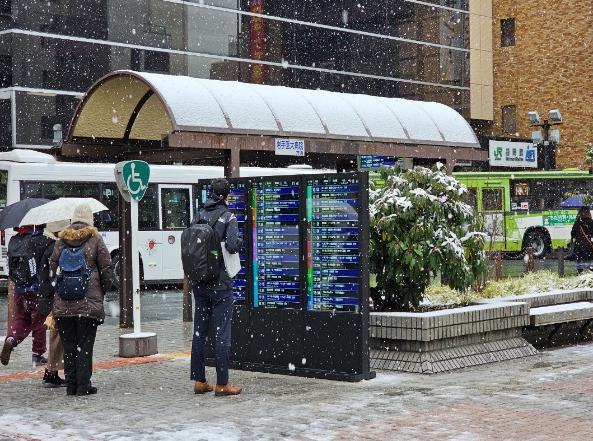
The old routine at most bus stops involves a lot of neck craning and watch tapping. You wait, you wonder, you pull out your phone to check a map that may or may not reflect the actual position of the bus. A new generation of stops replaces that guessing with a neat, no-nonsense countdown. Live data from the bus's own tracker feeds a small screen above the bench, showing arrival times that adjust as traffic slows or a driver gets held at a light.
What makes these displays valuable isn't the technology itself, but how it flips the waiting experience. You no longer have to budget a buffer of anxiety around every trip. The sign tells you the bus is eight minutes out, so you can read a few pages or finish a call without one eye on the road. Over time, that consistency builds trust in the entire route—and trust is what gets people to leave their car keys at home.
Streetlights That Know When the Sidewalk Is Empty
A new generation of streetlights can sense when no one is around, dimming to a faint glow or switching off entirely. Pairs of motion and heat sensors embedded in each pole track passing pedestrians and cyclists, while a small processor predicts the next few minutes of activity. On quiet blocks after midnight, the lights settle into a low-energy standby, barely brighter than moonlight. The moment someone steps onto the sidewalk, the lamps ahead brighten in a soft wave, illuminating the path just far enough to feel safe without flooding empty space with wasted light.
These adaptive systems do more than cut electricity bills. By reducing light pollution, they give urban wildlife and stargazers a darker sky, and by responding only to real movement they avoid the harsh, constant glow of older sodium or LED fixtures. Cities testing the technology report energy savings of up to 60 percent on residential streets. Maintenance crews also benefit: the same sensors that dim the lights can flag burned-out bulbs or damaged wiring, sending alerts before a dark stretch becomes a safety concern.
Privacy is built in by design. The sensors are not cameras and store no images; they simply register presence and direction. The data, if collected at all, remains anonymous and local to the pole's own controller. For residents, the result is a street that feels almost organic, waking when you approach and resting when you leave, a quiet partnership between infrastructure and the rhythms of daily life.
Bins That Sort Recycling Before You Even Ask
You toss a yogurt cup toward the opening and a small conveyor catches it mid-fall. A camera and a near-infrared sensor read the polymer in under a second, then a flap flicks the cup into the plastics bin while a dirty lid gets knocked into the general waste side. No sticky labels to peel, no tiny triangle to decode with your phone flashlight. The machine just handles it.
That's the quiet shift these bins represent. Instead of making people memorize recycling codes, they move the judgement to the bin itself. The sorting mechanism can distinguish clear PET from colored HDPE, separate aluminum from steel, and even reject a greasy pizza box before it contaminates a clean paper stream. Some models adjust their internal pathways depending on the local facility’s rules, so what works in one city doesn't have to be relearned in another.
For apartment buildings and office kitchens this matters more than any poster campaign. You don't need staff checking every bag, and the recycling stream stays cleaner because human guessing is removed early. It's less about being a perfect recycler and more about letting the container do the work you always meant to do.
Kiosks That Offer More Than a Map and a Wi-Fi Password
Walk through a modern airport arrivals hall and the once-forgettable information kiosk has changed. Instead of a static map taped behind glass and a sticker with the Wi-Fi password, these upright screens now pull live flight updates, let you book a taxi or shuttle to your hotel, and even sell tickets for local attractions before you reach the baggage carousel. The shift is subtle but practical: you spend less time hunting for a staff member and more time acting on what the screen already knows about your journey.
Hotels and convention centers have pushed the same idea further. A lobby kiosk can print your name badge, show which breakout room you are in, recommend a nearby coffee shop that is actually open, and let you order a late-night snack without waiting at the front desk. The map is still there if you need it, but it sits alongside tools that handle the small frictions of travel and events. One tap can reserve a meeting room or send a digital key to your phone.
What makes these machines feel less like a directory and more like a local guide is the quiet integration of live data and partnerships with nearby businesses. Instead of a generic list of restaurants, the kiosk might suggest an indoor market because rain is expected, or point you to a pharmacy that stays open past midnight. It does not announce itself as smart or innovative; it just answers the question you were about to ask. That is the real difference: the kiosk has stopped being furniture with a screen and started behaving like a staff member who never takes a break.
Seating That Rearranges Itself for Markets, Concerts, and Protests
The usual folding chair or bolted bleacher does one thing well and everything else poorly. A seating system that rearranges itself starts from the opposite assumption: the crowd’s shape, density, and intent should pull the furniture into a new geometry without a crew of workers hauling stacks between events. Under a market canopy, low clusters and wide aisles let people drift from stall to stall. Hours later, those same modules slide into curved tiers facing a stage, tightening the audience around a focal point. When a demonstration fills the square, the system can flatten into open ground or form low barriers and gathering nodes rather than prescribing rows.
What makes this feel less like a theme-park gimmick and more like real civic infrastructure is the way the movement logic changes with each use. Markets need porous edges and constant, slow circulation. Concerts reward steep sightlines and compressed personal space near the front. Protests demand visibility, quick exit routes, and surfaces that don’t trap people in fixed positions. A self-rearranging seat has to read those differences as physical patterns—not through a control room operator guessing from a screen, but through floor pressure, sound level, and the simple count of bodies lingering versus pushing through.
The technical side is less about robotics for its own sake than about letting heavy objects behave like a loose material. Individual seats or bench segments move on low-friction tracks or magnetic pads, locking only when a stable pattern emerges. The result can be unsettling at first, because the ground itself shifts under you, but that’s the point: the boundary between furniture and architecture softens. A space that was a produce aisle at noon becomes a mosh pit border by evening and a speaker’s platform by the next morning, without anyone stacking a single chair.
FAQ
It's not just about bolting a screen onto a bench. Smart street furniture typically includes elements like benches with solar charging, lighting that dims when no one is around, bus stops with live arrival data, and trash bins that signal when they're full. The key is that the piece connects to a network and uses data to serve people better in real time, rather than being a static object.
In dense areas, smart benches with charging ports and free Wi-Fi are immediate wins because people actually stop and use them. Smart waste bins also make a huge difference; instead of overflowing at lunchtime, they compact trash and alert collection teams only when needed. Interactive wayfinding kiosks help tourists and commuters navigate without needing to ask for directions.
They turn a normal resting spot into a mini charging hub. Someone can sit down, plug in a phone, and check messages without hunting for a café outlet. The solar panel also provides shade in some designs and keeps the bench lit at night, which makes public spaces feel safer and more welcoming.
Yes, but it depends on the sensors and controls. Adaptive streetlights that brighten only when pedestrians or cyclists are detected can cut energy use by 50 to 70 percent compared to always-on fixtures. Cities like Copenhagen have used motion-sensitive lighting along bike paths and seen both energy savings and better visibility where it's actually needed.
Maintenance is the hidden cost. Look for modular designs where a broken sensor or battery can be swapped without replacing the whole unit. Materials matter too: powder-coated aluminum or marine-grade steel hold up better than cheap plastics. Also ask about software updates—if the vendor can't push security patches remotely, the 'smart' features won't last long.
Absolutely. Cameras and footfall sensors can collect more than just movement patterns. The best deployments anonymize data at the edge, store only aggregate counts, and publish clear signage about what's being collected. Cities like Barcelona have run privacy-first pilots where raw video is never transmitted, only metadata like crowd density.
Singapore's smart bus stops with fans, Wi-Fi, and real-time arrival info work because they were co-designed with commuters. London's smart benches in parks survived longer after switching to vandal-resistant materials. The lesson is to start small, test in one district, and adapt based on how people actually use the furniture—not just what looks impressive in a brochure.
Instead of installing separate systems for lighting, Wi-Fi, cameras, and environmental sensors, a modular smart pole lets cities add or remove components as needs change. A district might start with just lighting controls, then later attach air quality monitors or 5G small cells without digging up the street again. That flexibility saves money and avoids technology becoming obsolete.
Conclusion
Modern street furniture has quietly moved past gimmicks. Solar benches now absorb daylight without resembling something from a low-budget space movie, blending timber slats and discreet panels into ordinary plazas. Bus stops do more than shelter you from rain: a subtle display shows the next arrival in minutes so passengers stop glancing at their wrists and spend that time people-watching instead. Streetlights dim to a soft glow when no one is walking underneath, then brighten as footsteps approach, saving energy without ever feeling like a surveillance gadget. Even rubbish bins have become surprisingly thoughtful, using internal sensors and simple mechanical guides to separate cans from paper before you finish your coffee.
The real shift is how these objects adapt to the rhythms of a city. Interactive kiosks have dropped the clunky touchscreen-for-everything approach, instead offering a clean map, a charging port, and maybe a local event listing; not a lecture on connectivity. And seating is no longer bolted into one shape. Benches and blocks can be shifted, folded, or stacked so the same square hosts a Saturday market, an evening concert, or a midday protest without a maintenance crew arriving at dawn. Good smart furniture disappears into the background until you need it, then does its job without demanding attention.
Contact Us
Contact Person: Leo
Email: [email protected]
Tel/WhatsApp: +86 18901905138
Website: https://www.zemsogroup.com/