

Blast Freezer Manufacturer Insights: How to Select the Best Industrial Freezing Solutions
2026-05-17
Selecting the right blast freezer can make or break your cold chain efficiency. With so many options flooding the market, how do you separate genuine performance from overhyped claims? At Worldbase, we've seen firsthand what works in demanding industrial environments—and what doesn't. This guide cuts through the noise, offering clear, practical insights to help you choose a freezing solution that aligns with your production goals, energy constraints, and long-term scalability needs.
Defining Your Production Goals Before Comparing Equipment
It's easy to get swept up in spec sheets and flashy features, but the most critical step happens before you ever look at a machine. Without a clear picture of what you need to achieve, even the most advanced equipment can become a costly mismatch. Think about your daily reality: are you scaling up a proven process, or adding a completely new product line? The answers determine whether you prioritize speed, precision, or adaptability.
Start by pinning down the non-negotiables. What output volume must you hit to meet demand? How much variation in materials or product designs do you really need to handle? Quality standards, such as tolerance levels or surface finishes, should also be spelled out upfront. These targets aren't just numbers—they're the foundation for narrowing the field to equipment that actually fits your operation, not someone else's ideal.
Once your goals are solid, comparing equipment becomes a focused elimination process. Instead of being dazzled by bells and whistles, you can ask suppliers pointed questions: 'How does this machine maintain consistency at our peak throughput?' or 'What changeover time is realistic for our mix of jobs?' The right piece of equipment will align with your objectives almost naturally, and you'll avoid the pitfall of buying a solution in search of a problem.
Material Flow and Footprint: Matching Freezer Design to Your Line
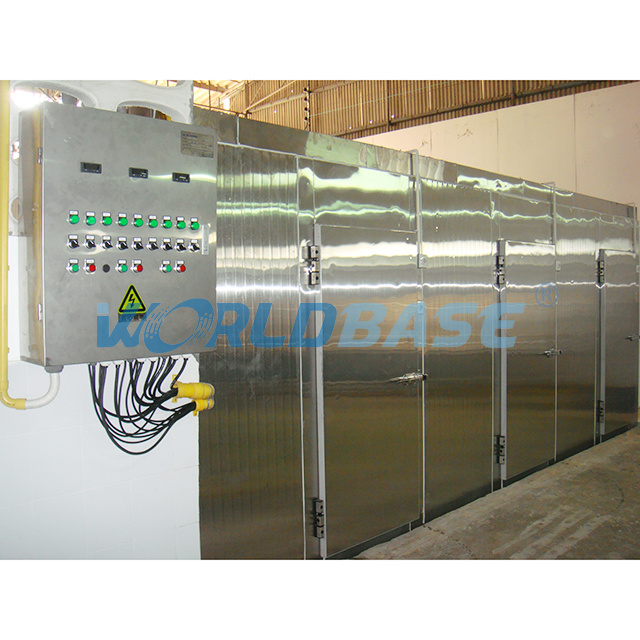
How materials move through your facility and how much floor space you can dedicate to freezing equipment are often overlooked until space runs out or bottlenecks appear. A freezer that doesn't align with your existing flow can force awkward detours, triple handling, or even require remodeling loading docks. Walk-in blast freezers, spiral systems, and tunnel units each demand different entry and exit paths, so the first question isn't about capacity—it's about whether a loaded rack of product can smoothly enter, freeze, and exit without crossing paths with raw ingredients or packaging lines.
The footprint goes beyond the machine itself. You need clearance for air circulation, defrost cycles, maintenance access, and forklift turning radii. Some designs let you feed product from one side and extract it from the opposite end, creating a clean linear flow that meshes with adjacent processes. Others function best with a U-shaped layout that keeps operators close to both infeed and outfeed. We've seen operations shrink their freezing floor space by 30% simply by switching from a batch-style cabinet to a continuous spiral that uses vertical height instead of sprawling horizontally.
A tight footprint doesn't automatically mean a good fit, though. If your team is constantly squeezing between walls and coil units to clear a jam or inspect product, that compact design becomes a daily frustration. The sweet spot balances three things: how product naturally moves through your plant, the actual square footage you can spare, and the ergonomic reality of people servicing the equipment shift after shift.
Cooling Performance Metrics That Actually Affect Product Quality
When evaluating cooling systems, many engineers fixate on headline numbers like maximum heat dissipation or fan speed. But the metrics that truly shape product quality are often more subtle. Cooling uniformity across a component, for instance, directly impacts long-term reliability. A hot spot that goes unnoticed during testing can lead to premature failure in the field, even if the average temperature stays within spec. This metric isn't about raw capacity; it's about ensuring that no single area becomes a silent stress concentrator over thousands of thermal cycles.
Another overlooked factor is the rate of temperature change during startup and shutdown. Rapid thermal swings might seem efficient, but they can induce mechanical stress at material interfaces—think solder joints or bonded layers. Products that cycle too quickly often develop microcracks long before their rated lifespan. By tracking the gradient of temperature change rather than just the endpoint, manufacturers can dramatically extend product durability without changing a single component.
Finally, consider the metric of cooling response time under transient loads. In real-world use, electronics rarely run at steady state. A cooling solution that takes too long to react when a processor boosts its clock speed will allow brief temperature spikes that degrade semiconductor materials over time. The quality impact is cumulative and often invisible until it's too late. Monitoring how quickly the system brings temperatures back down after a spike reveals more about actual product robustness than any static benchmark ever could.
Operational Costs Hidden Beyond the Purchase Price
When you sign off on a major equipment purchase, the invoice amount is just the starting point. The real drain on your budget often begins once the asset is deployed. Energy consumption, routine maintenance, and unexpected repairs can quietly inflate your total cost of ownership over the years. Many businesses focus solely on upfront pricing, only to discover later that cheaper models guzzle power or require proprietary consumables that lock you into a costly supply chain.
Beyond the obvious upkeep, there are softer expenses that rarely appear in a financial forecast. Downtime due to reliability issues can stall production lines, delay shipments, and frustrate clients—costs that are hard to quantify but painfully felt. Training staff to operate complex machinery or integrating new tools into existing workflows also consumes hours you weren't prepared to pay for. These peripheral drains add up, turning what seemed like a bargain into a long-term liability.
A smarter evaluation looks past the sticker price to the entire lifecycle, from installation to decommissioning. Savvy purchasers factor in energy efficiency ratings, expected maintenance intervals, and the availability of affordable replacement parts before committing. They ask vendors tough questions about real-world performance rather than relying on polished brochures. After all, a lower initial cost means little if it comes at the expense of reliability and efficiency that impact your bottom line every single day.
Adaptability for Future Product Lines and Peak Demands
In an industry shaped by rapid technological shifts and volatile market demands, the ability to adapt production capacity and product line configurations is no longer a luxury—it is a necessity. Our manufacturing framework is engineered with modularity at its core, allowing for swift retooling and reconfiguration to accommodate emerging product variants without extensive downtime. This inherent flexibility ensures that when customer preferences pivot or when entirely new product categories gain traction, the transition from prototype to full-scale production remains fluid and cost-effective. By decoupling key production stages from rigid, single-purpose hardware, we position ourselves to seamlessly integrate future innovations, whether they involve new materials, assembly techniques, or digital enhancements, without overburdening existing resources.
Peak demand periods, often triggered by seasonal surges, promotional events, or unexpected market shocks, can strain even the most robust supply chains. Our approach relies on a dynamic resource allocation model that blends fixed capacity with on-demand scalability. Through strategic partnerships with regional co-manufacturers and a flexible labor strategy, we can dial production volumes up or down in response to real-time demand signals. This elasticity extends beyond simple volume adjustments—it also covers material sourcing, where alternative suppliers are pre-qualified to step in when primary sources face constraints. The result is a buffer against the bullwhip effect and a more resilient fulfillment chain that maintains service levels even when forecasts fall short.
Looking forward, the lines between product categories are blurring, and the definition of a ‘production line’ is evolving. We’ve invested in cyber-physical systems that merge digital twin simulations with physical automation, enabling us to test and optimize workflows for hypothetical product lines long before any physical change is made. This ‘try-before-you-build’ capability reduces risk and shortens time-to-market for new offerings. Combined with a data-driven inventory strategy that uses predictive analytics to anticipate demand crests, we ensure that both existing product lines and future variants enjoy the same level of operational harmony. Adaptability, in our view, is not just about surviving disruption—it is about turning market flux into a competitive advantage through deliberate, engineered agility.
Service Networks and Real-World Reliability Signals
Modern service networks are designed as interconnected meshes of microservices, where each node contributes to overall system resilience. By distributing workloads across multiple regions and availability zones, these networks reduce the blast radius of localized failures, ensuring that a single point of disruption rarely cascades into a full outage. Intelligent routing layers, adaptive load balancing, and circuit breaking mechanisms work in concert to maintain service continuity even when underlying infrastructure behaves unpredictably.
Real-world reliability signals are the raw telemetry that reveals how a system truly performs under live conditions. Metrics like tail latency, error budget consumption, and traffic anomaly patterns provide a granular view that static health checks often miss. Instead of relying solely on synthetic probes, operators can leverage these organic signals to detect subtle degradations—such as a gradual increase in connection timeouts—that may foreshadow larger incidents.
When service networks interpret reliability signals in real time, they become capable of making autonomous decisions to preserve user experience. Traffic can be shifted away from regions experiencing early signs of saturation, or canary deployments can be automatically rolled back if error spikes exceed predefined thresholds. This closed-loop feedback between observed behavior and network response transforms reliability from a reactive discipline into a continuous, self-healing property of the system.
FAQ
Focus on their engineering expertise, particularly in refrigeration and airflow dynamics. Look at their track record with facilities similar to yours. Material quality and build durability matter a lot, as does their ability to customize. Don’t overlook lead times and whether they can scale with your production demands.
Tunnel freezers handle high volumes continuously but can be energy-intensive if not well designed. Spiral and fluidized bed systems often strike a better balance for delicate products like berries or seafood, using less energy per pound frozen. Batch freezers offer flexibility for smaller runs but may have higher per-unit costs if not optimized. The real comparison should factor in product type, throughput, and total cost of ownership.
It’s everything. Poor airflow leads to hot spots, partial freezing, and product waste. Advanced manufacturers use computational fluid dynamics to model and optimize air patterns, ensuring even cold distribution across every tray or belt. This directly affects quality, energy use, and cycle times.
A high-efficiency system might cost more upfront, but the savings stack up. You’ll see lower energy bills immediately—sometimes 20-30% less. Better insulation and compressor technology reduce wear, extending equipment life. Plus, faster, more consistent freezing improves product quality, cutting down on rework or rejected batches, and that directly protects your margins.
Ask if they have dedicated service teams locally or rely on third parties. Find out typical response times for emergencies and whether they stock critical spare parts. It’s wise to request references from clients who’ve had the system for five years or more—those experiences reveal how support holds up over time. Also, check if they offer training for your in-house staff.
IoT sensors now provide real-time data on core temperatures, compressor health, and energy draw, all accessible from a phone or dashboard. This lets operators adjust settings remotely, catch anomalies before they escalate, and run predictive maintenance. Some systems even use machine learning to optimize freeze cycles automatically based on product load and ambient conditions.
Modular units are pre-engineered and faster to install, ideal for standard applications and tighter budgets. Custom-built solutions let you specify dimensions, door configurations, and specialized features for unique workflows or space constraints. The trade-off is longer lead times and higher initial cost, but you get a system tailored exactly to your throughput and product handling needs.
Conclusion
Choosing the right blast freezer isn't just about comparing specs—it begins with a clear-eyed look at your own production targets. Before diving into equipment options, map out your throughput needs, product types, and batch sizes. The freezer must integrate smoothly into your line's material flow and footprint, so the design should minimize bottlenecks and manual handling. Performance hinges on cooling metrics that truly matter, like pull-down time and air velocity uniformity, which directly preserve texture and shelf life. Don't overlook how these factors play together: a compact tunnel freezer might promise fast freezing but could starve your line if layout constraints force awkward product transfers. Matching the freezer's inherent rhythm to your process avoids costly downtime and quality dips, making the upfront planning phase the most critical step in the entire selection journey.
Beyond the purchase price, the real cost of ownership hides in energy consumption, defrost cycles, and maintenance demands—so scrutinize long-term operational expenses rather than fixating on the initial tag. A machine that guzzles power or requires frequent coil cleaning will erode margins fast. Equally important is adaptability: your chosen solution should handle today's products while accommodating future line extensions or unexpected peak season surges without retrofitting headaches. Finally, the manufacturer's service network and real-world reliability signals—like how quickly they dispatch technicians, the availability of spare parts, and candid feedback from current users—often reveal more than glossy brochures ever could. By weighing these interconnected elements, you avoid a transactional purchase and instead invest in a freezing partnership that supports consistent quality, scales with your ambitions, and keeps cold chain integrity rock-solid day after day.
Contact Us
Contact Person: Mr Yang
Email: [email protected]
Tel/WhatsApp: +8613809083091
Website: https://en.worldbase.cn