

China Electric Wheelchair for the Elderly A Practical Guide to Safe and Comfortable Mobility
2026-09-24
Moving through China's crowded sidewalks, steep ramps, and compact living spaces can feel like an obstacle course for elderly wheelchair users—but it doesn't have to. A well-chosen electric wheelchair transforms routine trips into smooth, secure, and even enjoyable moments of independence. This practical guide walks you through what safe and comfortable mobility really means in the Chinese context, from battery life and terrain handling to everyday comfort features. We'll also highlight how Freedomchair addresses these needs without the usual compromises. Read on to make informed choices that keep your loved one moving freely and safely.
Matching the Chair to Your Daily Routes, Not Just Your Diagnosis
A clinical label like “mild spastic diplegia” tells you something about muscle tone, but it says almost nothing about whether you need to clear a narrow bathroom doorway, roll across cobblestones to the market, or pivot into a low car seat every morning. The chair that actually fits your life starts with mapping your real routes: the width of your front door, the height of your kitchen counters, the distance from your desk to the lift, the surface of the path to the bus stop. Those daily details shape the frame, the wheel size, the seat height, and the backrest angle far more than a diagnosis code ever will.
Measure twice before you click “order.” Run a tape along the tightest corner you navigate, note the highest threshold you cross, and time how long you sit without pressure relief. If you travel by car, think about how the chair breaks down—can you lift the heaviest piece into the boot on a bad day? If you cook, can you get your knees under the counter? If you work at a desk, does the armrest clear the keyboard tray? These answers turn an abstract “appropriate wheelchair” into a specific, everyday tool.
Finally, test the chair on your actual routes, not a showroom floor. Borrow a demo model for a weekend. Push it over the cracked pavement near your home, through the supermarket aisle, up the ramp at your friend’s flat. Notice where it catches, where your shoulders ache, where the casters flutter. Then adjust—softer tires, a shorter back, a different axle plate. A diagnosis is a starting point; your routes are the final spec sheet.
Getting Confident with the Controls Before You Hit the Sidewalk
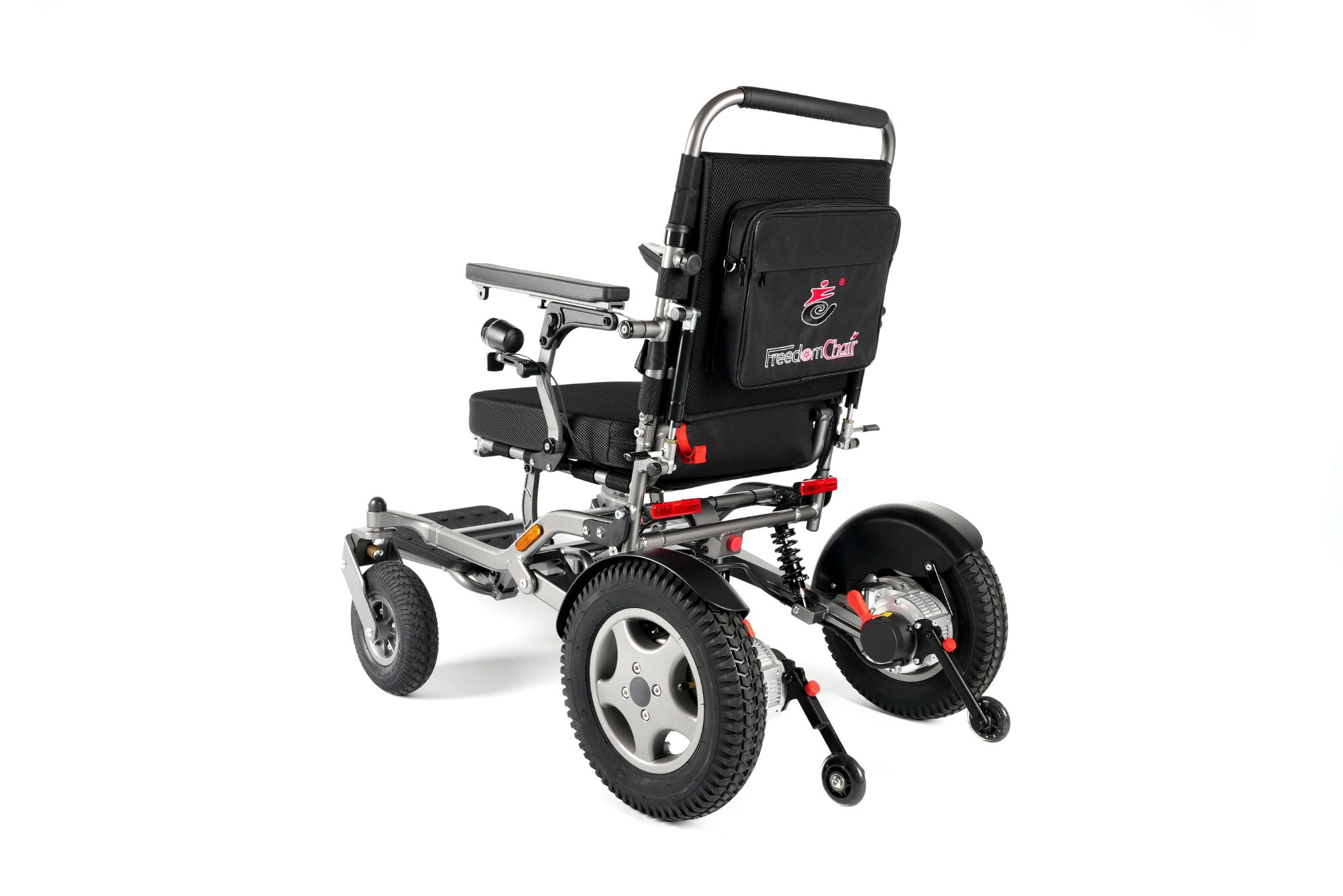
Before you even think about rolling onto a sidewalk, find a quiet patch of pavement where you won’t have to dodge pedestrians or parked cars. Stand on the board or seat, get a feel for the throttle and brake without looking down, and gently rock your weight forward and back. The goal isn’t speed—it’s making the controls feel like an extension of your hands and feet, so your reactions become automatic when you’re in a tighter space.
Spend ten or fifteen minutes testing how the brake responds at different pressures. Some brakes grab sharply, others ease in, and you want to know exactly where that bite point lives before you need it in a hurry. Practice slowing from a moderate roll, then coming to a full stop with one foot ready to step off. If the ride has different speed modes, cycle through them at a crawl to see how each one changes acceleration and stopping distance.
Only after you can start, turn, and stop without having to think about which hand does what should you head toward the sidewalk. That quiet repetition builds the muscle memory that keeps you upright when a pedestrian steps out or a curb cut appears faster than expected. Confidence on the controls isn’t about looking skilled—it’s about leaving enough attention free for everything happening around you.
Adjusting the Seat and Backrest for Hours of Comfort, Not Just Minutes
Most people set their chair once, lean back to test the cushions, and call it a day. That works for the first five minutes, but by hour three the pressure builds in places you didn't know could ache. The seat pan depth matters more than the padding: if the edge digs into the back of your knees, slide it forward until there's about two fingers of space. Then check the height. Your feet should rest flat without your thighs tilting upward, which quietly strains the hip flexors.
The backrest is often treated as a recliner switch, but its real job is to follow the natural curve of your spine without forcing it into a rigid arch. Start with the lumbar support at the small of your back, not higher or lower. Then adjust the tilt tension so you can lean back slightly and still keep your head aligned over your pelvis. If you find yourself locking the backrest fully upright, you're bracing, not resting. Let the chair carry part of your weight, and recheck the angle after an hour rather than assuming the first setting is final.
Battery Habits That Keep You from Getting Stranded Mid-Errand
Most people only think about their phone battery when it hits 5% and they're already hunting for an outlet in a parking lot. A better habit is a five-second scan before you walk out the door: if you're below 40% and your errand list involves GPS, mobile payments, or scanning loyalty apps, top up for ten minutes while you find your keys. That small buffer often makes the difference between a smooth afternoon and a dead phone right as you're trying to pull up a digital receipt.
Cold weather and hot dashboards are silent battery killers, so avoid leaving your phone in the car while you run into a store—even for a quick stop. If you must leave it behind, turn on airplane mode or at least disable background refresh for apps that ping location constantly. These background tasks drain more than you'd expect, especially in areas with spotty signal, where your phone works overtime hunting for a tower.
Instead of relying on a full charge every morning, carry a small power bank that's already topped up and keep a short cable in your glovebox or bag. When battery saver kicks in, don't fight it; lower your screen brightness manually and close only the apps you aren't actively using. It's not about micromanaging every percentage but about building a few automatic habits so your phone isn't the reason you're stranded mid-errand with a cart full of groceries and no way to pay.
Sharing Paths with Cyclists and Cars Without the Usual Tension
Most road tension comes from surprise. When a car drifts too close to a bike lane or a cyclist suddenly swerves, everyone’s pulse jumps. But predictable movement changes everything. Drivers who indicate turns a few seconds earlier, cyclists who hold a steady line, and pedestrians who pause before stepping off the curb create a rhythm that feels less like conflict and more like a shared choreography. It’s not about following more rules—it’s about making your next move obvious to everyone around you.
Another quiet shift is treating every trip as a collaboration rather than a competition. That means drivers accepting that a cyclist might need the full lane on a narrow street, and cyclists understanding that a car’s blind spot isn’t a personal insult. A quick wave, a nod, or even just slowing down when someone else is unsure can transform a near-miss into a non-event. The goal isn’t to be nice for the sake of it—it’s to keep everyone moving without the background hum of anger that makes shared paths exhausting.
Infrastructure helps, but behavior matters more. Painted lines and separated lanes reduce close calls, yet they can’t replace the human habit of leaving a little extra room. When a driver gives a cyclist a full car width instead of squeezing past, or a cyclist rolls through a stop sign only when it’s truly clear, the tension drops noticeably. Over time, these small choices build a culture where sharing the road feels ordinary—not like a daily negotiation with strangers.
Knowing When a Squeak or Slow Start Means It's Time for a Tune-Up
You're backing out of the driveway when a high-pitched squeal cuts through the morning quiet. Or maybe you turn the key and the engine groans for a second longer than it used to before catching. These aren't just quirks to shrug off. A squeak from under the hood often points to a worn serpentine belt or a pulley that's losing its grip, while a sluggish start can mean your battery is fading, the fuel filter is clogged, or the spark plugs have seen better days. Ignoring them rarely makes the problem disappear.
Think of your car as a collection of small parts that all need to stay in sync. When one piece starts to slip, it forces the others to work harder, and that's when the noises and delays show up. A belt that squeaks on cold mornings might snap on a hot afternoon, leaving you stranded. A slow crank that you blame on the weather could be a dying alternator draining the battery overnight. Paying attention to these early warnings gives you a chance to fix a twenty-dollar part before it turns into a five-hundred-dollar repair.
The good news is that a tune-up doesn't have to be complicated or expensive. A quick visit to a trusted mechanic can involve replacing belts, checking fluid levels, cleaning the throttle body, and testing the battery and charging system. You'll notice the difference immediately—the engine starts with a crisp turn of the key, and the squeaks fade into a steady hum. Treat those small signs as your car's way of asking for help, and you'll keep it running smoothly for years to come.
FAQ
Start with the person's height, weight, and hip width so the seat fits without pressure points. Then think about where the chair will actually be used: measure the home's doorways, elevator interior, and any ramps or thresholds, because many Chinese apartment buildings have tight corners. Battery range matters if the user likes to go to markets or parks, so look for a removable lithium battery that can be charged indoors. A tight turning radius helps in small flats, and simple joystick controls with large buttons are easier for shaky hands. Check whether the local dealer offers spare parts and home service, since waiting weeks for a repair can be a real problem.
In most Chinese cities, electric wheelchairs are treated as assistive mobility devices rather than motor vehicles, but enforcement varies by district. Sidewalks are generally allowed, though you should keep speed low and yield to pedestrians. Avoid bike lanes with heavy e-bike traffic if possible, and never enter expressways or elevated roads. Some cities require users to follow pedestrian signals and may restrict certain crowded commercial streets during peak hours. Because local rules can change, it is worth calling the local disabled persons' federation or traffic police office before buying, especially if the user plans to cross large intersections daily.
Do not run the battery down to zero before recharging; partial charges are gentler on lithium cells. In summer, avoid charging in direct sunlight or inside a hot enclosed balcony, because heat degrades the battery quickly. In northern winters, keep the chair indoors when not in use, since cold can cut the available range by a third or more. If the wheelchair will sit unused for weeks, store the battery at around half charge and disconnect it from the controller. Use only the charger that came with the chair, and do not leave it charging overnight without a timer or smart plug.
Choose a model with front and rear suspension plus pneumatic or foam-filled tires if the user often travels over cracked paving stones or tree-root bumps. Slightly lower tire pressure can absorb small vibrations, but do not go below the manufacturer's range or you risk pinch flats. When approaching a curb cut or threshold, slow down and take it straight on rather than at an angle, which reduces the chance of tipping. For older neighborhoods with rough surfaces, a chair with larger front wheels and a longer wheelbase will feel more stable than a compact indoor model.
Do a quick visual check of the tires for cuts or low pressure, then squeeze the brakes and push the chair slightly to confirm they hold. Turn the controller on and off to see that the joystick returns to neutral by itself. Check the battery indicator and make sure the seat is locked into its track, not sliding. Buckle the user in if a seat belt is fitted, and do a low-speed start and stop to listen for grinding or clicking. If the chair has a manual freewheel lever, verify it is in drive mode, not push mode, before setting off.
Many metro systems in China allow electric wheelchairs, but you usually need to use the accessible gate and elevator, and the chair must fit within the lift dimensions. Some stations may ask the user to switch the chair off or keep speed at the lowest setting on platforms. Low-floor buses can accommodate certain wheelchair models, but older buses with steps are very difficult, and drivers may refuse during rush hour when space is tight. It is best to check the local metro operator's website or call the bus company ahead of time, and if possible choose a foldable or compact model for mixed public transport use.
Humidity is the bigger threat, so wipe down metal parts with a dry cloth after use in rain and apply a light anti-rust spray to joints and bolts. Keep the controller and charging port covered when not in use, and avoid storing the chair in a closed balcony that gets direct afternoon sun, because heat can warp plastic and stress electronics. A dehumidifier or a few silica gel packs in the storage area helps reduce moisture damage. If the chair will be idle for more than a month, disconnect the battery and recharge it to about fifty percent every four weeks.
Set the seat depth so there are two to three fingers of space between the back of the knee and the seat edge, which prevents pressure behind the leg. Adjust the footplates so the thighs are fully supported and the knees are slightly lower than the hips. A gel or air cushion can spread pressure over the sitting bones, and a small lumbar roll can stop the user from slumping. Recline the backrest a few degrees if the user gets tired leaning forward, but do not ride reclined on slopes. Encourage a change of position or a short stand-and-stretch break every forty to sixty minutes when possible.
Conclusion
A practical guide to safe and comfortable mobility with an electric wheelchair in China starts not from a medical chart but from the places you actually go. The first step is matching the chair to your everyday routes—narrow sidewalks, curb cuts, market aisles, the uneven bricks outside older apartment blocks—rather than just your diagnosis. Once you have the right model, spend time in a quiet courtyard or empty parking lot getting a feel for the joystick, speed dial, and braking response before you merge into foot traffic. The seat and backrest deserve more than a quick adjustment; a few extra minutes setting the right depth, recline angle, and footplate height can turn a twenty-minute outing into hours without hip or lower-back aches.
Battery care is less about strict rules and more about routine: charge before the indicator drops too low, avoid leaving the chair in direct sun for hours, and carry the charger if your errands might stretch longer than expected. On shared paths, a steady speed and a polite bell or voice cue go further than aggressive weaving; most cyclists and drivers will give space if you signal early and hold your line. Finally, don’t ignore small signs—a squeak when turning, a sluggish start, or a seat that rocks slightly—because these are often the first hints that a bearing, connection, or motor brush needs attention. Catching them early keeps short trips from turning into long waits for repair.
Contact Us
Contact Person: Calvin Fan
Email: [email protected]
Tel/WhatsApp: 8618913265607
Website: www.freedom-chair.com