

China Flexo Printing Machine for Plastic Film Key Considerations Before You Buy
2026-11-29
If you work with plastic film, you already know that choosing the right flexo printing machine can make or break your production line. Sourcing from China opens up a world of options, but it also raises tough questions about build quality, repeatability, and long-term support. This guide walks you through the critical factors before you sign the contract. Along the way, you’ll see why many converters now look to HuiPeng as a practical benchmark for reliable Chinese-made flexo presses.
How the Machine Handles Thin Film Without Wrinkling or Stretching
Film handling starts long before the material ever touches a roller. The unwind station relies on a low-inertia dancer arm paired with a closed-loop tension signal, not a fixed brake, so the web stays under constant, gentle control even as roll diameter changes. A slight taper is applied automatically as the roll shrinks, preventing the sudden tug that usually creases the edges of thin gauge stock.
Through the process section, the film travels over rollers that are precision-crowned and hard-coated to reduce surface drag. Most critical are the idler rolls placed just before each nip point; their bearings are spec'd with minimal runout, and their surfaces are treated so static doesn't cause the film to cling or wander. Air-assisted turning bars handle direction changes without letting the material fold against itself, while edge guides use non-contact ultrasonic sensors to keep tracking corrections below half a millimeter at a time.
At the point where tension is most delicate, the machine switches from torque-based to position-based stretching. Servo-driven draw rolls are synchronized through a virtual gearbox, and the speed ratio between them is adjusted in increments of a fraction of a percent. This keeps the film within its elastic recovery zone, so it never gets permanently deformed. If a slight wrinkle does form, a spreader roller with curved rubber lugs gently opens the web from center to edges before it enters the next critical process, and the entire line speed is automatically reduced for a few seconds until the sensor confirms the film is flat again.
Drying Performance With Water-Based Inks on Non-Absorbent Film
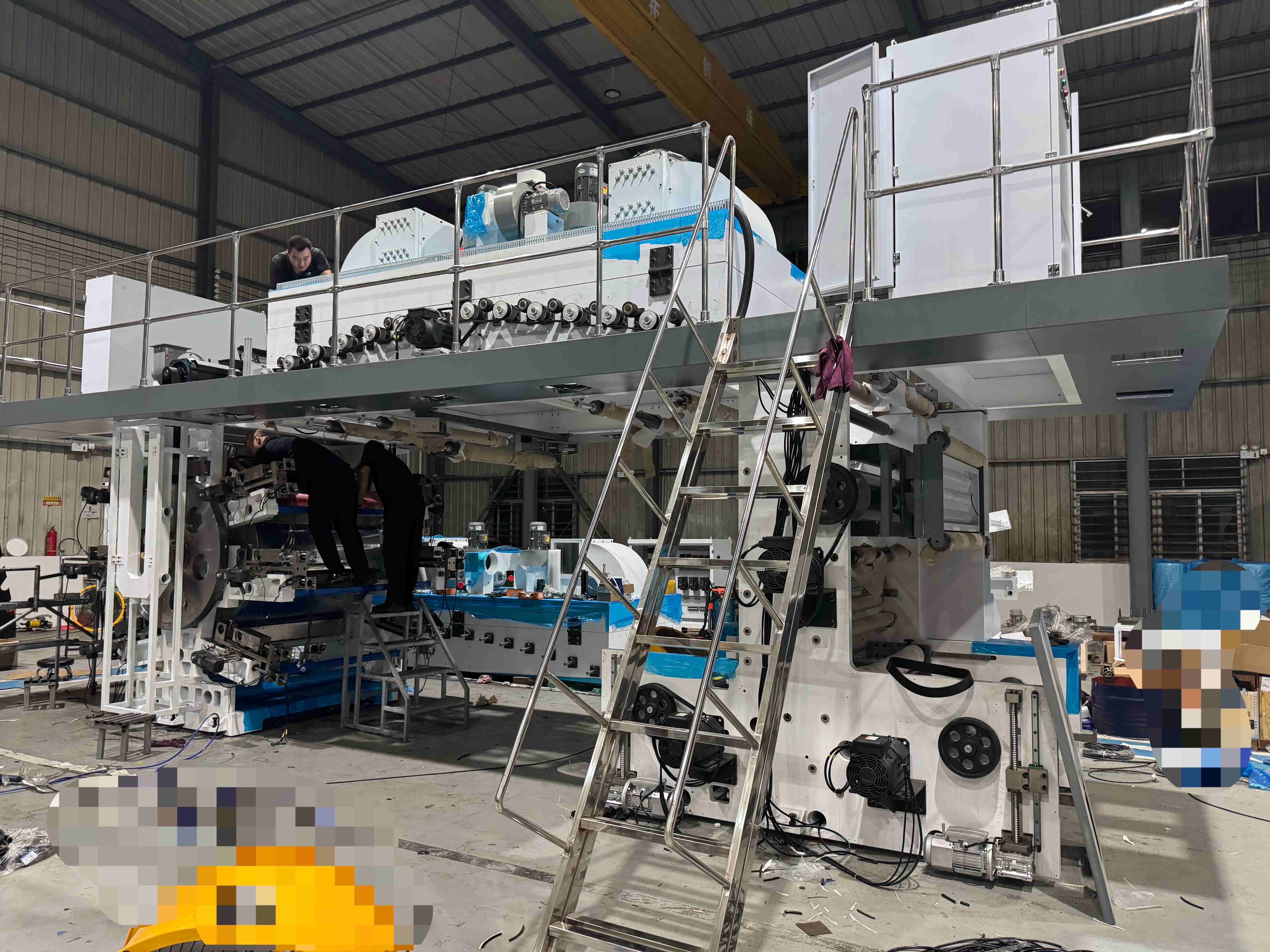
On film substrates that offer no absorbency, water-based inks lose their usual escape route through the substrate. The water and co-solvent blend must leave entirely from the surface, which makes air movement and temperature control far more decisive than on paper. If the dryer is set up for solvent inks, the surface skins over quickly while moisture remains trapped underneath, leading to blocking on the reel or poor scratch resistance hours after printing.
Practical drying speed depends less on the ink pigment load and more on how well the co-solvent package releases from the film. A slower, staged temperature ramp often outperforms a single high-heat zone because it lets amine and glycol ether components evaporate before the resin locks in. With films like treated polypropylene or polyester, a modest increase in airflow across the web does more for drying than raising the dryer temperature alone, and it reduces the risk of dimensional changes in the substrate.
Evaluating the result should include a quick scuff test after cooling, not just a dry-to-touch check at the delivery end. Residual moisture can look acceptable while the web is warm, then cause odor, adhesion loss, or blocking once the roll reaches room temperature. Adjusting the ink with a faster-releasing co-solvent is usually more effective than extending the dryer length, especially when line speed cannot drop.
Sleeve Changes and Anilox Matching for Short Runs
Short runs rarely give you time to chase variables, so sleeve and anilox combinations need to be settled before the job reaches the press. A common mistake is treating the sleeve as just a repeat-length carrier and leaving the anilox choice to habit. When the plate surface, tape thickness, and sleeve diameter shift between jobs, the same anilox can lay down noticeably more or less ink, and the difference shows up fast in small batch work where every impression counts.
Keeping a simple log of which sleeve and anilox pair worked for a given substrate and artwork type removes most of the trial and error. For fine screens and small text, a higher line count with lower volume tends to hold detail without flooding; solid panels on porous board usually want a coarser cell structure with more carrying capacity. The goal is not to find one perfect anilox, but a short list of two or three that cover the common repeat lengths and plate types in your shop.
It also helps to group short-run jobs by similar print requirements instead of by customer. That way sleeve changes stay predictable, and the anilox can be matched to the job family rather than swapped every time. Even a rough preset chart, checked against actual density readings for a few runs, will cut makeready enough to make short work less of a scramble.
Keeping Fine Text and Vignettes in Register at Speed
Small type and delicate vignettes expose every weakness in a press run. At high speed the web or sheet wants to wander, tension shifts, and the slightest misregister turns a fine serif into a smudge or breaks the soft edge of a vignette into a visible step. Keeping them in register is less about chasing perfection after the fact and more about removing the small instabilities that accumulate before the first impression hits. Dampening balance, roller pressures, plate packing, and even the grain direction of the stock have to agree with one another.
Automatic register controls help, but they tend to react after a drift has already begun. That is often too late for a 6-point numeral or a vignette fading to nothing. A better approach is to reduce the causes of drift: set cylinder bearers cleanly, watch for uneven plate wear, and keep ink and water films thin enough that they do not pull the image out of position. On longer runs, checking the register mark spacing at regular intervals catches slow changes in blanket thickness or paper stretch before they become visible in the work itself.
Speed itself is not the enemy. The damage usually comes from forcing a press past the point where its mechanical repeat and drying capacity stay predictable. Once the infeed, tension zones, and delivery are tuned as a single system, fine text and vignettes can hold register at surprisingly high output. The difference is that the pressroom treats them as the standard to meet, not as decorative extras that can be allowed to shift a little.
Static Elimination and Web Cleaning for Dust-Free Print
Dust and static form a costly combination on high-speed presses. A charged web pulls airborne particles out of the surrounding air and holds them tight, so even a visually clean shop can produce printed defects. Removing the charge at the unwind and just before each print unit stops the web from acting like a magnet, while active web cleaning lifts off whatever has already settled.
Ionizing bars placed close to the moving substrate neutralize surface charges without touching the material. This works best when paired with a web cleaner that uses agitating airflow or soft contact rolls to dislodge particles, followed by vacuum extraction to carry them away. The sequence matters: neutralize first, then clean, because a discharged surface releases debris far more easily than one still clinging electrostatically.
On synthetic films and nonconductive substrates, static can rebuild within seconds, so a single treatment at the unwind is rarely enough. Positioning compact anti-static and cleaning units between print stations keeps the web from picking up new contamination mid-run. The goal is not just cleaner material at the start, but a stable, dust-free path all the way to the drying section.
What to Expect for Installation Support and Wear Parts Lead Times
Installation support depends less on a script and more on the crew you get. Once a machine arrives, expect a few overlapping steps: a pre-installation call to confirm footing dimensions and clearances, the arrival of a field technician who knows the equipment well enough to spot misalignment early, and a final walkthrough where torque settings and lubrication points are checked before handover. If you have your own maintenance team, the support often shifts into a training role rather than hands-on work, which tends to speed things up considerably.
Wear parts lead times are rarely a fixed number, and that catches people off guard. Stock castings usually ship within a few weeks, but anything made to order—especially with a custom alloy or a pattern that hasn't been poured in a while—can stretch to ten or twelve weeks. Foundry backlogs, heat-treatment capacity, and freight lanes from overseas suppliers all pull on the schedule. A realistic approach is to ask for the casting date, not just the delivery date, because the former tells you whether the order is actually in the queue.
The practical rule is to keep a buffer on high-wear items and treat the first order as a learning run. Once you know how the wear profile behaves on your feed material, you can move from reactive buying to a rough replenishment cycle that matches your shutdown windows. That alone avoids more downtime than any expedited freight option ever will.
FAQ
Bring sample rolls to the supplier and ask for a trial on the exact gauge and surface treatment you run. LDPE, HDPE, BOPP, and breathable film each behave differently, so a machine tuned only for thin shopping bag film may struggle with heavier or treated substrates. Check the unwind and rewind tension range, corona treater placement, and whether the dryer can keep up with higher line speeds on non-absorbent film.
Start with your narrowest and widest products, not just the current bestseller. The print cylinder repeat range matters more than the machine's advertised maximum width. If you mostly print short repeats but occasionally run larger bags, ask how fast changeover really is and whether sleeve-based systems are worth the extra cost for your volume.
They can be, but cost differences usually show up in the web guide, tension control, gear or servo quality, and the thickness of the frame. Ask for a detailed component list instead of focusing on the final price. A machine with off-brand drives and a flimsy drying tunnel will cost more in downtime than the savings.
Buy for the next two or three years rather than the absolute minimum. Adding print decks later is often possible but rarely cheap or simple because the frame length, dryer capacity, and registration system are sized around the original configuration. If your customers are moving toward more complex designs, an eight-color press may save a second pass.
Film does not absorb ink, so drying is a bigger bottleneck than it first appears. Check airflow volume, nozzle design, exhaust capacity, and whether the temperature can be held steady at your fastest planned speed. Ask for drying data with water-based and solvent-based inks on a similar film, not just a general catalog figure.
Very important, because film stretches and slips more than paper. Look for closed-loop tension control and ask what registration variance the supplier will commit to in writing. If they only quote a number for paper or thick board, request a film-specific test with your material at normal production tension.
Ask for a recommended spare parts list with lead times, and confirm whether they can support you remotely by video or need to send an engineer. Common wear items like doctor blades, anilox sleeves, gears, and belts should be easy to source. Also check if they have local agents or customers in your region who can share actual service experience.
If the purchase size justifies it, visit and run your own film. A factory visit shows you how they build the machine, whether tolerances are controlled, and how honest the demonstration is. If visiting is not possible, ask for a live video trial with your material, serial number visible, and a specific test checklist rather than a polished marketing clip.
Conclusion
When you start comparing China flexo presses for plastic film, the conversation usually comes back to two things: how the machine manages tension and how it handles ink that has nowhere to absorb. Thin polyethylene or BOPP can turn into a nightmare if the infeed and outfeed aren't tuned properly, so ask about dancer roller response, idle roller alignment, and whether the drive system pulls evenly at every station. Wrinkling and stretching aren't just cosmetic; they wreck register and make waste climb quickly. Water-based inks on non-absorbent film demand a dryer that actually removes moisture rather than just blowing hot air around. Look at air velocity, nozzle placement, and whether the press can hold a steady temperature at production speed. If the drying is marginal, you'll either slow down or ship film that still smells of retained solvent and water.
Shorter runs change the math. A press that takes twenty minutes to swap sleeves and anilox rollers will eat the profit out of repeat jobs. Ask how the sleeve locking system works, whether anilox inventory covers the line screen and cell volume you actually print, and how repeatable the setup is between operators. Fine text, small reverses, and soft vignettes are where cheaper builds show themselves, especially as speed increases; the real question is whether the registration system holds after acceleration, not just during a demo. Dust and static on film are less visible but just as destructive. A basic web cleaner and active static bar should be standard, not optional. Before you commit, pin down installation support and realistic lead times for wear parts. Some suppliers offer fast response, while others leave you waiting on overseas freight for simple items like doctor blades or bearings.
Contact Us
Contact Person: Isaias
Email: [email protected]
Tel/WhatsApp: 86-13868693129
Website: https://www.hpflexo.com/