

China Food Truck Menus Bring Regional Chinese Street Flavors to Every Curb
2026-11-28
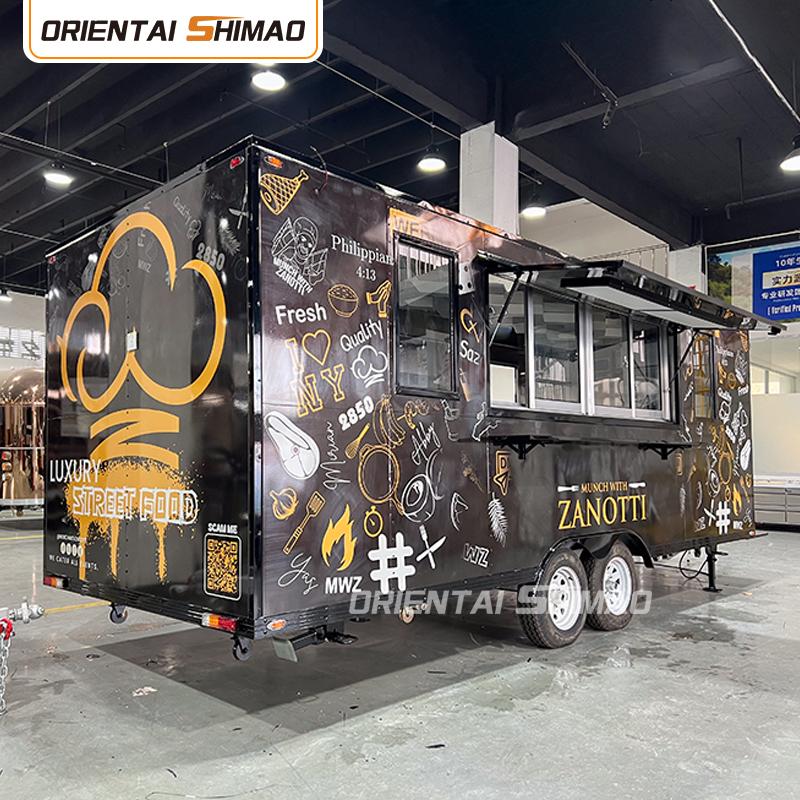
Every curb in America has a taco truck story, but China’s regional street food is only now getting its turn. From the numbing heat of Chengdu to the cumin-scented smoke of Xi’an, these menus don’t smooth out regional edges—they lean into them. Oriental Shimao is built on that exact premise: bringing the deeper, messier, more specific flavors of Chinese streets to a window near you. If your idea of Chinese takeout still stops at orange chicken, the next few sections are about to redraw the map.
The Wok Arrives Before the Restaurant Does
The first thing through the door is not a sign, a stack of menus, or even a chair. It is a blackened wok carried under one arm, its inside glowing with years of oil and heat. The chef sets it on a makeshift burner in the middle of an unfinished room and lights the gas without waiting for the walls to be painted.
Smoke drifts through the open doorway before the restaurant has a name. Neighbors slow down, glance inside, and recognize something more reliable than a business plan: the sound of garlic hitting hot metal, the quick toss, the hiss of soy sauce at the edge of the flame. The menu may still be a rough note on a napkin, but the kitchen is already speaking.
By the time the tables are arranged and the sign is bolted above the entrance, that wok has learned the tempo of the street. It knows when the lunch rush starts and how much heat a rainy evening requires. The room was built around it, not the other way around, because the restaurant could wait—the cooking could not.
Regional Chinese Flavors That Never Needed a Dining Room
Some of the best regional Chinese food never appears on a menu with table service. In Chengdu, a wooden cart parked near a wet market can turn out sweet water noodles topped with a paste of sesame, brown sugar, and chili oil that clings to the thick-cut strands. People balance on low plastic stools, bowls close to their chins, while the vendor scrapes garlic into a porcelain crock. The steam from a neighboring pot of wontons mixes with the smell of Sichuan peppercorn oil. Nobody calls it casual dining; it is just how lunch happens.
The same is true in Chaozhou, where night porridge stalls set up under old arcades. A glass cabinet holds silver pomfret, marinated goose, pickled mustard greens, and small dishes of fermented tofu. You point, the cook chops, and the rice porridge arrives almost too hot to hold. The flavors are clean, saline, faintly sweet from the goose fat, and they have nothing to do with restaurant pacing. People go back for the specific crunch of fried garlic on top, the way the broth turns cloudy from the rice.
In Xi'an, narrow lanes around the Muslim Quarter offer persimmon fritters pulled from bubbling oil and lamb skewers dusted with cumin over charcoal. The vendors remember regulars by the cut of meat they prefer, the exact amount of chili. The setting might be a fold-out table or a low wall, but the technique is no less serious than a dining room. Often the best signal of quality is a crowd of locals bending forward so the juices don't drip on their shoes.
What a Lanzhou Broth Tastes Like on a City Sidewalk
The first thing you notice is the broth's color: a shade somewhere between amber and rust, carrying a thin veil of chili oil that shifts with every step of the vendor's ladle. It tastes less like a single loud spice and more like the slow pull of beef bone, star anise, and white pepper. There is a soft, almost dusty warmth at the back of the throat, not from heat but from the long simmer that rounded off the sharper edges.
On a city sidewalk, steam rises past plastic stools and parked scooters, and the broth seems to gather the air around it. The broth clings to the hand-pulled noodles just enough to flavor each strand, then settles into a clean, salty finish that makes you reach for the spoon again. A little chopped cilantro and garlic chive float on top, cutting through the richness with a green, soap-bright note.
What stays with you is the aftertaste: a faint savor of roasted onion, a tick of Sichuan pepper, and the deep, almost sweet presence of beef fat that has soaked up hours of spice. It does not shout for attention. It simply feels like a bowl that belongs exactly where it is being eaten.
Street-Side Menus Built for Chopsticks, Not Forks
Skewers slide off bamboo sticks without a knife ever touching the plate, and greens are torn into bite-sized lengths that lift cleanly between two wooden tips. At these stalls, the cooking starts with a simple question: can this be picked up with chopsticks? Broths are ladled into bowls with noodles cut short enough to gather, while braised meats are sliced thin against the grain so they fold rather than flop.
The wok does much of the work before chopsticks even arrive. Vegetables get seared just long enough to soften their edges, and rice is pressed into lumps that hold together without being sticky. Street cooks rely on texture and size, breaking apart anything that would need a fork's tines. Even crispy pork belly is portioned into one-bite squares with a crackling top that yields under gentle pressure.
That attention to chopstick-friendly detail changes how a meal feels. You eat closer to the bowl, moving quickly from pickled radish to chili oil noodles without switching utensils. It's not about tradition for its own sake; it's simply faster, tidier, and more direct when the whole menu is built around the way people actually eat on the street.
From Xi’an Cumin Lamb to Cantonese Clay Pot Rice in One Block
Walk the short stretch between the northern end of the block and the old shophouse on the corner, and you'll pass from the dry, smoky heat of Xi'an's street grills into the soft, bubbling steam of a Cantonese kitchen. The shift happens without ceremony. One minute your fingers smell of toasted cumin and charred lamb fat, the next you're breathing in the sweet, almost caramelized scent of rice crisping at the bottom of a clay pot. Nobody planned this as a food crawl. It simply happened, the way good eating streets tend to collect contradictions.
The cumin lamb is not polite food. Skewers arrive blackened at the edges, dusted with enough spice to make your lips tingle for an hour. You eat standing up, maybe leaning against a wall, tearing meat off the stick with your teeth. Then you walk forty steps, duck past a curtain, and suddenly there's a clay pot rice in front of you: lap cheong sliced thin, a runny egg, dark soy pooling around the edge. The crust at the bottom is the real prize. You scrape it loose with a spoon, and the crunch echoes like a small private applause.
What connects these two dishes isn't technique or region. It's the stubborn belief that a single block can hold more hunger than most neighborhoods manage in a mile. You come for one thing and leave having eaten from two different centuries. That's the quiet trick of places like this: they don't ask you to choose, they just lay the map of China down on a cracked tile floor and let you walk it in six minutes.
Why the Best Map of China Is Painted on a Food Truck
Somewhere between a parking lot in Chengdu and a curb in Xi'an, the side of a battered food truck becomes the only map of China that ever made real sense. Not the kind with clean provincial borders printed on glossy paper, but a hand-painted sprawl of noodle stains, faded chili oil splashes, and the occasional splash of vinegar. The truck's owner, a former geography teacher from Lanzhou, started sketching the outline of the country after a customer asked why his biang biang noodles tasted more like Shaanxi than Gansu. Now the map grows organically, each route marked not by highways but by the dishes that paid for the diesel.
What makes this rolling cartography better than any official atlas is that it refuses to sit still. The boundaries shift with the seasons—winter pulls the truck toward the lamb-heavy northwest, summer drags it south for cold rice noodles and sour plum drinks. A province isn't just a shape; it's the smell of cumin in Xinjiang, the thickness of sesame paste in Wuhan, the exact crunch of a scallion pancake folded three times in Shandong. Regulars argue over whether the Yangtze should be drawn as a river of hotpot broth or a line of tea-smoked duck. The owner just shrugs and repaints it depending on who bought the last bowl of noodles.
There is no legend tucked into the corner, no scale bar, no compass rose. If you want to know the distance between two cities, you ask how many meals it takes to get there. Beijing to Shanghai? About eleven orders of jianbing, give or take a side of soy milk. The truck's map is less about territory and more about appetite, a reminder that a country is best understood when it is tasted, argued over, and drawn with a brush that still smells faintly of garlic. It may never make it into a textbook, but no textbook ever fed you a perfect map of home one bite at a time.
FAQ
Instead of the usual sweet-and-sour approach, they tend to zero in on one region or a handful of regional specialties. A truck might build its whole identity around Xi'an street food, so you are more likely to see hand-torn flatbread soaked in lamb stew than a generic noodle box.
Lanzhou beef noodles, Tianjin jianbing, Chengdu cold noodles, Yunnan rice noodles, and Xinjiang-style cumin skewers are common. It varies by owner, but the menus usually name a city or province rather than just saying 'Sichuan style'.
They do a lot of prep before service: sauces are mixed, dough is rested, meats are braised or marinated overnight. On the truck, they rely on a few compact pieces of equipment like a flat griddle or a small fryer, and they streamline steps that would normally need a full restaurant line.
A truck can move to where people already are, so diners do not have to make a special trip across the city. That lower overhead also lets owners test a very specific regional menu without gambling on a full brick-and-mortar lease.
Many keep a core list of familiar items and rotate a few specials. Some change with the weather, bringing out more cold noodle dishes in summer and turning to braises or spicy broths when it gets cold.
Jianbing is a good entry point because it is fast, portable, and not aggressively spicy unless you ask for extra chili. Roujiamo, often described as a Chinese-style meat sandwich, is another approachable choice with slow-cooked meat and a crisp flatbread.
Owners often mix imported pantry items with produce from local Asian markets. Some make their own chili oil, fermented sauces, or hand-pulled noodles because certain components simply are not available off the shelf.
It depends on the truck. Some keep the salt, heat, and numbing spice exactly as they would serve it back home. Others soften the intensity a little or offer a mild version, but most try to preserve the dish's main character rather than turning it into a generic fusion plate.
Conclusion
The heavy clang of a wok now rings out from parking lots and curbs long before any dining room takes shape. These trucks carry regional Chinese cooking that never depended on white tablecloths or fixed addresses: a Lanzhou beef noodle broth, clear and deeply spiced, steams beside a bus stop the same way it would outside a night market in Gansu. Menus are written for chopsticks, with compact bowls and folded wrappers rather than fork-friendly plates, and that small shift changes how people eat on the street. A few blocks can hold Xi'an cumin lamb, Cantonese clay pot rice, and Sichuan liangfen, turning an ordinary curb into a condensed map of China's food traditions.
What makes these trucks convincing is not just the range but the immediacy. Vendors pull noodles to order, toast spices in shallow pans, and let the aroma of sizzling cumin drift across intersections. The food does not feel like a simplified takeout version; it carries the rough edges and regional accents of street stalls in Lanzhou, Xi'an, Guangzhou, and Chengdu. Because the kitchen is squeezed into a few square meters, technique becomes the anchor: high heat, fast tosses, precise timing. That is why the best guide to regional Chinese cooking in some cities may not be a restaurant row or a glossy directory, but a shifting lineup of trucks whose painted maps and hand-scrawled specials tell you exactly which province is cooking tonight.
Contact Us
Contact Person: Jack Wang
Email: [email protected]
Tel/WhatsApp: 8618306483516
Website: https://www.orientalshimaofoodtruck.com