
China Precast Concrete House Mold Supplier for Reliable Construction Projects
2026-08-27
Every construction project hinges on the quality of its molds, yet finding a supplier who truly understands the demands of precast concrete housing can feel like searching for a needle in a haystack. That’s where Qianfeng Electromechanical Equipment comes in—a China-based manufacturer that has quietly built a reputation for molds that hold their shape, project after project. In this post, we’ll explore what sets their precast concrete house molds apart and why reliability matters more than ever on today’s job sites.
Mold Precision That Keeps Wall Panels Fitting Without Field Adjustments
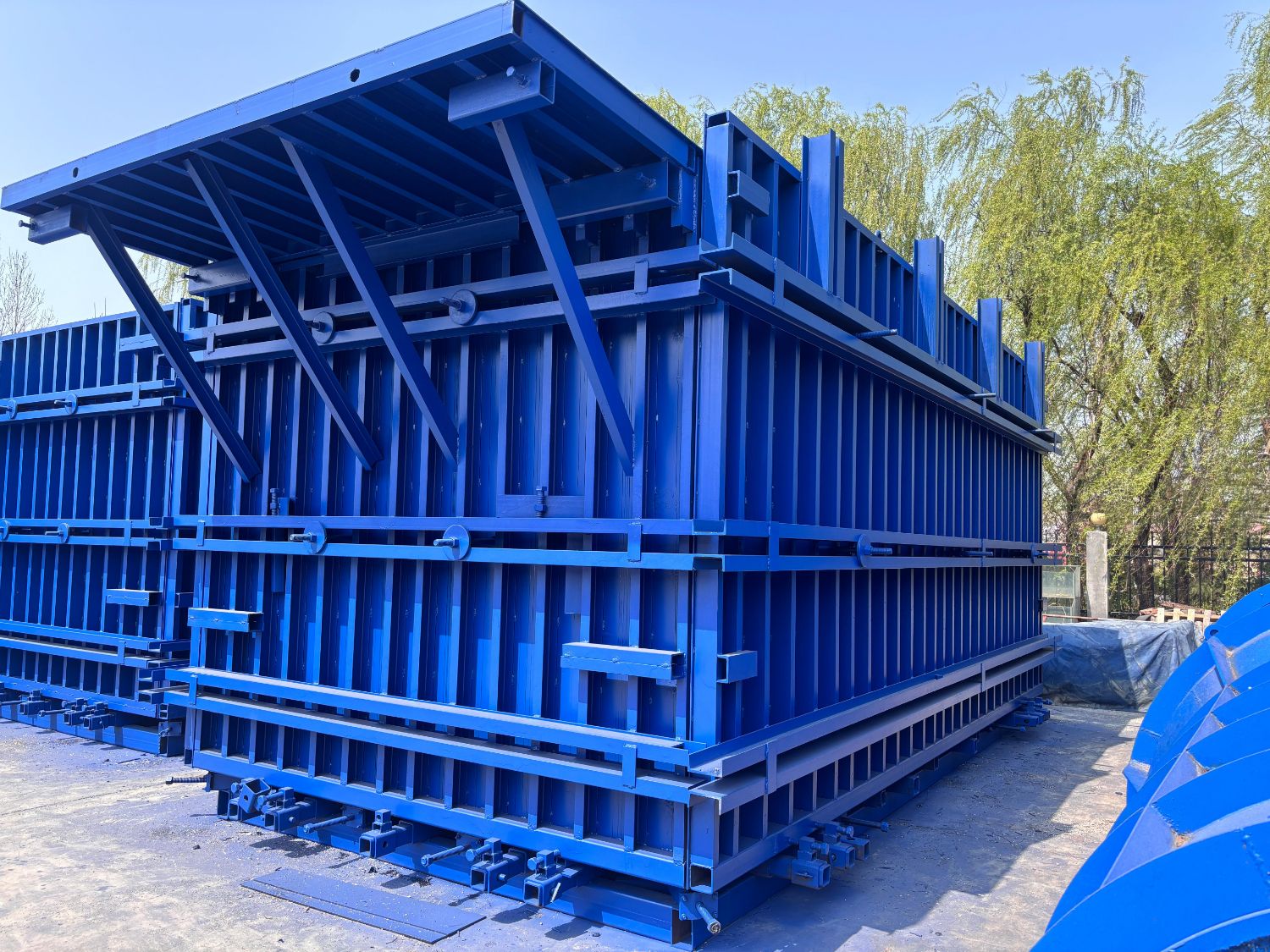
When a wall panel leaves the mold, it should drop into place on site like a key into a lock. Achieving that level of fit starts long before the first pour, with mold tolerances held to a fraction of a millimeter. Every corner radius, every draft angle, every locating pin is machined to match the panel's mating surface. This isn't about chasing perfect numbers on a drawing—it's about making sure the panel's edges, reveals, and joint lines align so cleanly that installers never reach for a grinder or shim.
The real test comes when two panels meet. If the mold's side rails have shifted even slightly during production, the panel will carry that error into the field. That's why we lock down moving parts, verify alignment after every cycle, and use hardened steel guides that resist wear over thousands of pours. The result is a panel with consistent thickness, square corners, and a surface that matches its neighbor without forcing. It means no last-minute notching, no visible caulk lines hiding a bad fit.
Precision in the mold also simplifies the installer's job. Panels that fit without adjustment go up faster, require fewer touch-ups, and leave a cleaner finish. There's less waste from broken edges or re-cut panels. Ultimately, the mold's accuracy becomes the project's quiet advantage—no callbacks, no finger-pointing, just a wall that looks like it was meant to be there from day one.
What a Reliable Supplier Does Differently Before the First Pour
A reliable supplier doesn't wait until trucks are scheduled to start asking questions. Weeks before any concrete arrives, they're walking the site with the contractor, checking formwork, rebar clearance, and pump placement. They want to know where the mix will land, how far it has to travel, and what the weather window looks like—because all of that changes slump, set time, and finishability. That early site visit is where most pour-day surprises get caught.
Then comes the mix design conversation. Instead of emailing a standard 4,000 psi ticket, they ask about placement method, finish type, and curing conditions. A slab that will be power-troweled in July needs a different water reducer than a wall poured in March. They'll often send a trial batch and invite the contractor to test it, not just in a lab but under field-like conditions. If that means adjusting aggregate or admixture weeks ahead, they do it before production quotas make it hard.
Lastly, they build a communication chain that includes the dispatcher, the batch plant, and the driver—not just the sales rep. The contractor gets a real phone number for the plant, a confirmed truck spacing interval, and a backup plan if a pump fails or a truck gets stuck. That coordination might feel like overkill, but it's what separates a supplier who shows up from one who anticipates the first pour.
Steel Thickness, Weld Patterns, and the Details That Extend Mold Life
Tooling shops often overlook the relationship between plate thickness and cooling-channel placement. A thicker cavity block doesn't automatically mean longer life; what matters is how the extra mass redistributes thermal stress. When water lines sit too close to a thin wall, repeated heating and cooling cycles create micro-cracks that spread along the grain. By shifting to a heavier section and moving channels deeper, the surface stays hotter for slightly longer but expands more evenly, which cuts down on the stress concentration that usually starts at sharp corners near the parting line.
Weld pattern choice gets less attention than it should, especially on repair jobs. A continuous bead along the entire perimeter may sound strong, but it locks in distortion and leaves the repaired zone brittle after heat treatment. Interrupted stitches, placed diagonal to the flow direction, let the block breathe during thermal cycling. The small gaps act as expansion joints, preventing the weld from pulling away from the base steel. Pair that with a preheat above 300°F before welding and a slow cool under insulation, and the repaired area often outlasts the original material.
Details like radius blending at the bottom of deep ribs and the direction of final polishing also add cycles to a mold. Sharp inside corners concentrate stress whether they are machined, EDM'd, or welded. Hand-blending those transitions to a smooth radius, then polishing along the draw direction rather than across it, reduces micro-notches where cracks begin. It's the combination of these small adjustments, not any single upgrade, that pushes a mold from 100,000 shots toward 300,000 before major servicing.
Adapting One Mold System for Multiple House Layouts
Designing a single mold system that adapts to multiple house layouts starts with identifying the common structural denominators across floor plans. Rather than locking dimensions into a fixed grid, the mold incorporates adjustable side rails, repositionable block-outs, and modular corner inserts that can be swapped or slid into place. This turns a traditionally rigid concrete form into a flexible kit of parts, allowing contractors to cast walls for a compact one-bedroom bungalow and a sprawling three-bedroom ranch using the same base hardware. The key is standardizing the connection points and load paths while leaving room for length and opening variations.
On site, the adaptation process relies on a set of layout templates and spacing guides that map each house plan to the mold's adjustable zones. Crews follow a sequence of pin and clamp adjustments, moving from the longest continuous wall to the shorter segmented runs, then locking in door and window openings with dedicated filler panels. Because the system uses numbered index marks instead of relying on a tape measure for every changeover, switching from one layout to the next takes under an hour and dramatically reduces the chance of misalignment. This approach also keeps the mold in near-constant use, eliminating the downtime typically needed to build or buy custom forms for each new design.
The real benefit shows up in long-term flexibility. A developer can start with a line of starter homes, then introduce wider or deeper versions without investing in an entirely new forming system. Renovation projects also gain from the same adaptability: a foundation crew can reuse the mold for an addition that matches an existing footprint, then reconfigure it for a detached garage or accessory dwelling unit on the same property. Over time, the cumulative savings in material handling, storage space, and skilled labor hours outweigh the initial cost of the adjustable components, making the one mold system a practical backbone for builders who serve varied clients.
Managing Long-Distance Mold Delivery Without Compromising Build Schedules
Long-distance mold shipping tends to fall apart when it is treated as a last-minute freight task instead of a planned part of the build. Before the mold leaves the shop, lock down the crating method, the exact route, and a transit buffer that accounts for weather, customs, or driver hours. Share that timeline with the machining, assembly, and site teams so nobody is waiting on a surprise.
Splitting large molds into modular sections can reduce the risk of damage and make the tool easier to handle at both ends. If reassembly is simple enough for the receiving team to manage without special fixtures, the schedule stays intact even when the shipment arrives a day late. Add shock or tilt indicators to the crate so any rough handling shows up before the mold is unpacked, not after it fails a trial run.
What often saves a build schedule is not a faster truck but a flexible handoff plan. Agree in advance which downstream tasks can shift if the mold gets held up, and keep a short list of non-critical work that can absorb the delay. Regular check-ins between the shipping coordinator and the site supervisor help catch problems early, when a reroute or a different carrier still has time to make a difference.
Avoiding the Hidden Costs of Cheaper Precast Formwork
Choosing a less expensive precast formwork system often feels like a win at the outset. The quoted price per square foot looks attractive, and the procurement team sees immediate budget relief. But beneath that sticker price, there are usually compromises in steel thickness, weld quality, or panel rigidity that quietly transfer costs downstream. A panel that deflects half a millimeter more under load might not fail outright, yet it will produce visible joint lines, uneven reveals, and surfaces that need extra patching once the concrete cures. Those finishing hours add up fast, often erasing the upfront savings within the first few pours.
Another hidden cost is durability across reuses. Cheaper formwork tends to wear at the edges and corners sooner, especially when crews strip and cycle panels quickly. Once a panel loses its dimensional accuracy, every subsequent cast inherits that geometry. You end up either accepting dimensional drift or spending money on repairs, shims, and recalibration. Higher-grade systems are engineered for repetitive use without losing tolerance, which means the cost per use drops steadily over a project's life. The cheaper option, by contrast, may need early replacement or constant field adjustments that eat into labor productivity.
There's also the underestimated risk of schedule disruption. If a low-cost formwork system jams, warps, or requires extra bracing to prevent blowouts, the pour cycle slows down. Time lost on a critical path is rarely recoverable, and the penalty clauses or extended site overhead can dwarf the initial material savings. Smart buyers evaluate formwork not as a one-time purchase but as a tool that influences pour accuracy, crew speed, and rework rates. When those factors are folded into the total cost analysis, spending a bit more upfront on robust, precisely manufactured formwork often proves to be the cheaper choice in the long run.
FAQ
Our molds are built around the actual casting sequence on site. We reinforce corner joints with double-welded steel plates and use a modular pin system so the same set can be rearranged for different wall layouts. That cuts down assembly time without relying on generic panel sizes.
Yes, we receive drawings or sketches and adjust the side rails, rib spacing, and opening positions to match. We typically send a 3D mock-up for approval before production, which helps avoid surprises during installation.
The main face plates are usually 4 to 6 mm Q235 steel, with the back frame reinforced by 8 to 10 mm channel or angle iron depending on the panel height. This keeps deflection low even when pouring multiple units per day.
We break down large wall molds into sections that fit standard flat-rack containers. Each piece is wrapped with anti-rust film, then braced with wooden battens and steel straps. We also include lifting points marked on each section so the crew can unload safely.
We usually send a short video walkthrough and a labeled assembly drawing with each order. For larger projects, our engineer can join a video call during the first assembly. We don't charge for basic remote support within the first month.
Self-compacting or slightly fluid mixes with small aggregate tend to fill the details better, but the molds are designed to handle normal vibrated concrete as well. We recommend a release agent with a thin consistency so it doesn't build up in corners.
For a standard two-bedroom house mold set, we typically need 18 to 25 days. Custom window and door opening layouts may add another week. We send progress photos at three stages: frame welding, panel fitting, and final trial assembly.
The critical connection points are made from replaceable plates and bolts, so you can order just the damaged section. We keep digital cutting files for each project for at least five years, which lets us produce matching replacements quickly.
Conclusion
Wall panels that drop into place without grinding or shimming tell you a lot about the mold they came from. In practice, that kind of fit starts with a Chinese supplier that checks every critical dimension against the panel drawing, verifies insert positions, and confirms lifting-point loads before the first pour. The difference shows up in the steelwork too: heavier plate in the corners and around vibrator mounts, continuous welds rather than short tack welds, and stiffener spacing calculated for repeated stripping. Those choices keep the mold face flat and square over hundreds of cycles, so the panels stay consistent instead of gradually drifting out of tolerance.
There is also the question of how easily one mold handles different house layouts. A good design uses bolt-on side rails, adjustable bulkheads, and reversible window boxes, allowing the same main frame to produce panels for several room sizes without weakening the structure. Shipping from China adds another layer of risk, but proper internal bracing, moisture-resistant crating, and careful container loading keep the assembly from arriving warped or late. And while cheaper formwork can look similar in a photo, thin steel and poor alignment hardware often lead to rejected panels, extra welding on site, and idle crews. Over the life of a project, the real cost difference comes from those interruptions, not from the initial purchase price.
Contact Us
Contact Person: Bill
Email: [email protected]
Tel/WhatsApp: 8615063653526
Website: https://www.qianfengjd.com