

China Press Brake Machine Advantages You Should Know Before Purchasing
2026-09-14
If you're still equating Chinese press brakes with low quality, you're working from a playbook that's ten years out of date. The machines coming out of China now handle high-strength steel, hit repeatable angles, and cost far less than comparable European models—but the real advantage is knowing where that value comes from. One name that keeps showing up in serious fabrication shops is HUNSONE, not because of hype, but because their machines hold tolerances when the pressure is on. Before you commit, it's worth separating the advantages that actually matter from the ones that don't.
The Real Cost Factors Behind China's Press Brake Pricing
A press brake's sticker price is rarely a good indicator of what it actually costs to build. The grade of steel used in the frame and ram, the origin of the hydraulic valves and pumps, and the level of weld inspection all shift the final number by thousands of dollars. Many low-cost machines from China rely on locally sourced components that wear faster and lose repeat accuracy within the first year. That is not a labor story; it is a materials and supply-chain decision.
Labor in China is no longer the dominant savings it was a decade ago. Skilled welders, machinists, and quality inspectors command higher wages, especially in coastal manufacturing hubs. What keeps some prices low is high-volume production with modular designs and bulk procurement of common parts. But two factories making what looks like the same 100-ton machine can differ enormously in machining tolerances, heat treatment, and final calibration. Some skip full-load testing or use softer guide rails to save time.
The hidden cost factors surface after delivery. A cheaper press brake may come with minimal warranty coverage, slow spare parts availability, and no remote diagnostics support. Hydraulic leaks, electrical faults, and back-gauge drift often appear within months, forcing buyers to absorb repair labor and lost production. When you calculate total ownership cost over five to eight years, the lowest quote is often the most expensive option.
How Chinese Builders Are Closing the Precision Gap for Press Brakes
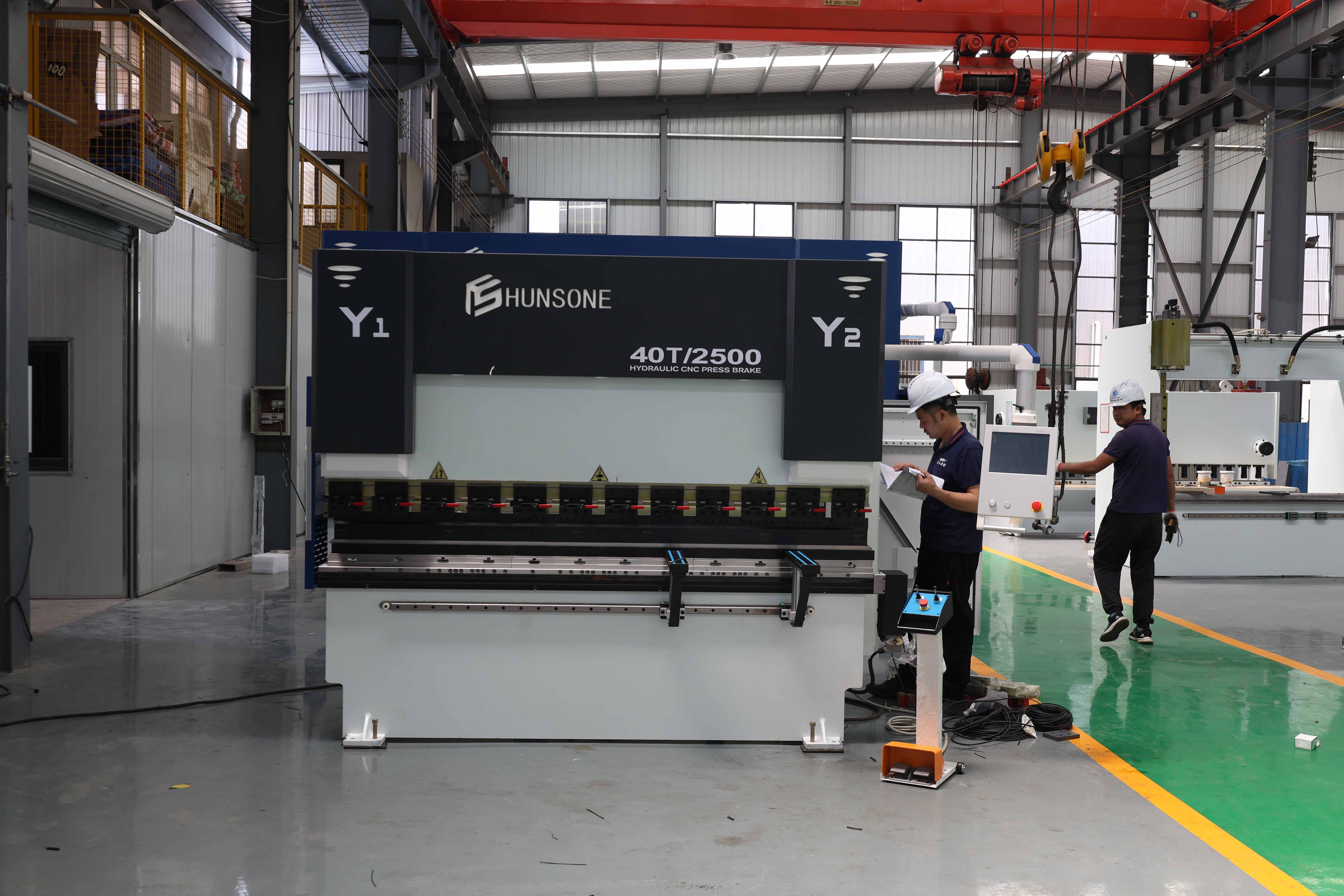
On the floor of a bustling fabrication shop in Guangzhou, a technician runs a test bend on a newly assembled press brake, then checks the angle with a digital protractor. The reading comes back within 0.2 degrees of the target—a tolerance that would have been unthinkable for many domestic machines a decade ago. This scene captures a quiet but significant shift: Chinese manufacturers are no longer content to compete on price alone. They are systematically narrowing the precision gap that once separated their press brakes from premium European and Japanese models, and they are doing it through a mix of smarter engineering, better components, and a stubborn focus on repeatability.
One of the most visible changes is the move away from simple hydraulic synchronization toward more advanced crowning systems and real-time angle measurement. Instead of relying on mechanical stops and operator intuition, builders are integrating CNC-controlled backgauges with finer resolution, servo-driven ram adjustments, and automatic compensation for deflection under load. This means the machine actively corrects for material springback and frame distortion during the bend, rather than expecting the operator to chase accuracy with shims and test pieces. The result is that a mid-range Chinese press brake today can often hold a bend angle consistency that rivals machines costing twice as much from established Western brands.
Another factor is the willingness to source critical hydraulic valves, encoders, and control systems from the same global suppliers used by high-end builders, while still assembling and calibrating the machines locally. This hybrid approach keeps costs manageable but removes many of the weak points that used to plague budget equipment—leaky manifolds, drifting zero points, and jerky ram movement. Combined with tighter machining tolerances on the frame and beam, plus more rigorous factory testing before shipment, the gap in day-to-day bending accuracy has become less about nationality and more about how well the machine is set up and maintained. For shops that need dependable parts without the premium price tag, the old assumption that Chinese press brakes are inherently imprecise is increasingly out of date.
Custom Press Brake Configurations Without Custom-Built Budgets
For years, getting a press brake tailored to a specific bending job meant either paying for a fully custom machine or settling for an off-the-shelf model that forced compromises. A third path now exists: manufacturers have built modular platforms where the bed length, tonnage, backgauge reach, and controller type can be mixed and matched from pre-engineered options. This approach gives you near-custom performance—like adding extra stroke or a specialized crowning system—without triggering the one-off engineering fees that usually come with bespoke equipment.
The real advantage shows up in the purchasing timeline and the total cost of ownership. Because the core frame and drive components are already in production or on the shelf, lead times often shrink from months to weeks compared to a true custom build. You still get meaningful choices, such as picking a light curtain package for high-mix work or selecting a larger throat depth for deep box bending, but the underlying structure remains standardized. That keeps spare parts affordable and service calls straightforward, since technicians aren't learning a unique machine's quirks on your shop floor.
Some suppliers now include real-time configuration tools that update pricing and footprint as you select options, removing the guesswork from what was once a lengthy back-and-forth with a sales engineer. You can see immediately whether adding a higher-speed ram or a more advanced CNC control pushes you over budget, and adjust accordingly. It's a pragmatic middle ground: the flexibility of a custom press brake without the premium, the extended wait, or the risk of buying a machine that's over-engineered for the work actually in front of you.
Why Press Brake Delivery Timelines Are Shorter Than You Think
Most people assume a press brake is a massive, one-off machine that takes half a year to build. The reality is quite different. Many builders now keep standard frames, beams, and crowning systems in stock, ready to be configured rather than fabricated from raw steel. That alone trims weeks off the schedule.
It also helps that assembly is done in parallel. Instead of putting the machine together step by step, hydraulic units, electrical cabinets, and back gauges are built and tested at the same time. When everything comes together on the final line, it’s more like a final fit than a full construction, which keeps things moving faster than old sequential methods.
Even custom features don’t slow things down as much as you’d expect. Common options like special tooling, laser guards, or extended tables are often pre-engineered modules that plug into an existing platform. You get a tailored press brake without the long wait tied to true bespoke engineering.
Quality Control Steps That Redefine the Word Cheap for Press Brakes
Every batch of steel plate gets checked for thickness and tensile strength before it reaches the cutting table. Instead of assuming the mill sent what was ordered, the receiving crew measures sample sheets at three points and rejects anything outside a 0.2 mm band. Laser-cut parts are then placed on a master fixture, and any edge gap larger than 0.15 mm means the piece goes back for rework, not forced into alignment with a hammer.
Once the frame is welded, it spends six hours in a vibration stress-relief rig before the mounting surfaces are skimmed on a CNC mill. That second machining pass is what keeps a low-cost press brake from slowly twisting out of square after a few months of heavy use. The goal is simple: spend a little extra time here so the machine holds its geometry long after the shipping crate is gone.
After final assembly, each press brake runs a full-tonnage dry cycle while dial indicators watch ram parallelism across the bed. The backgauge is then locked to a laser reference, and the controller's Y-axis compensation is tuned until a test bend repeats within ±0.01 mm. There is no secret material or premium component in this process, just a refusal to skip the checks that catch drift before it leaves the floor.
The Hidden After-Sales Network That Comes Standard with Press Brakes
When you buy a press brake, the machine itself is only half the story. The other half is the quiet, behind-the-scenes support structure that kicks in the moment your operator hits a snag. Most manufacturers don't advertise it, but a robust after-sales network is often bundled into the purchase price—think of it as the invisible warranty that keeps your bending operations running long after the installation crew has left.
This network typically includes remote diagnostics, a dedicated technical hotline staffed by engineers who know your specific model, and a regional parts depot that can ship a replacement valve or backgauge finger overnight. The best ones go further: they track your machine's service history proactively, flagging wear items before they fail and coordinating preventive maintenance visits during your slow seasons. It's not glamorous, but it's the reason two identical press brakes can have wildly different uptime records.
What separates a genuine support ecosystem from a bare-bones warranty is the human layer. The best after-sales teams keep detailed notes on your tooling preferences, your operator's skill level, and even the quirks of your shop's electrical supply. Call them at 2 a.m. with a hydraulic pressure fault, and they won't read you a script—they'll ask about the noise the pump was making last week. That kind of institutional memory doesn't come from a manual; it comes from treating every service ticket as part of a long-term relationship, not a one-off transaction.
FAQ
The cost difference is often the first thing buyers notice, but it's not just about a lower price. Many Chinese factories have invested heavily in automated production lines and in-house casting or welding, which brings down labor costs without cutting corners on structural rigidity. You also get standard features like CNC controllers from reputable brands, servo-driven axes, and hardened tooling included in the base package—items that would be expensive add-ons elsewhere. Over the last five years, the gap in build quality has narrowed significantly, so the savings no longer mean sacrificing long-term durability.
Instead of relying on manual adjustment, most mid-range and high-end Chinese press brakes now use closed-loop hydraulic systems with linear encoders on the Y1 and Y2 axes. This gives consistent bending angles even after thousands of cycles. Some factories also run laser interferometer calibration on every machine before crating, and they publish actual test reports rather than just theoretical specs. It's common to see repeatability figures around ±0.01 mm on the backgauge and ±0.5° on bend angle, which is comparable to machines costing twice as much.
Customization is actually one of the quiet strengths of the Chinese market. Many manufacturers will adjust bed length, throat depth, stroke, and even the control system to match your specific tooling or production layout. If you need a wider opening for tall parts, a special backgauge finger arrangement, or integration with a robot, the factory can usually accommodate that within a few weeks. The key is to work directly with a manufacturer that has its own engineering team rather than a trading company, because the latter often just resells off-the-shelf models.
After-sales support varies widely, so it pays to ask the right questions before signing. Reputable factories now offer remote video diagnostics, English-speaking service engineers, and spare parts shipped by air within 48 to 72 hours. Some even have local partner technicians in major markets like the US, Germany, or Australia. The honest answer is that you won't get the same on-site response time as a domestic dealer, but if you choose a manufacturer with a track record of exports and a well-documented maintenance schedule, the support can be very workable. Always confirm the warranty terms and whether they cover parts only or parts plus labor for the first year.
Yes, features like automatic crowning, servo-hydraulic hybrid drives, and real-time angle measurement have trickled down into Chinese machines at much lower price points. For example, many models now ship with a hydraulic crowning system that adjusts the bed deflection automatically based on the force required, which used to be a premium option. You also see user-friendly touchscreen interfaces with 3D simulation, offline programming software, and energy-saving standby modes. Some manufacturers even offer laser-based angle correction systems integrated into the control loop, so the machine self-adjusts after the first bend.
The phrase 'Chinese press brake' covers a huge range, from light sheet metal shops to heavy fabrication. For high-volume or thick plate work, you'll want to look at models with a welded monoblock frame, a larger bed, and a high-torque servo pump. Many factories now stress-relieve the frame after welding and machine the key surfaces on large CNC gantry mills, which improves rigidity and reduces spring-back variation. In practice, a well-specified Chinese press brake can comfortably bend 10 to 20 mm mild steel over a full 3-meter bed all day, provided you size the tonnage correctly and keep the hydraulic oil clean.
Good factories don't just assemble and crate. They typically run a no-load test for at least 8 hours, then perform bending tests on sample sheets using your actual tooling or standard V-dies. They measure bend angle consistency at multiple points along the bed, check backgauge positioning repeatability, and verify hydraulic pressure stability under load. Some will also do a full geometric inspection of the frame and ram alignment using a laser tracker. The test report is often included in the crate, and smart buyers ask for a video of the machine running before it ships.
Not as difficult as many people assume, but it requires some planning. Most standard parts—hydraulic seals, valves, filters, and CNC controllers—are from global brands like Bosch Rexroth, Sun Hydraulics, or Siemens, so you can often source them locally. For frame-specific parts like the backgauge ballscrew or custom manifolds, you'll need to order from the original manufacturer, which usually ships by express courier. The best approach is to buy a spare parts kit upfront, including seals, sensors, and a backup controller, and then establish a direct line to the factory's service department before any breakdown happens.
Conclusion
The usual assumption is that China's press brake pricing comes only from low wages, but the real drivers are far more structural. Dense supply chains put foundries, steel processors, and hydraulic component makers within a short drive of assembly plants, cutting inbound freight and inventory costs. At the same time, builders have systematically closed the precision gap by adopting European and Japanese CNC controls, laser interferometer calibration, and machined ram-and-bed surfaces. A machine leaving a reputable Chinese factory now often carries the same repeatability specifications as brands costing twice as much. Quality control has also shifted from spot checks to documented processes: each press brake goes through test bends, deflection measurement, and hydraulic pressure verification before crating. The word cheap no longer fits, because the value comes from sourcing efficiency and disciplined production rather than skipped steps.
Custom configurations are another quiet advantage. Instead of forcing buyers into rigid model lines, many Chinese manufacturers use modular frames, interchangeable backgauge systems, and selectable CNC packages, so a shop can specify bed length, crowning type, tooling, and safety features without paying custom-built engineering fees. Delivery timelines are shorter than expected because common tonnage and width combinations are pre-staged, while local component availability removes multi-month waits for hydraulic valves or controllers. After the sale, hidden support networks kick in: video-guided troubleshooting, regional service partners, and stocked parts depots in North America, Europe, and Southeast Asia often come standard with the machine. Training documentation is usually provided in English, and warranty response is handled through the same channels that sold the unit. Taken together, these factors make a Chinese press brake an operational asset with predictable costs, not just an inexpensive piece of iron.
Contact Us
Contact Person: James Chen
Email: [email protected]
Tel/WhatsApp: 86 13770803946
Website: https://www.hunsone.com/