

China Pull Rod Hard Case That Keeps Fragile Gear Protected During Transit
2026-11-28
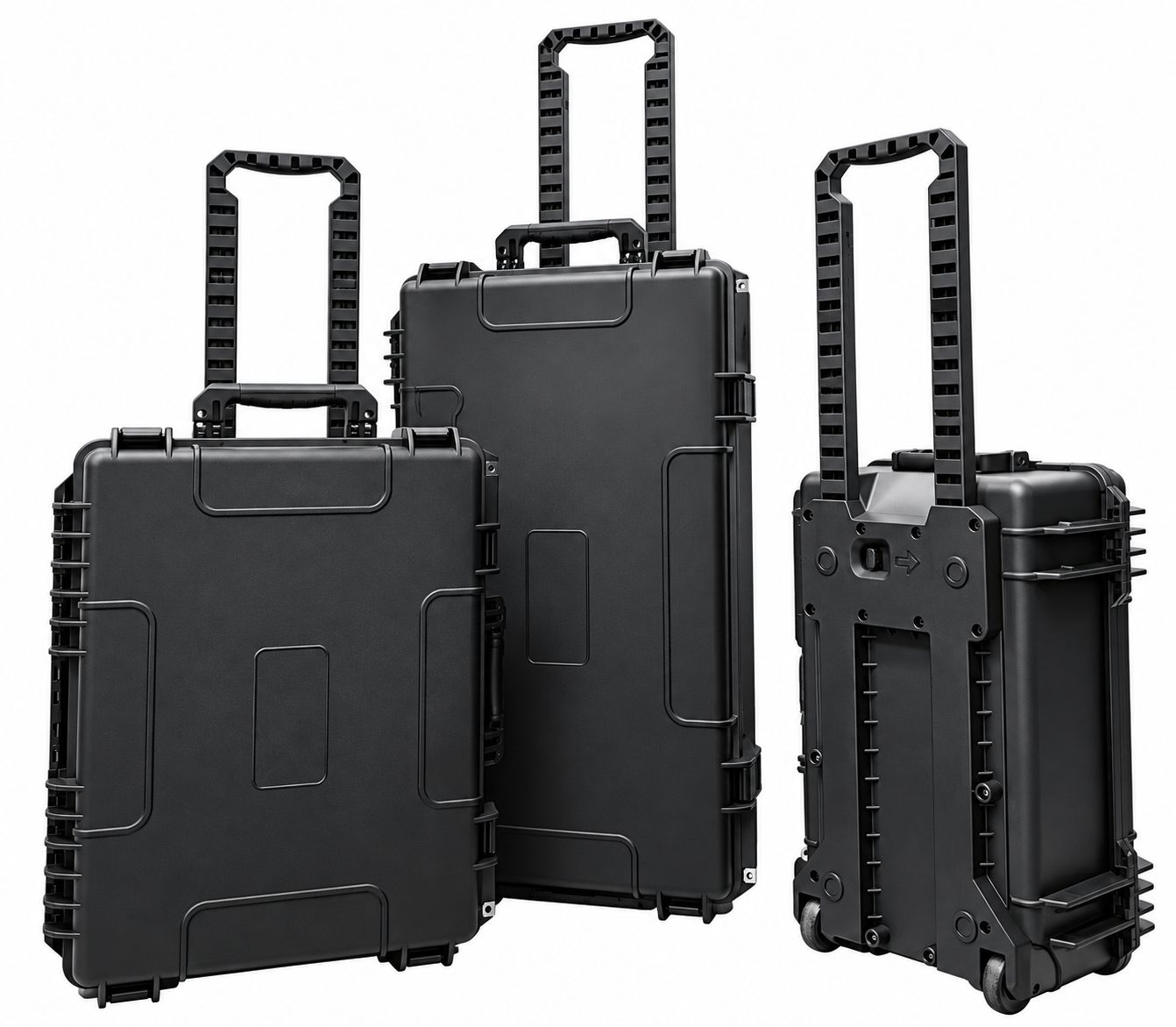
A China pull rod hard case only earns its place when fragile gear stays protected during transit—not just on paper, but after being tossed, stacked, and rolled across a loading dock. That’s the standard WEISHUO designs around, and it shows in details most cases overlook.
What a Hard Shell Actually Does When Baggage Handlers Get Busy
When the ramp gets busy, a hard shell case stops being a fashion statement and starts working like a disposable shield. Baggage handlers have seconds to move hundreds of bags, so cases get dropped onto conveyor belts, slid across metal guides, and stacked under a wall of other luggage. A polycarbonate or ABS shell takes those blunt hits and spreads the force across a wider area. Instead of a sharp impact tearing through fabric and reaching your stuff, the shell flexes just enough to absorb the energy, then pops back. The result is rarely pretty on the outside, but the contents usually survive without a scratch.
That rigidity also matters when bags are piled in the cargo hold. Soft bags flatten and pinch under weight, which can press fragile items together or bend frames. A hard shell holds its shape, so there is still space around your belongings even when another 30-pound suitcase lands on top of it. Scuffs, gouges and hairline cracks may appear on the shell over time, but that is the trade-off: the case sacrifices its own finish so that the things inside are not the ones absorbing the punishment.
A Foam Layout That Keeps Lenses and Sensors From Wandering
Inside the carrying case, every optical element gets its own carved pocket. The foam isn't just a soft filler; it's a shaped grid that holds each lens barrel and sensor module in a fixed orientation. Even if the case gets jostled or tipped over during transport, the components stay where they were placed. There's no slow drift toward the edges, no bumping against harder surfaces, and no chance of two precision surfaces scratching each other.
The layout was worked out from actual field use, where loose gear tends to migrate toward the lowest point. By cutting different depths for bodies, adapter rings, and smaller sensors, the foam creates a kind of static map. Each piece drops into its own slot with a slight press fit, not so tight that extraction becomes a fight, but firm enough to prevent rotation or sliding. This means you can open the case after a long drive or flight and find the arrangement exactly as you packed it.
Another detail that helps is the use of closed-cell foam in high-wear zones. It doesn't shed dust or break down into particles that could settle on sensor glass. The edges around each cavity are smoothed rather than sharply cut, so there's less chance of catching a cable or a lens ring. Over time, the foam keeps its shape instead of collapsing under the weight of heavier optics, so the original layout remains effective trip after trip.
The Handle-and-Wheel Combo Built for Gate Changes and Long Corridors
Gate changes rarely come with advance notice, so the last thing anyone needs is a bag that fights them in a crowded terminal. This design pairs a low-profile telescoping handle with two wide-set wheels that turn without dragging, letting you pivot mid-stride when the departure board sends you from B12 to A3. The handle height locks at three points, which keeps your elbow relaxed whether you are rolling it beside your hip or swinging around a tight corner.
Long concourses punish stiff casters and wobbly frames. Here the wheels sit slightly behind the shell rather than directly below it, a small shift that improves clearance over expansion joints and carpet seams while keeping the load centered when you move fast. The grip has a slight texture instead of a hard plastic edge, so your hand does not tire before the moving walkway ends.
For the trip back through immigration and baggage claim, the whole setup still has to work with one hand. The release button sits under the handle rather than on top, which reduces accidental drops, and the wheels stay smooth even after curbs and cobblestones enter the picture. It is not flashy hardware, but it is the reason the bag rolls instead of tugging at your shoulder.
How Latches, Gaskets, and Corner Bumpers Keep the Outside Out
A cabinet that looks closed can still breathe. Latches do more than keep the door from swinging open; they set the squeeze on the gasket. Even a small gap near a hinge or corner lets moisture and dust slip in, so a well-made latch spreads its clamping force instead of pinching only one side. That even pressure matters more than how hard the latch snaps shut.
Gaskets only work when they are pressed just enough. Closed-cell foam and molded rubber behave differently, and if the compression is too light, water finds the low spots; too heavy and the material takes a permanent set, leaving a channel for air later. Keeping that balance means the seal stays springy rather than becoming a flattened strip that only looks like a barrier.
Corner bumpers tend to get mistaken for simple edge protection, but their real job is alignment under impact. When an enclosure is knocked, the frame can twist enough to open a hairline seam where the door meets the body. A bumper absorbs that hit before the structure flexes, so the latch tension and gasket compression stay where they were set. Without that, the outside finds its way in through the smallest change in geometry.
Choosing the Right Interior for Camera Kits, Mics, and Test Tools
A rigid shell means little if the inside turns every bump into a direct hit. For camera bodies and lenses, look for a layout that lets dense closed-cell foam take the shape of each item rather than relying on loose dividers that shift after a week in the field. The cutouts should hold gear slightly below the lid line so nothing rubs when the case is closed, with enough depth for a mounted lens or a cage without forcing the zipper or latch.
Mics and small test tools need a different approach. Shotgun capsules and lavalier connectors survive best in a compartment where they are not stacked under heavier gear, while multimeters and cable testers are easier to grab when the interior uses angled pockets or shallow trays instead of one deep bucket. If the same case carries both audio and measurement tools, pick an insert with a firm lower tier and a soft mesh sleeve in the lid for adapters, batteries, and short XLR jumpers.
Interior fabric matters just as much as structure. Nylon lining can catch on foam edges over time, while a tighter weave or poly-faced insert resists snags and wipes clean after outdoor use. For anything that spends hours in a hot vehicle, avoid adhesives that soften and leave residue on cables or rubber grips; sewn or laser-cut panels tend to stay intact longer.
The Unpacking Moment and Why the Fragile Stuff Still Works
The box comes off the truck with one corner already soft from rubbing against a table leg. Cutting the tape feels like opening a small, dusty argument between what should have survived and what actually did. Inside, a glass pitcher sits wrapped in a dish towel, a chip missing from the rim but the handle still firm. The surprise is not that something broke. The surprise is how much did not.
Most of the fragile stuff made it because somebody packed it with a kind of stubborn optimism. Mugs got nested inside bowls. Plates stood on their edges instead of stacked flat. Old newspaper got stuffed into gaps until nothing moved when the box was shaken. That looseness, the small amount of give around each object, is probably the whole trick. It lets the fragile things absorb the ride instead of fighting it.
There is a small relief in seeing glass and ceramic come out whole after a move. It suggests that being breakable is not the same as being doomed. The things that matter often travel badly, wrapped in whatever was nearby, and still arrive in one piece. Maybe that is why the unpacking moment holds attention: it is a brief proof that care, even the imperfect kind, still works.
FAQ
The shell has a ribbed, impact-resistant body with reinforced corners, so knocks during loading don't transfer straight through to the contents. Inside, the foam can be shaped around each piece of equipment, which keeps things from shifting when the case is tipped or stacked.
The telescoping handle is aluminum and locks at two heights. Even with a heavy load it doesn't wobble much, and the base plate spreads the pull force instead of letting it twist the shell.
Yes. The pick-and-pluck foam can be removed in sections, or you can switch to padded dividers. That works well for irregular items like cameras, microphones, or field instruments that need a snug fit.
There is a rubber gasket running around the lid edge. It keeps out dust and light rain, though the case is not meant for full submersion.
The wheels are wide and made from a soft polyurethane compound. They roll over curbs, gravel, and uneven warehouse floors without sticking, and they don't make much noise inside buildings.
The latches close in two stages and hold tight once pressed down. They will not pop open from vibration or an impact, and the tabs have holes for small padlocks.
There are standard sizes from a compact carry-on box up to larger cases for lighting or audio gear. Custom dimensions and foam cutting are also possible for equipment that doesn't fit standard layouts.
Conclusion
A rigid outer shell isn't just a cosmetic upgrade—it spreads impact force across the frame when a case tumbles off a conveyor or gets wedged under heavier luggage. Instead of letting a corner take the full hit, the shell transfers that energy outward while the lid stays clamped, so a dropped bag doesn't turn into a cracked monitor or a bent mount. Inside, the foam does quieter work: cutouts keep each lens, wireless transmitter, and camera body in its own pocket, preventing metal-to-glass contact during sudden stops. That matters more than people expect, because loose gear in a padded bag can still drift toward the zipper and bang against harder items. The pull rod and wheels are equally deliberate. Long airport corridors and last-minute gate changes stop being a strain when the case rolls behind you without twisting your wrist, and the handle height keeps the weight balanced instead of dragging one shoulder down.
Closures and seals are the parts most people ignore until a ramp gets hit by rain or dust. Latches that snap with firm resistance, gaskets that seat evenly around the rim, and corner bumpers that absorb knocks all keep moisture, grit, and pressure changes from reaching the interior. For mixed kits—camera bodies, shotgun mics, calibration tools—the right interior often means a mix of diced foam for small accessories and a fitted top layer that stops taller items from shifting when the case is stood upright. That configuration also makes the unpacking moment calmer: open the lid and every item is still where you packed it, with no crushed foam dust in ports and no cracked filter threads. The real test isn't a spec sheet; it's arriving after a rough connection, opening the case, and finding that the gear powers on without a reset, re-seat, or apology.
Contact Us
Contact Person: Logious
Email: [email protected]
Tel/WhatsApp: +86 15867373883
Website: https://www.vsocase.com/