

China Strong Magnet Essential Guide for Engineers and Manufacturers
2026-09-14
Strong magnets are the silent workhorses behind countless industrial breakthroughs, yet sourcing the right one from China often feels like navigating a maze of inconsistent specs and exaggerated claims. This guide cuts through that noise for engineers and manufacturers who need reliable magnetic solutions—not marketing fluff. Whether you're spec'ing a custom assembly or troubleshooting a production line, understanding material grades, coating durability, and supplier accountability is what separates a good design from a great one. That's where DAWA comes in: a partner that treats magnet sourcing as an engineering discipline, not a commodity gamble. Ready to see what your specifications are truly capable of?
Neodymium Grade Hacks Engineers Often Overlook
Engineers often fixate on the N-number stamped on a magnet—N52, N48, whatever the datasheet brags about—without checking the operating temperature first. A plain N52 can lose a noticeable chunk of its flux density once the assembly runs past 60°C, and by 80°C you might be better off with a lower nominal grade that has a higher coercivity suffix. The letters after the number (M, H, SH, UH, EH) aren't just marketing; they dictate how well the magnet resists demagnetization at elevated temperatures. Grabbing an N42SH instead of an N52 for a hot motor housing isn't a downgrade—it's the difference between a rotor that holds its field and one that quietly fades after a few hundred cycles.
Plating and geometry get overlooked just as often. The nickel-copper-nickel coating spec'd on a drawing adds a few microns to each face, which sounds trivial until you're trying to maintain a tight air gap in a sensor or a voice coil. Those microns eat into the gap and reduce the effective field more than most back-of-the-envelope calculations assume. Similarly, the shape of the magnet changes its permeance coefficient, which determines how close to the knee of the demagnetization curve you're actually operating. A thin, wide magnet in an open circuit might look fine on paper with a high-grade material, but under a reverse field it can drop below the knee and partially demagnetize. Sometimes a thicker, lower-grade magnet or a small steel return path does more for real-world performance than chasing a bigger BHmax number.
From a sourcing standpoint, speculating on exotic grades like N52 or N55 often backfires. These are produced in smaller batches, carry a price premium, and can have longer lead times, especially in custom shapes. Meanwhile, a slightly lower grade like N48 with a well-designed magnetic circuit—using a back iron, optimizing pole geometry, or adjusting the air gap—frequently matches or beats the raw performance of an N52 in a sloppy housing. It's also worth revisiting the temperature coefficients: a motor that runs cold at startup but hot under load will see its Br and Hcj shift, and if you sized your design around a room-temperature datasheet, you're leaving performance on the table or risking partial demagnetization in the field. Matching the grade suffix to the actual thermal envelope, not the ideal one, is the kind of detail that separates a prototype that demos well from a product that survives a warranty period.
Coating Choices That Survive Corrosive Environments
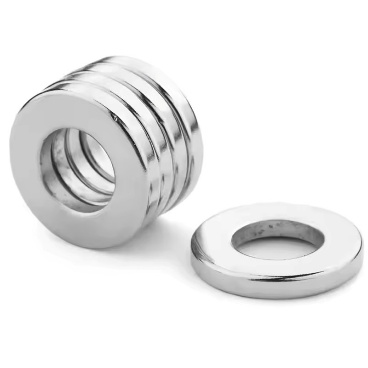
Corrosive environments don't just eat away at metal—they test every assumption you've made about surface protection. While standard epoxies and alkyds might hold up in mild conditions, harsh chemical exposure, salt spray, or acidic fumes demand coatings engineered with a different mindset. Think about the failure points first: at edges, welds, and fasteners, where film thickness tends to thin out and corrosion sneaks in. A smart choice isn't just the resin type, but how the coating system is built up in layers, each with a specific job, from zinc-rich primers that sacrifice themselves to protect the steel, to dense topcoats that block moisture and oxygen.
Polyurethane and fluoropolymer finishes often top the list for chemical resistance and color retention, especially where UV light also plays a role. But don't overlook inorganic zinc silicates—these almost become part of the steel itself, offering decades of service in marine or industrial atmospheres. For immersion conditions or aggressive acid tanks, vinyl esters and certain novolac epoxies outperform standard bisphenol-A epoxies by a wide margin. The key is matching the coating's chemical backbone to the specific corrosive agents present, not just choosing the most expensive option on the shelf.
Surface preparation remains the silent partner in any successful coating choice. Even the most advanced fluoropolymer will fail quickly if applied over rust, mill scale, or oil. Specifying a near-white blast cleaning (SSPC-SP 10 or equivalent) and maintaining the right ambient conditions during application can double or triple the lifespan of the system. Finally, consider maintenance realities: some coatings are easy to touch up in the field, while others demand complete removal and reapplication. The best choice isn't just what survives the environment—it's what survives the maintenance schedule too.
Designing Against Demagnetization: What Spec Sheets Hide
Permanent magnets quietly lose strength under conditions that rarely appear in datasheets. A motor rated for 150°C may suffer irreversible flux loss at just 80°C if the magnet’s knee point sits too close to the operating slope. Load lines, recoil permeability, and temperature coefficients get buried in fine print, leaving designers guessing until field failures surface.
The real threat often hides in transient events. Inrush currents, sudden short circuits, or regenerative braking can push the operating point far below the knee, creating localized demagnetization that accumulates with each cycle. Spec sheets rarely show how the magnet behaves at −40°C cold start or after 10,000 hard stops. Without this data, a “high-energy” grade can become a liability in traction or servo applications.
Smart designers test actual magnets in worst-case thermal and electrical corners, not just nominal curves. They look for vendor data on irreversible loss after temperature cycling, partial demagnetization recovery, and how the magnet handles opposing fields from stator slots. The difference between a robust design and a warranty nightmare often comes down to what wasn’t printed on page three.
Tolerance Stack-Ups That Make or Break Magnetic Assemblies
When magnets, pole pieces, and housings stack up, tiny tolerance choices decide whether the field aligns or falls apart. A few microns too much on a keeper plate can shift the air gap enough to kill holding force. Designers who ignore this see prototypes that pass inspection but fail in the field—because the cumulative error only shows up under real assembly conditions, not on a single-part drawing.
The silent killer is often the radial fit between a magnet and its pocket. If the bore is oversized to ease pressing, the magnet can sit off-center enough to create a lopsided flux path. That lopsided field might still meet a basic pull test, but it will cause inconsistent latching or premature wear in moving parts. A better approach is to treat the magnet's position as a functional datum, not just a clearance fit.
Finally, thermal expansion stack-ups sneak in when different materials are bonded. Aluminum carriers grow more than the magnet, opening gaps at high temperature and shifting the working point. A tolerance loop that only accounts for room-temperature dimensions will under-design the assembly. The fix is to map the full temperature range and give the stack-up room to breathe without losing magnetic contact.
Pull Force Realities: Why Air Gaps Change Everything
Most pull force charts assume two perfectly flat, clean surfaces making intimate contact. Real magnets never see that. A fingerprint, a layer of paint, machining marks, or even trapped air creates a tiny separation, and that gap behaves like a high-resistance barrier in the magnetic circuit. The result is not a minor correction; it's a dominant variable that can turn a seemingly safe design into an underperforming failure.
The mechanism is straightforward but often underestimated. Air has roughly a thousand times the magnetic reluctance of steel, so even a tenth of a millimetre of air forces flux to work much harder to complete the loop. Instead of travelling straight through the mating surface, field lines bulge outward, leakage increases, and the effective flux density at the contact area drops sharply. Depending on magnet geometry and material grade, a 0.3 mm gap can easily erase one-third of the expected pull force, and larger gaps can collapse it entirely.
This is why two magnets from the same batch can behave differently on different assemblies. Surface flatness, plating thickness, clamping torque, thermal expansion, and trapped debris all shift the air gap in ways that are hard to see but easy to measure in terms of lost holding power. Rather than treating the gap as an afterthought, it has to be part of the initial calculation. Otherwise, designs built on ideal-contact numbers will quietly fail in the field, long after the prototype stage.
Sourcing China Magnets Without the Quality Lottery
Most sourcing failures with Chinese magnet suppliers don’t start with obvious defects. They start with a sample that passes every test, followed by a production run where coercivity drifts, plating flakes after six weeks, or dimensional tolerance widens just enough to kill assembly yield. If you only compare spec sheets and price, you’re not vetting a supplier—you’re buying a raffle ticket. Ask for the actual sintering batch records and the in-line magnetic test data for the exact grade you’re ordering, not a generic N52 datasheet.
A better approach is to make rejection criteria part of the purchase order before the first article ships. Specify pull force or surface gauss limits, salt spray hours for the coating, and a maximum acceptable dimensional Cpk. Then send a third-party inspector to pull samples from the middle of the production run, not from the hand-picked approval box. The factories that welcome this kind of scrutiny tend to be the ones whose plating line is already under statistical control and whose magnetizer operator isn’t guessing at the capacitor settings.
FAQ
Check whether the factory can provide a full inspection report for the specific grade and coating you intend to buy, not just a generic datasheet. Ask for batch-level test data on remanence, coercivity, and maximum energy product, and compare it against your own incoming inspection results for at least three sample lots.
The letter suffix shows the maximum operating temperature and intrinsic coercivity range. For example, N35 is standard up to about 80°C, while N42SH can handle 150°C. The number before the letter is the maximum energy product in MGOe. Don't rely on the number alone; a N50 without a suffix will lose strength quickly if your application runs warm.
Many buyers default to nickel-copper-nickel because it's cheap, but microscopic pinholes often lead to rust under high humidity. If the magnet will see condensation, specify epoxy or a multi-layer Ni-Cu-Ni plus epoxy topcoat. Also confirm the coating thickness and adhesion test method before production, otherwise you'll see peeling at edges within weeks.
Request a material certificate with actual measured values for Br, Hcb, Hcj, and BHmax for each production lot, plus a coating thickness report and a pull-force test report on the specific geometry. A generic certificate of conformance doesn't prove anything; insist on traceable lot numbers that match the carton labels.
Agree on a formal quality clause that ties payment release to incoming inspection results, not just visual acceptance. Retain the right to send random samples from the bulk shipment to a third-party lab for magnetic property testing. Also schedule an unannounced video audit of the production line before the first large order ships.
Sintered gives you much higher energy density and is better for compact motors or sensors where space is tight. Bonded is cheaper to mold into complex shapes and often has tighter dimensional control without grinding, but you sacrifice a lot of magnetic output. If your design can tolerate a larger volume, bonded might cut cost, but sintered remains the default for high-performance needs.
Separate the magnet dimensions from the housing or carrier dimensions on the drawing, and use the ISO 2768 medium tolerance for non-critical surfaces. For press-fit or adhesive gaps, specify the adhesive thickness range directly rather than just the bore size. Avoid over-tolerancing the magnet itself because grinding costs rise sharply below ±0.05 mm.
Sea freight containers can reach 60°C or more inside, which can partially demagnetize low-coercivity grades like N35 if they're packed tightly without shielding. Also, strong magnets shipped by air must comply with magnetic field limits at the package surface, so request degaussed or shielded packaging if needed. Store them away from ferrous tools and keep humidity below 60% to prevent coating degradation.
Conclusion
Engineers often treat neodymium grades as interchangeable, but the real-world gap between an N35 and an N52—or more critically, between a standard N42 and a high-coercivity N42SH—can decide whether a motor survives prolonged heat or quietly loses torque. Coatings follow the same pattern: a single nickel layer might look fine on a bench but fails within weeks in salt spray, whereas a properly sealed epoxy or multi-layer Ni-Cu-Ni with passivation extends service life by years. Spec sheets hide more than they reveal about demagnetization. They rarely mention how sharp corners, thin cross-sections, or localized eddy currents create weak points that leak flux under thermal cycling, long before any catastrophic failure shows up on a test report.
Mechanical tolerance accumulation is just as unforgiving. A few microns of plating variation across mating surfaces changes the effective air gap, and because pull force falls off roughly with the square of distance, a design that looked robust in CAD can become marginal on the assembly line. This is where sourcing becomes the make-or-break factor. Chinese magnet suppliers range from backyard workshops to fully automated lines, and vague grade claims or missing documentation turn procurement into a lottery. The successful approach is verification: checking coercivity with a hysteresisgraph, measuring coating thickness under a microscope, and locking down dimensional consistency through repeated batch audits. Engineers who treat supplier qualification as an engineering task, not a purchasing formality, get magnets that behave as designed.
Contact Us
Contact Person: Kelvin Lo
Email: [email protected]
Tel/WhatsApp: 0769-88561131
Website: https://dawamagnetic.com/