

Coal-Based Activated Carbon Company: Mastering Purification with Superior Adsorption Solutions
2026-08-01
Purification challenges demand more than just basic filtration—they require precision-engineered solutions that tackle contaminants at the molecular level. For industries ranging from water treatment to air purification, coal-based activated carbon stands out as a powerhouse, offering unmatched adsorption capabilities. Yet, not all carbon is created equal. Discovering the right partner can transform complex purification hurdles into seamless processes. At Tundrr, we don’t just supply activated carbon; we craft tailored adsorption strategies that redefine what purity means for your operations. Dive into the science and innovation behind our coal-based solutions and see how we’re setting new industry benchmarks—one perfectly purified stream at a time.
Precision Porosity: Engineering Carbon for Targeted Contaminant Removal
Tuning pore architecture in activated carbon isn't just about surface area—it's about matching cavity dimensions to specific molecular invaders. By manipulating precursor chemistry and activation conditions, we craft ultramicropores that snatch low-molecular-weight pollutants while wider mesopores become highways for larger organic molecules. This deliberate asymmetry ensures that every angstrom of internal volume works against a predefined threat, not just anything that drifts by.
The magic lies in leaving behind the one-size-fits-most mentality. Instead of relying on generic steam activation, we deploy templated synthesis and post-synthetic etching to carve out tailored sorption niches. Think of it as molecular-scale sculpture: removing carbon atoms where they aren't needed to create traps perfectly sized for pharmaceuticals, pesticides, or endocrine disruptors. The result is a material that ignores benign background species and hunts the contaminants that actually matter in a given water matrix.
Beyond static pore networks, dynamic surface chemistry amplifies this selectivity. By grafting functional groups at the entrances to these engineered voids, we create gated channels that open only under specific pH or ionic strength conditions. This responsive behavior transforms a passive filter into an active separation medium, capable of distinguishing between closely related compounds based on their environmental footprint rather than just size. It's precision engineering that finally gives carbon a memory for the molecules we want removed.
From Raw Material to Finished Product: The Vertical Integration Edge
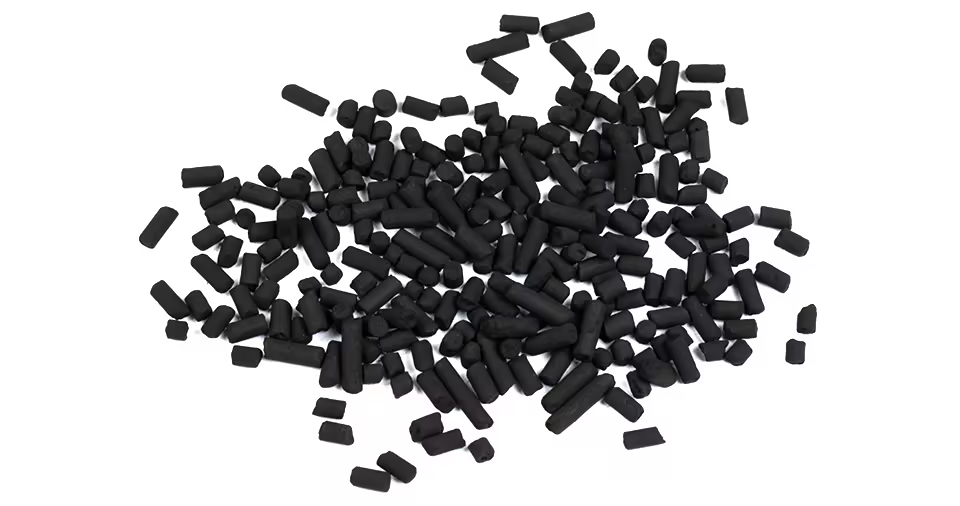
Mastery over every stage of production isn’t just an operational choice—it’s a strategic advantage that redefines what’s possible. When a single entity oversees the journey from raw material extraction to the final packaged good, the usual friction between suppliers, manufacturers, and distributors disappears. This seamless chain allows for real-time adjustments, tighter quality control, and a deeper understanding of cost drivers, creating products that are not only consistent but often impossible for fragmented competitors to replicate. The result is a coherent system where innovation can flow both upstream and downstream without the typical barriers of contractual negotiation or information lag.
Vertical integration also transforms how businesses respond to market shifts. Instead of waiting for a supplier to ramp up or a distributor to clear a bottleneck, an integrated operation can reallocate resources internally, often in hours rather than weeks. This agility extends to sustainability efforts: direct control over raw material sourcing means ethical and environmental standards can be enforced with precision, not trust. It’s the difference between hoping a partner follows through and having the authority to make it happen. Over time, this self-reliance builds a reservoir of institutional knowledge that external partnerships rarely provide, turning every product into a cumulative refinement of the one before it.
Perhaps the most underrated edge lies in the economics of iteration. When R&D, prototyping, and full-scale production share the same ecosystem, the feedback loop tightens dramatically. Flaws caught during manufacturing can be traced back to material composition within the same day, and improvements tested on the line become learnings for the next design cycle. This compressed learning curve lowers the true cost of innovation, making it feasible to attempt ambitious projects that would otherwise be too risky in a disintegrated supply chain. Customers may only see the final product, but they sense the difference—a cohesion and purpose that comes from every piece being shaped by the same set of hands, from origin to end.
Beyond Basic Filtration: Unlocking Multi-Layer Adsorption Dynamics
Filtration often gets reduced to a simple physical barrier—particles too big to pass get caught, and that's the end of the story. But dig a little deeper and you'll find a far more intricate world, where molecules don't just get trapped; they cling, they migrate, and they rearrange themselves across different layers of the filter medium. This is the realm of multi-layer adsorption dynamics, and it pushes the performance of filtration systems well beyond the basics.
In a multi-layer setup, each stratum of material brings its own chemistry and pore architecture to the table. The outermost layer might snatch up larger contaminants through mechanical sieving, but it also starts a cascade of weaker interactions—van der Waals forces, electrostatic attractions—that prime the surface for what comes next. Deeper layers, often engineered with tailored functional groups or a specific charge distribution, then take over, grabbing hold of the remaining trace compounds through stronger, more selective binding. The real magic happens as these layers work in sequence, turning a simple filter into a dynamic capture-and-release engine that adapts to the fluid's changing composition as it percolates through.
What truly sets this apart is the temporal dimension. Adsorption isn't a one-shot deal; molecules constantly hop between surface sites, diffuse into nanopores, and sometimes even nudge aside previously adsorbed species in a slow, competitive dance. Understanding these kinetics lets us design filters that don't just fill up and fail, but actually self-optimize during operation—shifting the load to fresh zones and extending usable life far beyond conventional expectations. It's less about building a wall and more about choreographing an intricate molecular ballet.
Custom Reactivation Cycles: Extending Carbon Life and Performance
Activated carbon doesn't have to be a single-use resource. By tailoring the reactivation process to the specific contaminants loaded onto the carbon, we can recover more of its adsorptive capacity. This isn't a one-size-fits-all furnace run; it involves adjusting temperature, residence time, and atmosphere based on the carbon's service history. The result is carbon that performs closer to virgin material, cycle after cycle.
Standard reactivation often leaves behind a fraction of stubborn adsorbates, gradually eroding performance. Custom cycles change that. For instance, carbon used in pharmaceutical purification might need a lower-temperature, longer-duration reactivation to gently desorb heat-sensitive residues without damaging the pore structure. In contrast, carbon from petrochemical streams often benefits from higher temperatures and steam activation to clear heavy hydrocarbons. This precision keeps the carbon in service longer and reduces the need for frequent top-ups of fresh material.
The real-world payoff goes beyond extended life. Plants see more consistent effluent quality because the reactivated carbon behaves more predictably. There's also a drop in overall operating costs—less fresh carbon purchasing, lower disposal fees, and fewer changeout interruptions. When reactivation is treated as a managed cycle instead of a routine regeneration, carbon becomes a long-term asset rather than a consumable.
Responsible Resource Management: Our Commitment to Sustainable Production
We believe that every resource matters. From raw materials to energy and water, we scrutinize every input to ensure it is used efficiently and with minimal waste. Our production processes are continuously refined through lean manufacturing principles, which help us eliminate unnecessary steps and reduce material loss. By investing in state-of-the-art technology and real-time monitoring systems, we can pinpoint areas where resources are being overused and immediately implement corrective measures. This not only lowers our environmental footprint but also creates a more resilient and cost-effective operation, ultimately benefiting both our customers and the planet.
Circularity is at the heart of our design philosophy. We prioritize materials that can be recycled, repurposed, or safely returned to nature at the end of a product's life. Our engineering teams collaborate with suppliers to develop closed-loop systems where waste from one process becomes the feedstock for another. For instance, production scraps are collected, reprocessed, and fed back into manufacturing, significantly reducing our reliance on virgin resources. We also design packaging with minimalism in mind, using materials with high post-consumer recycled content and ensuring that every box, filler, and label is easily recyclable. It’s about rethinking waste not as an endpoint but as a resource out of place.
Behind every product lies a commitment to responsible sourcing and ethical stewardship. We partner exclusively with suppliers who share our dedication to environmental protection and fair labor practices. Our supply chain is regularly audited to ensure that forests, water sources, and mineral reserves are not exploited, and that local communities are respected. Through initiatives like regenerative agriculture and certified sustainable forestry, we aim to give back more than we take. It’s a continuous journey, and we openly share our progress and challenges because trust is built on transparency. Our goal is simple: to create products that people love, without compromising the well-being of future generations.
Collaborative Purification Strategies: Co-Designing Solutions with Clients
真正有效的纯化方案从来不是实验室里的孤独作业。我们坚持与客户并肩工作,因为没有人比他们更了解样品的细微特性。从最初的问题定义到最终工艺定型,每一个决策点都经过双向对话,确保技术路径与现实需求精准咬合。
共同设计意味着透明共享数据、工具和思考过程。我们邀请客户深入参与纯化步骤的调试,将他们的领域经验与我们的技术专长融合。这种深度交织不仅加速了问题诊断,更常常催生出教科书上没有的创新解法。
协作的成果体现在持续优化的流程中。一次成功的纯化只是起点,我们与客户共同建立的反馈机制,让每一次运行都成为下一次提升的基石。这种动态演进的能力,让解决方案超越了单次交付,成长为适应未来变化的活系统。
FAQ
Its high surface area and well-developed pore structure allow it to trap a wide range of contaminants, from organic compounds to heavy metals, making it extremely versatile. Our carbon is engineered to provide rapid kinetics and high adsorption capacity, which means faster purification cycles and longer service life compared to generic alternatives.
We control every stage, from sourcing premium bituminous coal to final activation, using real-time process analytics and rigorous batch testing. Our in-house labs run adsorption isotherms and particle size analyses on each lot, and we maintain strict ISO-certified protocols so that performance never deviates, regardless of order size.
Water treatment plants, air purification manufacturers, and chemical processors are our primary clients, but we also tailor solutions for pharmaceuticals, food and beverage, and gold recovery. Each sector has unique purity requirements, and our application specialists adapt the carbon’s porosity and surface chemistry accordingly.
It begins with a detailed analysis of your feedstock or waste stream. We then select a base carbon and fine-tune it through controlled activation, impregnation, or thermal treatment to target molecules like VOCs, chloramines, or mercury. Pilot-scale testing validates the custom medium before full-scale delivery, ensuring the solution matches your exact operation.
We’ve integrated continuous-feed activation technology and advanced binder formulations that enhance mechanical strength without sacrificing pore volume. This yields a low-dust, high-hardness carbon that withstands pressure drops in packed beds. Additionally, our reactivation service extends carbon life, reducing total cost of ownership for clients.
Our R&D closely monitors regulatory shifts, so we proactively develop carbons that meet stricter discharge limits for substances like PFAS, disinfection byproducts, and mercury. For example, our latest grade achieves sub-ppt removal for long-chain PFAS, helping operators stay ahead of mandates without major retrofit expenses.
A municipal water utility struggled with seasonal algae blooms causing taste and odor issues, plus trace pesticides. Our tailored blend of microporous coal-based carbon and catalytic carbon completely eliminated the off-flavors and reliably reduced MCPA to below detection, using their existing rapid gravity filters with minimal downtime.
We provide on-site technical audits, column sizing models, and installation guidance. If needed, our engineers conduct pilot trials to optimize empty bed contact time and backwash rates. After start-up, we monitor performance through periodic spent-carbon analysis and offer reactivation or replacement scheduling to keep systems at peak efficiency.
Conclusion
Harnessing the inherent porosity of coal, we engineer activated carbon with tailored pore structures—micropores, mesopores, and macropores—to precisely capture target contaminants, from trace organic compounds to heavy metals. Our vertical integration gives us full control over the entire value chain, starting with carefully selected raw coal that undergoes controlled carbonization and activation. This ensures every batch meets rigorous specifications and delivers consistent, high-performance adsorption. Going beyond conventional filtration, we leverage multi-layer adsorption dynamics, where physisorption and chemisorption work in tandem across the carbon’s internal surface, effectively removing complex pollutant mixtures in a single pass.
Recognizing that regeneration is key to operational efficiency, we design custom reactivation cycles—thermal, steam, or chemical—that restore up to 95% of the original adsorption capacity without compromising structural integrity. This significantly prolongs carbon service life and slashes disposal costs. Our commitment to sustainable production is embedded throughout: we utilize energy-efficient kilns, recover and reuse process heat, and implement closed-loop water systems. Beyond selling a product, we act as a purification partner, collaborating with clients to develop bespoke solutions. Through pilot trials and performance modeling, we optimize filter design, contact time, and carbon selection, delivering systems that achieve regulatory compliance and operational excellence while advancing circular economy principles.
Contact Us
Contact Person: Ellen Zhang
Email: [email protected]
Tel/WhatsApp: +86(21) 2287 6756
Website: https://www.tundrr.com/en/