

Coal-Based Powdered Activated Carbon Manufacturing: Advancing Purification Solutions Across Industries
2026-07-19
Purification challenges are evolving fast—from tightening water regulations to the demand for cleaner air and more efficient industrial processes. At the heart of these solutions lies a material often overlooked: coal-based powdered activated carbon. But not all carbon is created equal. Enter Tundrr, redefining manufacturing precision to deliver high-performance adsorbents that don't just meet standards—they set them. In this post, we peel back the layers on how advanced production methods are unlocking new possibilities across water treatment, air purification, and beyond. If you think you know activated carbon, think again.
Unlocking Coal’s Hidden Architecture for Superior Adsorption
Coal is far more than a fuel; buried within its carbon-rich matrix is an intricate labyrinth of micropores, mesopores, and macropores that collectively create an immense internal surface area — often exceeding hundreds of square meters per gram. These voids, shaped over millennia by geological pressure and temperature, act like a natural molecular sponge. Yet in raw coal, many of these channels remain blocked by mineral matter and tars, dulling its true adsorptive potential. Carefully unlocking this architecture — through physical or chemical activation — blows open the clogged passages, exposing a network that rivals engineered porous carbons in its ability to trap pollutants, gases, and even metal ions from water.
The secret to coal’s superior adsorption lies not just in the size of its pores, but in the chemical personalities stamped onto its internal surfaces. Oxygen-containing groups such as carboxyl, hydroxyl, and carbonyl naturally decorate the pore walls, offering sites for hydrogen bonding, ion exchange, and π–π interactions with organic molecules. By tuning the activation conditions — steam, CO₂, or mild chemical treatment — one can amplify these functional groups or introduce new ones, essentially tailoring the internal landscape to grab specific contaminants. A carefully modified coal sorbent can pull ammonia from air with the same eagerness as it strips dyes from wastewater, all because the hidden surface chemistry is brought into full play.
What makes this rediscovery compelling is its blend of performance and practicality. Unlike synthetic sorbents that demand precise, energy-intensive manufacturing, coal-based adsorbents leverage a starting material that is abundant and, when viewed through the lens of pollution mitigation, in need of a cleaner purpose. The very imperfections in coal’s structure — its heteroatoms, its irregular pore mouths — become assets rather than flaws. By peeling back its unassuming exterior, we find a material that can be engineered at low cost to outperform commercial activated carbons in niche applications, offering a pragmatic bridge between resource extraction and environmental remediation.
The Precision Pyrolysis Process: Where Temperature Dictates Performance
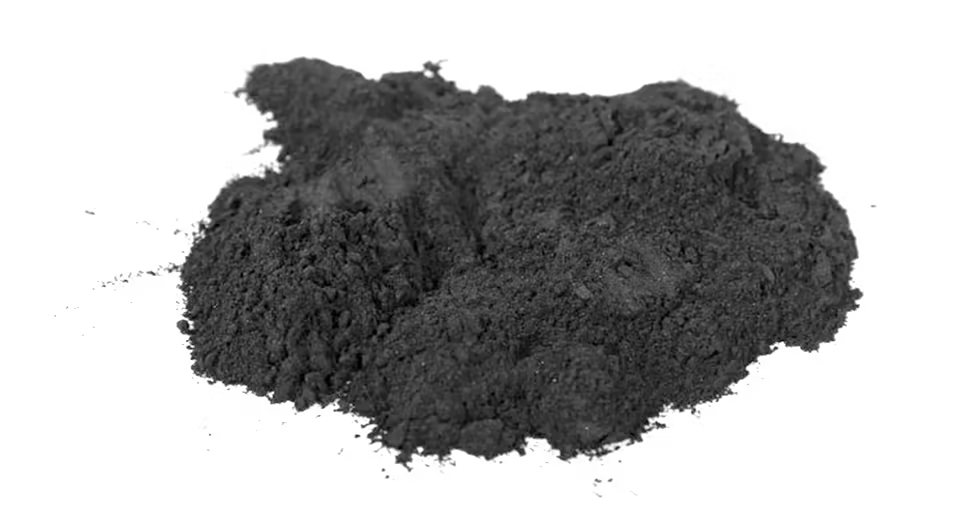
Pyrolysis is not a one-size-fits-all reaction. What begins as a uniform feed material can transform into dramatically different end products—biochar, bio-oil, or syngas—simply by shifting thermal conditions. The secret lies in understanding that every degree matters. At lower temperature ranges, typically between 300°C and 450°C, the process favors char formation. The molecular structure breaks down slowly, retaining much of the original carbon in a solid, stable form ideal for soil amendment or carbon sequestration. But push the heat just a little higher, into the 450°C–600°C window, and the chemistry pivots: volatile compounds release more aggressively, condensing into a liquid bio-oil rich in energy-dense compounds. This delicate equilibrium between heat input and product distribution is what makes precise temperature control the defining feature of advanced pyrolysis systems.
Beyond simply holding a setpoint, performance hinges on how uniformly that temperature penetrates the feed stock. Uneven heating creates hot spots that degrade valuable vapors into unwanted gases, or cold zones where material barely reacts. Engineers now use multi-zone furnaces, real-time thermocouple arrays, and feedback loops that adjust heating rates within seconds. Ramp speed also plays a starring role: a slow, gradual climb to 500°C will maximize char quality with a cleaner pore structure, while a rapid thermal shock—reaching peak temperature in minutes—can nearly double the yield of condensable liquids. Even the cooling profile after pyrolysis shapes the final product’s surface chemistry, influencing how well it adsorbs nutrients or captures pollutants later. In a well-tuned system, operators treat temperature as more than a parameter; it becomes a narrative that guides every physico-chemical transformation from feedstock to valuable output.
What ties this all together is the realization that optimal temperature is never just a number on a gauge—it’s an intersection of material properties, reactor design, and intended use. A forestry residue bound for vineyard biochar demands a different thermal journey than plastic waste being converted into diesel-range fuels. Leading facilities don’t just set-and-forget; they model the decomposition kinetics beforehand, then validate with inline spectroscopy that detects product quality shifts in real time. This convergence of precision engineering and fundamental chemistry is closing the gap between laboratory potential and industrial reality, proving that when temperature dictates performance, mastery of that thermal landscape is what separates commodity output from high-value, application-specific results.
Grinding to the Perfect Particle Size: A Balance of Filtration and Flow
Achieving the ideal grind for coffee is about more than just taste—it's a delicate interplay between how water interacts with the grounds. If the particles are too fine, they compact tightly, choking the flow and over-extracting bitter flavors. Go too coarse, and water rushes through, leaving behind a weak, underdeveloped cup. The sweet spot lies in that narrow range where the bed offers just enough resistance to maintain a steady flow while still trapping the fines and oils that give body and clarity.
The physics of flow through a packed bed reveals why uniformity matters. Irregular particle distribution creates channels—paths of least resistance where water bypasses most of the coffee, leading to uneven extraction. A consistent, unimodal grind promotes even saturation and a stable percolation rate. This balance ensures that each gram of water has the same contact time with the coffee, pulling out the desired solubles while leaving behind the astringent compounds. It's a constant negotiation: finer for more surface area, coarser for better permeability.
In practice, dialing in the perfect size means observing the brew. A drawdown that halts or a muddy puck signals excessive fines clogging the filter. A brew that flows too fast, yielding thin texture, points to a grind too coarse. Small adjustments, sometimes just a few microns on a high-quality burr grinder, can shift the outcome from muddled to brilliant. The goal is a grind that forms a porous, stable structure, allowing water to weave through at the right pace, extracting fully without stalling—because when filtration and flow harmonize, the resulting cup is clean, vibrant, and full of nuance.
Versatile Purification: How One Material Tackles Diverse Industrial Challenges
In the labyrinth of industrial processing, few materials earn the title of true chameleon. Activated alumina stands out not by brute force, but through a quiet adaptability that lets it slip into roles others can't fill. At its core, the material is a desiccant—greedy for water vapor in compressed air and gas streams, protecting sensitive equipment from corrosion and ice blockages. Yet that same porous structure, dotted with reactive sites, also latches onto fluoride and arsenic in drinking water, making it a silent guardian in communities plagued by contaminated wells. The surface chemistry can be tuned during manufacturing, adjusting pore sizes and catalytic activity so that a single batch might dry ethylene for a petrochemical plant one day, then strip leached metals from a mining runoff the next.
This versatility owes much to the material’s amphoteric nature—it can dance with both acids and bases. In refineries, it scavenges hydrogen chloride from reformer gas streams, preventing downstream catalyst poisoning. Shift the pH and temperature, and that same alumina bed begins capturing siloxanes in biogas, protecting turbines from abrasive silica deposits. Engineers have learned to exploit these shape-shifting properties through clever process design: layered beds that first dry, then purify, regenerative cycles that steam out trapped impurities, and surface impregnation with other metals to create tailored sorbents for niche challenges like mercury removal from natural gas. The material becomes a customizable platform, not just a filter, adapting its appetite to the contaminants it's fed.
Beyond the obvious, activated alumina proves its worth in the margins where other technologies stumble. It thrives in high-temperature environments that destroy activated carbon, maintains integrity under conditions that swell silica gel, and offers a forgiving kinetics profile that forgives flow fluctuations. This resilience makes it a fixture in air dryers aboard diesel locomotives crossing deserts, in breathing air purifiers for firefighters, and in the vacuum-insulated panels that keep medical refrigerators cold in off-grid clinics. The common thread isn't any single property but a material intelligence built into its nanoscale architecture—an architecture that industry keeps rediscovering whenever a new contaminant emerges and no ready solution exists.
Designing Pores for Poison: Custom Solutions for Modern Contaminants
The relentless influx of synthetic chemicals into water supplies demands a fundamental rethink of filtration. Traditional activated carbon often falls short, its broad-spectrum adsorption leaving behind trace pharmaceuticals, pesticides, and industrial byproducts. The answer lies in precision engineering at the molecular scale—crafting pores with geometries and surface chemistries tailored to capture specific pollutants. By imitating the lock-and-key mechanisms found in biological receptors, these designed adsorbents offer a level of selectivity previously unattainable, transforming passive filtration into an active, targeted defense.
Building these custom traps requires a convergence of computational modeling and advanced synthesis. Researchers map the van der Waals contours and electrostatic fingerprints of target molecules, then design cavities that maximize binding affinity while excluding harmless background ions. Metal-organic frameworks and covalent organic polymers become the construction kits, their tunable subunits arranged to create channels that literally seize contaminants at the molecular waist. Recent breakthroughs have produced materials that can pull parts-per-trillion levels of perfluoroalkyl substances from drinking water without releasing them back, a feat that reshapes remediation economics.
Beyond single-use scenarios, the frontier lies in regenerable systems that release captured toxins on demand, enabling recovery rather than landfill disposal. Scientists are programming pores with light- or pH-responsive gates that swing open under benign conditions, flushing out concentrated pollutants for safe incineration or reclamation. Such smart architectures don’t just remove modern poisons—they redefine the entire lifecycle of water treatment, from crisis response to circular resource loops.
Circular Carbon Economy: Reactivation and Reuse in Purification Systems
The concept of a circular carbon economy pushes us to rethink how we manage spent adsorbents from purification systems. Instead of discarding activated carbon after a single use, reactivation processes restore its porosity and surface functionality, allowing the same material to be cycled back into service. Thermal reactivation under controlled conditions removes accumulated contaminants and partially recreates the original pore structure, yielding a regenerated product that often competes with virgin carbon in terms of performance. This shift not only reduces the demand for fresh carbon manufactured from coal, coconut shells, or wood but also sharply cuts the waste stream heading to landfills or incineration. The approach turns a linear “produce-use-dispose” model into a self-sustaining loop where carbon assets are maintained at their highest utility for multiple cycles.
Practical reuse in purification systems involves more than just reactivation—it requires careful matching of the regenerated carbon to the specific treatment goal. For example, reactivated carbon from drinking water plants can be redeployed in wastewater treatment or industrial off-gas cleaning, where the physical and chemical demands differ. By assessing properties like iodine number, abrasion resistance, and ash content, engineers can design cascading plans that extend the overall lifespan of the carbon material across progressively less stringent uses. Some facilities co-mingle reactivated carbon with a small fraction of virgin makeup to fine-tune performance, achieving both operational reliability and material efficiency. This layered reuse strategy embodies circular thinking by extracting maximum value before final disposal becomes unavoidable.
Embedding reactivation and reuse into purification workflows also alters the economic calculus. Spent carbon, once considered hazardous waste with associated tipping fees, transforms into a valuable secondary resource. On-site or regional reactivation hubs reduce transportation burdens and offer predictable costs insulated from virgin carbon price swings. More importantly, the avoided emissions from manufacturing new carbon and the reduced waste footprint contribute to corporate sustainability goals in a tangible, measurable way, making the circular carbon economy an operational reality rather than a distant ideal.
FAQ
It is a highly porous form of carbon derived from selected coals through a two-step process: carbonization in an oxygen-limited environment followed by activation with steam or chemical agents. This creates an extensive network of microscopic pores that give the powder its powerful ability to trap impurities.
Water treatment plants use it to remove taste, odor, and dissolved organic compounds. The food industry employs it for decolorizing syrups and oils, while pharmaceutical companies depend on it for drug purification. It also plays a key role in air filtration systems and gold recovery operations.
Coal-based variants often have a broader pore size distribution, making them particularly effective for removing a wide range of contaminants, including larger molecules. They tend to offer good mechanical strength and can be more cost-effective for high-volume applications, though each source material has specific strengths depending on the target pollutant.
Activation develops the internal surface area, which can exceed 1000 square meters per gram. By carefully controlling temperature, time, and the activating agent, manufacturers tailor the pore structure to suit specific contaminants, whether it's tiny iodine molecules or larger color bodies.
It adsorbs chlorine, disinfection by-products, pesticides, and other trace organics that affect taste and safety. When dosed into the treatment stream and later removed by filtration, it leaves water cleaner without adding any harmful residues.
Yes, it is injected into flue gas streams to capture mercury, dioxins, and furans from incinerators and power plants. Its high bulk density and adsorption kinetics make it suitable for such in-flight scrubbing, protecting both public health and the environment.
Modern facilities invest in emission controls to manage dust and volatile byproducts, and many use energy recovery systems to reduce the carbon footprint. Spent carbon can sometimes be reactivated thermally, extending its useful life and minimizing waste.
The choice depends on the size of the target molecules, the pH and temperature of the process stream, and the required contact time. Manufacturers typically provide iodine number, molasses number, and particle size data to help match the product to the specific purification challenge.
Conclusion
From the controlled pyrolysis of select coals to the meticulous grinding that balances particle size with filtration efficiency, coal-based powdered activated carbon (PAC) production transforms a dense geological material into a labyrinth of micropores and mesopores. The thermal activation process, tuned at precise temperatures, unlocks an internal surface area that can exceed 1,000 m²/g, creating a network ideally suited for capturing a vast spectrum of contaminants. Engineers manipulate residence time and atmosphere to tailor the pore distribution, ensuring that the resulting carbon not only adsorbs small organic molecules but also accommodates larger pollutants like color bodies and emerging micropollutants. This architecture, inherited partly from the coal's natural maceral composition, is what makes the material so adaptable across industries—from drinking water treatment to pharmaceutical purification.
Once deployed, PAC proves remarkably versatile: the same base material can be customized through post-treatment or blending to target specific contaminants, such as perfluoroalkyl substances (PFAS), endocrine disruptors, or pesticide residues. Beyond single-use, the circular carbon economy gains momentum through thermal reactivation, which restores spent carbon's adsorptive capacity and reuses it multiple times, slashing waste and operational costs. This regeneration loop, when integrated into large-scale water reclamation or air scrubbing systems, anchors sustainable purification strategies. By designing pores for modern poisons and embracing reactivation, coal-based PAC manufacturing evolves from a simple filtration aid into a dynamic platform for solving some of the industry's toughest separation challenges.
Contact Us
Contact Person: Ellen Zhang
Email: [email protected]
Tel/WhatsApp: +86(21) 2287 6756
Website: https://www.tundrr.com/en/