

Cooling Mattress Topper Manufacturer Guide: Key Factors to Evaluate Before Partnering
2026-10-25
Finding a reliable cooling mattress topper manufacturer feels like hunting for a needle in a stack of foam. Everyone promises "cooling technology," but few deliver consistent quality. Before you commit to a partnership, you need to evaluate factors that separate long-term suppliers from one-off vendors. This guide walks you through the key checks—and shares what makes a manufacturer like Kunbao worth your shortlist.
Verify Cooling Claims With Data, Not Adjectives
Marketers love to throw around words like "ice-cold," "ultra-fresh," or "Arctic blast" when describing cooling performance. But adjectives don't hold up under scrutiny. The only way to know if a material or system actually keeps you cooler is to measure it—surface temperature drop, thermal conductivity, evaporative cooling rate, or heat flux under controlled conditions. Without those numbers, a claim is just a feeling dressed up in fancy language.
Real verification means comparing like with like. Grab an infrared thermometer and test the fabric under the same ambient temperature, humidity, and airflow as a standard control sample. Record how long it takes for the surface to return to baseline after heating, or measure the moisture vapor transmission rate if it claims to wick and cool. A 2°C difference might sound trivial, but in physiological terms, that's the gap between "noticeably cooler" and "just another shirt."
Adjectives age poorly; data ages well. If a cooling claim can't be replicated in a simple side-by-side test, it doesn't belong on the packaging. Instead of saying "feels refreshing," show the chart: skin temperature after 10 minutes of activity, evaporative resistance in m² Pa/W, or Q-max value for instant cool touch. That's how you separate genuine innovation from marketing theater.
Material Quality Tells You More Than Thread Count
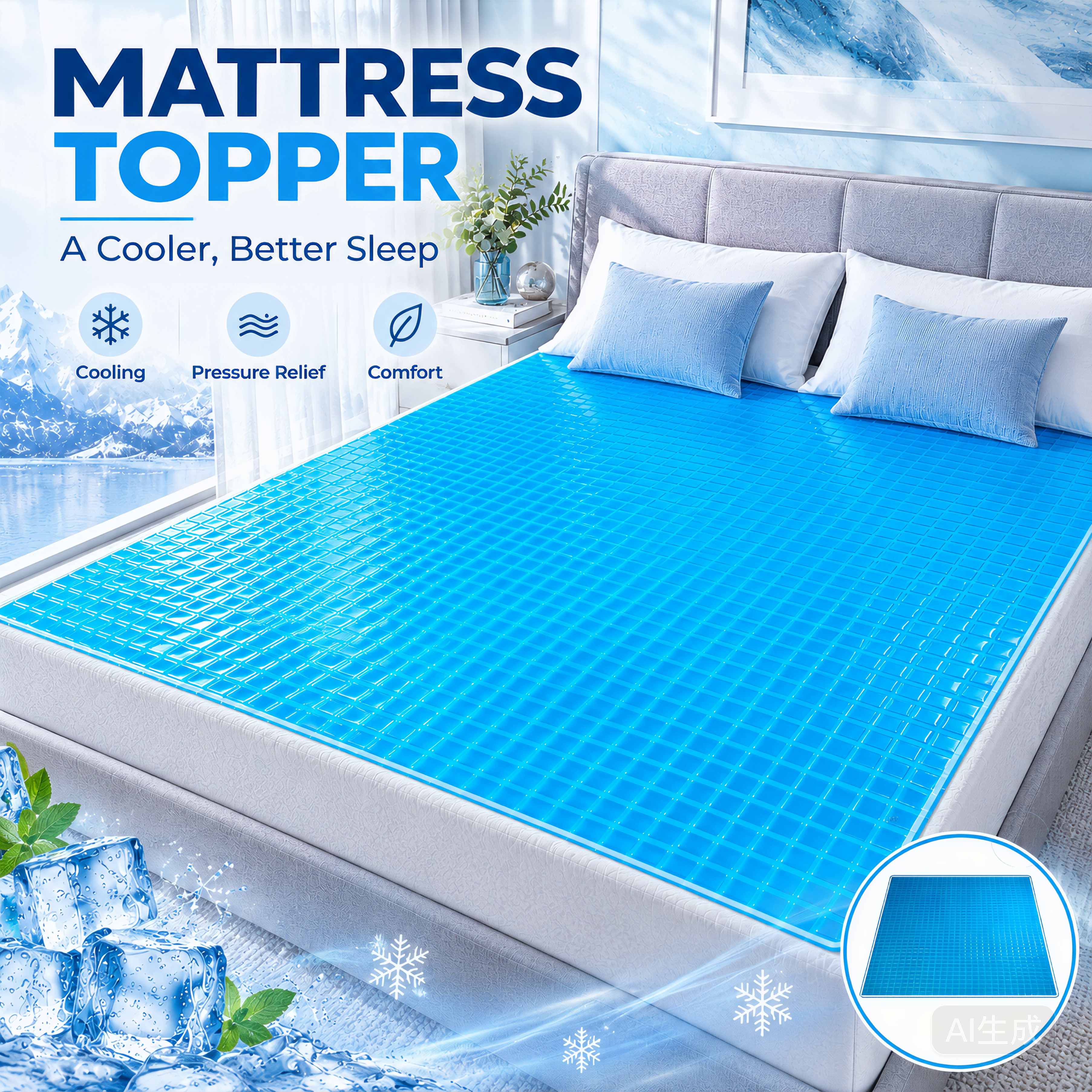
Thread count gets all the attention, but it rarely explains how your sheets will feel after a month of washing. Long-staple cotton like Egyptian or Supima produces noticeably smoother, stronger yarns than ordinary upland cotton, even when the thread count is lower. A 300-thread-count sheet made from true long-staple fibers will often outlast and out-soften a 600-thread-count sheet woven from weaker, shorter staples.
The weave matters just as much. Percale from high-quality single-ply yarns feels crisp and breathable, while sateen from the same fiber yields a silky drape. Manufacturers sometimes inflate thread count by using multi-ply yarns, but that doesn't add comfort—it just adds marketing bulk. You're better off checking the fiber origin and staple length than chasing a bigger number.
Linen and bamboo bring their own merits, too. Stonewashed European flax softens beautifully over time and wicks moisture better than most cotton, while quality bamboo viscose offers a cool, fluid hand. None of these depend on thread count to prove their worth. Once you focus on how the material is grown, spun, and woven, the number on the label becomes far less relevant.
Customization Flexibility Separates Real Partners From Resellers
A reseller will show you a feature list and ask which box you want to check. A real partner sits down with your operations team, finds where the standard workflow breaks, and reworks the integration until it fits the way you actually run your business. That might mean adjusting data fields, changing approval routing, or building a lightweight connector to an internal tool nobody else has heard of.
This willingness to bend the product around your constraints shows up in small, unglamorous ways: a non-standard billing cycle, a compliance report formatted for a specific auditor, a deployment option that respects your data residency rules. Resellers rarely have the mandate or the engineering capacity to make those calls. They can flip settings, but they can't change how the system behaves.
Over time, that gap becomes the difference between a vendor you manage and a partner you rely on. Customization flexibility isn't a premium add-on; it's the clearest signal that the company on the other side is invested in your outcomes, not just the license count.
Compliance and Testing Requirements Worth Requesting
When dealing with component suppliers or contract manufacturers, the phrase "trust but verify" takes on a practical edge. Instead of accepting a certificate of conformity at face value, ask for the specific test reports tied to your actual production batch—things like solderability tests on plated leads, ionic contamination levels on bare boards, or pull-force data on crimped terminals. These aren't exotic requests; they're the kind of evidence that separates a supplier who merely holds an ISO certificate from one who can prove process stability on the line that made your parts. If a vendor hesitates to share batch-level data and only points to a wall of generic compliance logos, that hesitation itself is a useful signal.
Another area that often gets overlooked is environmental stress screening. Many companies specify operating temperature ranges but never ask whether the supplier actually performs thermal cycling or burn-in before shipment. Worth requesting is a defined screening profile—say, twenty cycles from -40°C to +85°C with a dwell at each extreme, followed by a functional test. For connectors or switches, request insertion-cycle life data from the same mold cavity or plating lot as your order, not a golden sample from years ago. This closes the gap between "designed to meet" and "demonstrated to meet" under conditions that mimic your field environment.
Finally, don't shy away from requesting out-of-spec samples. Ask the vendor to include a small number of deliberately marginal parts—near the upper limit of contact resistance, slightly below minimum pull strength, or with a cosmetic defect that doesn't affect function. These let your own incoming inspection team calibrate their pass/fail thresholds and train operators on what a real borderline failure looks like. It also forces the supplier to acknowledge that their process has a distribution, not a single perfect value. Suppliers that push back on this rarely have robust internal limits; those that agree usually have nothing to hide.
Pricing Transparency and MOQ Realities You Need to Know
Most supplier quotes look straightforward until you ask what happens at 500 units versus 5,000. The per-unit price might drop by 40%, but setup fees, tooling amortization, and packaging minimums can eat the difference before you've even placed the order. Real pricing transparency means seeing those breakpoints laid out side by side—not buried in a follow-up email.
MOQs are rarely as fixed as they first appear. A factory might list 1,000 pieces because that's what their production line prefers, but they'll often run 300 with a surcharge or a longer lead time. The key is asking what actually drives the minimum: raw material lot sizes, machine changeover time, or just a sales target. Once you know that, you can negotiate around it instead of accepting an inflated first quote.
Lead Times and Communication as Hidden Deal Breakers
Most buyers fixate on unit price, specs, and payment terms while ignoring the two factors that quietly sink projects. A supplier might quote a four-week lead time during negotiation, but that number often comes from the sales team rather than production reality. Once the order is placed, delays creep in—material shortages, queue jumping for bigger clients, or simply a factory that overpromised to win the deal. By the time you realize the goods won't arrive on schedule, you've already burned through your buffer and your customer is threatening to cancel.
Then there's the communication gap, which turns a solvable delay into a full-blown crisis. A factory that goes silent for five days after you ask about a revised ship date isn't just disorganized—they're hiding something. Maybe the line is down, or they've shifted capacity to a higher-margin order. Either way, you're left guessing, and guesses don't help you manage your own inventory or reassure your buyer. The most damaging part isn't the late delivery itself; it's the feeling that you're the last to know what's actually happening on the ground.
FAQ
Look beyond basic gel infusions. A solid manufacturer will offer options like phase-change materials that actively regulate temperature, open-cell foams with enhanced airflow, and breathable cover fabrics such as Tencel or Outlast. Ask for test data showing heat dissipation and moisture wicking rather than just marketing claims.
Request recent third-party lab reports for durability, off-gassing, and cooling performance. Ask about their defect rate and how they handle batch inconsistencies. If possible, arrange a video tour of the production floor to see inspection points, not just the final assembly line.
Prioritize certifications tied to material safety and emissions, such as CertiPUR-US for foam, OEKO-TEX Standard 100 for textiles, and GREENGUARD Gold for low chemical emissions. These indicate the manufacturer already meets stricter standards that many retailers and consumers expect.
Ask about their minimum order quantities for custom sizes, whether they have in-house design support for material layering, and how they handle prototyping. A capable partner should walk you through trade-offs between cooling performance, thickness, and cost without pushing a stock option.
The origin and quality of gel, foam, and phase-change materials directly affect how well the topper regulates temperature over years of use. Request information on supplier stability and whether they test incoming raw materials for thermal consistency. Cheaper sources often degrade faster and lose cooling ability.
Expect a range rather than a single number. For moderate volumes, 30 to 60 days is common, but ask about their current order backlog and peak season constraints. Confirm whether they can scale from a small pilot run to full production without significant delays.
Send a detailed inquiry and note how quickly they respond with specific answers rather than generic promises. Ask who your main point of contact will be and how they handle design changes mid-production. Consistent, clear updates in the first few weeks often predict smoother collaboration later.
Watch for reluctance to share material specifications, vague answers about cooling technology, or prices far below the market average. Also be wary if they cannot provide a sample within a reasonable timeframe or avoid discussing warranty and after-sales support for bulk orders.
Conclusion
A reliable cooling mattress topper partner won't lean on fluffy words when you ask how the product actually performs. Demand hard numbers: thermal conductivity, heat flux, and results from standardized sweat or sleep simulation tests. If a factory can't produce a single data sheet, walk away. Material quality is another non-negotiable. Thread count means almost nothing here; what matters is fiber type, density, whether the cooling gel or phase-change material is genuinely integrated or just sprayed on, and how the cover breathes. A manufacturer that talks openly about blend ratios, PCM loading levels, and airflow testing is one you can trust. Customization flexibility also reveals whether you're dealing with a real factory or a middleman. Ask if they can alter fill weight, change cover fabrics, adjust quilting patterns, or build to your exact size and firmness specs without a blank stare.
Compliance should never be assumed. Request current certificates for OEKO-TEX, CertiPUR-US, GREENGUARD Gold, and any relevant flammability standards, and verify the lab reports match the batch you'll actually receive. Pricing transparency matters just as much as the number on the quote. A good partner breaks down material costs, labor, packaging, and shipping, and explains exactly how MOQ changes your per-unit price. Watch out for vague surcharges or "customization fees" that appear after you commit. Finally, lead times and communication often kill deals more than price does. Confirm realistic production windows, ask how they handle peak-season delays, and test their responsiveness before signing. If they dodge questions or take three days to answer a simple email, that behavior will only get worse once your order is in production.
Contact Us
Contact Person: Catherine Peng
Email: [email protected]
Tel/WhatsApp: +86-13434169510
Website: https://www.kbcoolgel.com/