

Custom Filling Machine Manufacturer: Crafting Precision Solutions for Your Production Line
2026-06-21
In today's competitive manufacturing landscape, every production line demands machinery that fits like a glove. Off-the-shelf filling machines often fall short when it comes to unique product requirements or complex bottle shapes. That's where a custom filling machine manufacturer becomes your strategic partner—not just a supplier. At INTOP Machinery, we don't believe in one-size-fits-all solutions. Instead, we engineer precision filling systems tailored to your exact specifications, flow rates, and container challenges. From viscous sauces to volatile chemicals, our custom-designed equipment ensures accuracy, efficiency, and seamless integration. Ready to move beyond compromise and discover how a purpose-built solution can transform your production line? This article explores what to look for in a custom filling machine manufacturer and how the right engineering partner turns your challenges into competitive advantages.
Tailored Filling Systems That Match Your Exact Production Needs
No two production lines are exactly alike, and relying on off‑the‑shelf filling equipment often means accepting compromises. The viscosity of your product, the shape and material of your containers, and even the ambient conditions in your facility can all influence how a filling system should operate. A truly effective solution starts by looking at these details, not by forcing your process into a pre‑set configuration.
Our approach is built around deep collaboration with your team. We examine everything from your current throughput goals to future expansion plans, then engineer filling stations that align precisely with your operational reality. Piston fillers, overflow fillers, or custom valve arrangements—each component is selected and adjusted to handle your specific product characteristics, from free‑flowing liquids to pastes with suspended particulates. Container handling, capping, and labeling modules are integrated in a way that mirrors your ideal workflow, not a generic template.
The result is a system that feels like it was designed for your floor, not just assembled from a catalog. Changeover times drop because the interface and guides are set up for the formats you actually use. Accuracy improves across every fill cycle, reducing giveaway and waste. And as your product lineup evolves, the system can be reconfigured without starting from scratch—because it was built with the understanding that your production needs are never static.
Precision Engineering for Flawless Fill Accuracy
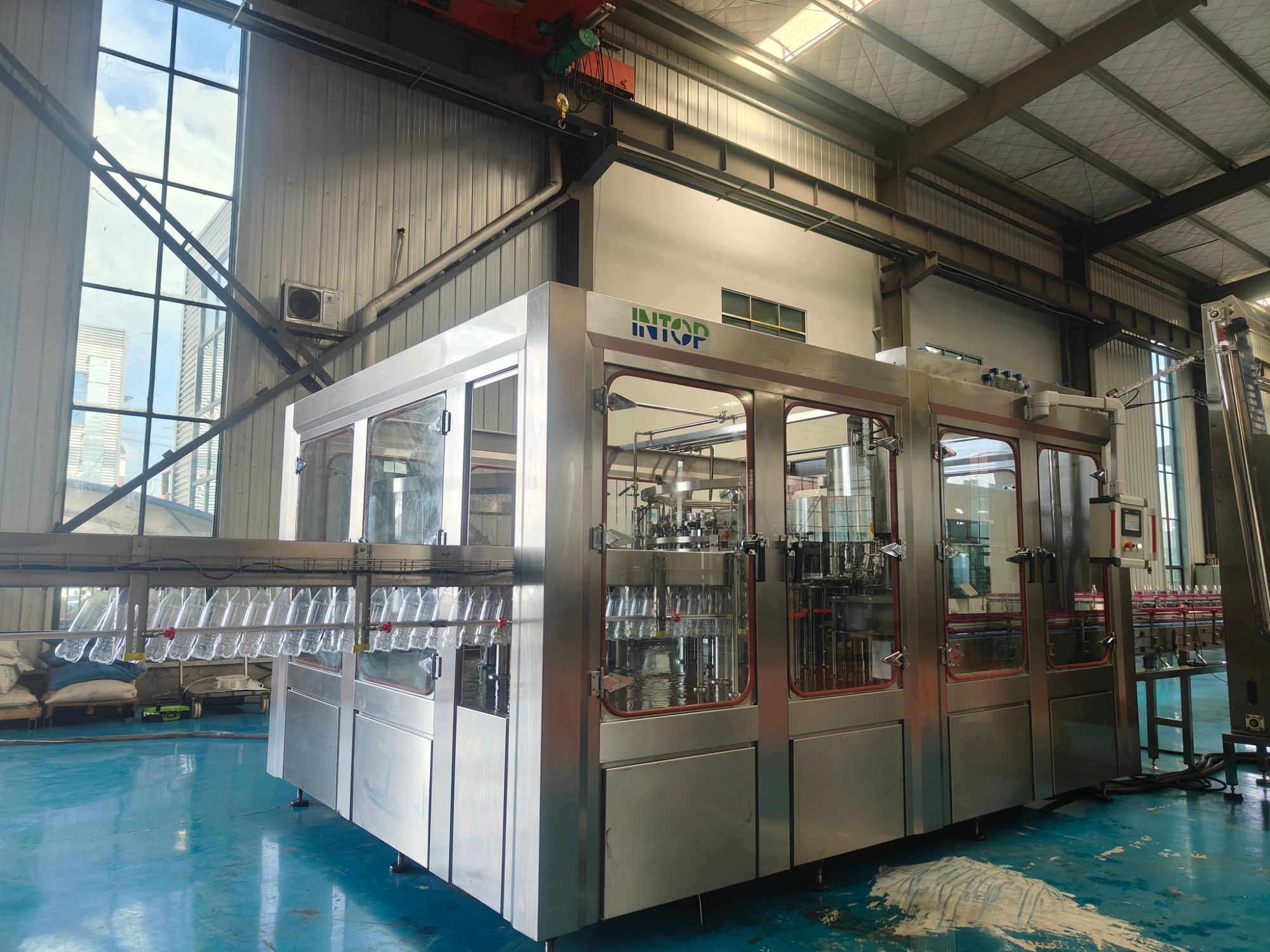
Getting every drop right isn’t just a target; it’s a fundamental requirement in high-stakes production environments. Our approach to precision engineering strips away the guesswork, embedding reliability directly into the fill process through meticulous calibration and robust mechanical design.
Inside the system, components like positive displacement pumps and mass flow meters work in concert. They don’t simply dispense—they measure and adjust in real time, compensating for variables like temperature shifts or viscosity changes. This closed-loop logic ensures that the fill volume remains consistent from the first bottle to the ten-thousandth, without drift.
The payoff is immediate on the line: minimal product giveaway, fewer rejected units, and effortless compliance with stringent weight and measure regulations. But beyond the bottom line, it’s about trust—every container that leaves your facility carries exactly what your label promises.
Innovative Machine Designs That Evolve With Your Workflow
Machines used to be rigid, built for a single purpose. Not anymore. Today's designs are fluid, shifting gears as your production line pivots from one task to the next. It's like having a tool that reshapes itself as the job changes, without the downtime of retooling.
Modularity is the quiet backbone here. Swap in a new module, and the machine picks up a different skill set—think of it as adding an app to your phone, but for physical labor. This keeps things moving without ripping out entire systems.
On a deeper level, these machines notice patterns in how you work and adjust accordingly. They learn the rhythm of your floor, eking out extra efficiency by tweaking their own operations. It's a partnership that gets smarter the longer you work together.
From Concept to Commissioning—A Seamless Collaboration
Bringing an idea to life takes more than just engineering know-how—it demands an ongoing conversation between vision and practicality. Right from the initial sketches, our team embeds itself in your objectives, asking the questions that turn broad concepts into tangible blueprints. We make sure that every line on the drawing reflects your operational needs, not just industry standards.
As the project moves from design to fabrication and assembly, the dialogue continues. You won’t be chasing updates or second-guessing priorities. We keep you looped in with clear, jargon-free checkpoints where decisions are made together. This shared ownership means when something needs tweaking, it happens fast, without the friction of handoffs between disconnected departments.
Commissioning is where the true value of integrated teamwork comes through. Our engineers don’t just install and walk away—they stay on-site, fine-tuning alongside your operators until the line runs exactly as intended. That moment when the first product comes off the system isn’t just a milestone for us; it’s the natural result of a process built on trust and deep collaboration from day one.
Built to Last: Reliable Performance with Minimal Downtime
When your operations depend on a tool that simply cannot fail, the difference is in the details. We don't just talk about durability—we select materials that resist corrosion, design joints that handle stress without flinching, and finish surfaces to prevent the slow creep of wear. Every part is chosen because it has a proven track record of lasting well beyond its expected lifespan, not just meeting a spec sheet.
Uptime isn't an accident. Behind every reliable system is a battery of tests that mimic years of hard use: vibration trials that shake out loose connections, temperature cycling that exposes weak points, and continuous run simulations that reveal the slightest drift in performance. By the time a product reaches you, it has already survived worse than your everyday environment, so you're not the one discovering the flaws.
We know that even the most dependable equipment eventually needs attention, so we make those moments as brief as they are rare. Thoughtful engineering places wear items where you can reach them in minutes, not hours. Color-coded guides and common fasteners eliminate guesswork. The goal is simple: keep you working, with interruptions measured in coffee breaks, not days.
Future-Ready Solutions for Changing Industry Demands
Industries rarely stand still, and the tools that power them need to adapt just as quickly. Rather than chasing every new trend, smart organizations embed flexibility into their core operations. This means choosing modular systems that can scale up, pivot, or integrate with emerging technologies without a complete overhaul. It’s less about predicting the next big thing and more about building a foundation that welcomes change instead of resisting it.
True future-readiness comes from solutions that learn alongside your business. When your inventory management platform automatically refines reorder points based on shifting buyer patterns, or your customer dashboard surfaces anomalies before they become problems, you’re not just keeping up—you’re staying ahead. The key is designing intelligence that doesn’t require constant hand-holding, freeing teams to focus on strategy rather than firefighting.
Resilience in the face of shifting demands also relies on breaking down data silos. When sales figures, supply chain updates, and customer input flow into a single, coherent view, decision-makers can spot opportunities or risks early. By connecting these dots through adaptable platforms, companies turn market volatility from a threat into a strategic advantage.
FAQ
We design each machine around your specific product and throughput needs rather than forcing you to adapt to a generic setup. That means fewer compromises on speed, accuracy, or container compatibility.
Absolutely. We configure the filling system—whether piston, pump, or gravity-based—to match your product's viscosity. For paste-like substances, we often integrate heated hoppers or specialized nozzles to maintain flow.
We use high-quality sensors and closed-loop controls that automatically adjust for variables like temperature or product settling. Regular calibration is straightforward, and we build in diagnostic tools to catch drift early.
We've built machines for food and beverage, cosmetics, pharmaceuticals, chemicals, and even industrial lubricants. Each sector has its own regulatory and operational quirks, and we tailor accordingly.
It depends on complexity, but most projects run between 8 and 16 weeks from initial consultation to delivery. Rush timelines are possible if your production deadline is tight.
We provide on-site training during setup and offer remote diagnostics plus a spare parts kit. Extended service contracts are available for preventive maintenance visits.
Many of our machines feature quick-change parts and modular designs. We can retrofit or expand the system later, often without a complete overhaul.
Conclusion
When you work with a custom filling machine manufacturer, you’re getting more than off-the-shelf equipment—you’re co-creating a filling system that fits the way you actually operate. It begins with a real conversation about your product’s behaviour, your line speed, and your factory footprint. Then we engineer a machine that slots directly into your workflow, handling anything from thick creams to thin solvents without compromise. Accuracy isn’t a brochure claim; it’s the result of precision-engineered nozzles, responsive controls, and a design that’s been tuned to your specific container and fill volume.
What really matters is how that machine holds up over time. We build for longevity, using quality materials and straightforward mechanical layouts that reduce wear points and make cleaning and service fast. Our process is collaborative: you’re involved from the first sketch right through to the day we run your product on the floor. And because production demands never stand still, we bake adaptability into the core of our designs—whether that means adding a new fill head, integrating an inspection module, or reconfiguring for a different bottle shape. The result is a filler that not only keeps downtime to a whisper but also grows with you as your market evolves.
Contact Us
Contact Person: Laura
Email: [email protected]
Tel/WhatsApp: +86 13957758832
Website: https://www.intopmachinery.com