

Custom PE Protective Film Manufacturer: What to Look for in a Reliable Partner
2026-09-06
Choosing a custom PE protective film manufacturer isn't just about getting the lowest price—it's about finding a partner who understands your production challenges. From inconsistent film adhesion to delayed shipments, the wrong supplier can quietly erode your margins. At Shire, we've seen firsthand what separates a dependable manufacturer from a costly gamble. In this guide, we'll walk through the key factors—material expertise, customization flexibility, QC standards, and supply reliability—that should top your checklist before you commit.
Adhesive Behavior on Real Surfaces Beats Any Datasheet
Lab tests assume polished steel and controlled temperature. The moment an adhesive meets a dusty concrete floor or a slightly oily metal panel, the numbers on the datasheet lose their grip. Real surfaces are rough, contaminated, and wildly inconsistent—so the only honest way to judge an adhesive is to test it exactly where it will be used.
Humidity, surface energy, and microscopic texture all shift how a bond forms. A tape that holds fast on glass may peel cleanly from powder-coated aluminum. Instead of trusting catalog values, smart engineers run side-by-side trials on the actual substrate, under the actual load, for the actual service life.
That messy, empirical approach matters more than any spec sheet. Because the best adhesive isn't the one with the highest lab strength—it's the one that keeps holding when the surface is less than perfect, the temperature swings, and the real world does its worst.
Custom Widths and Tolerances: The Uncomfortable Questions
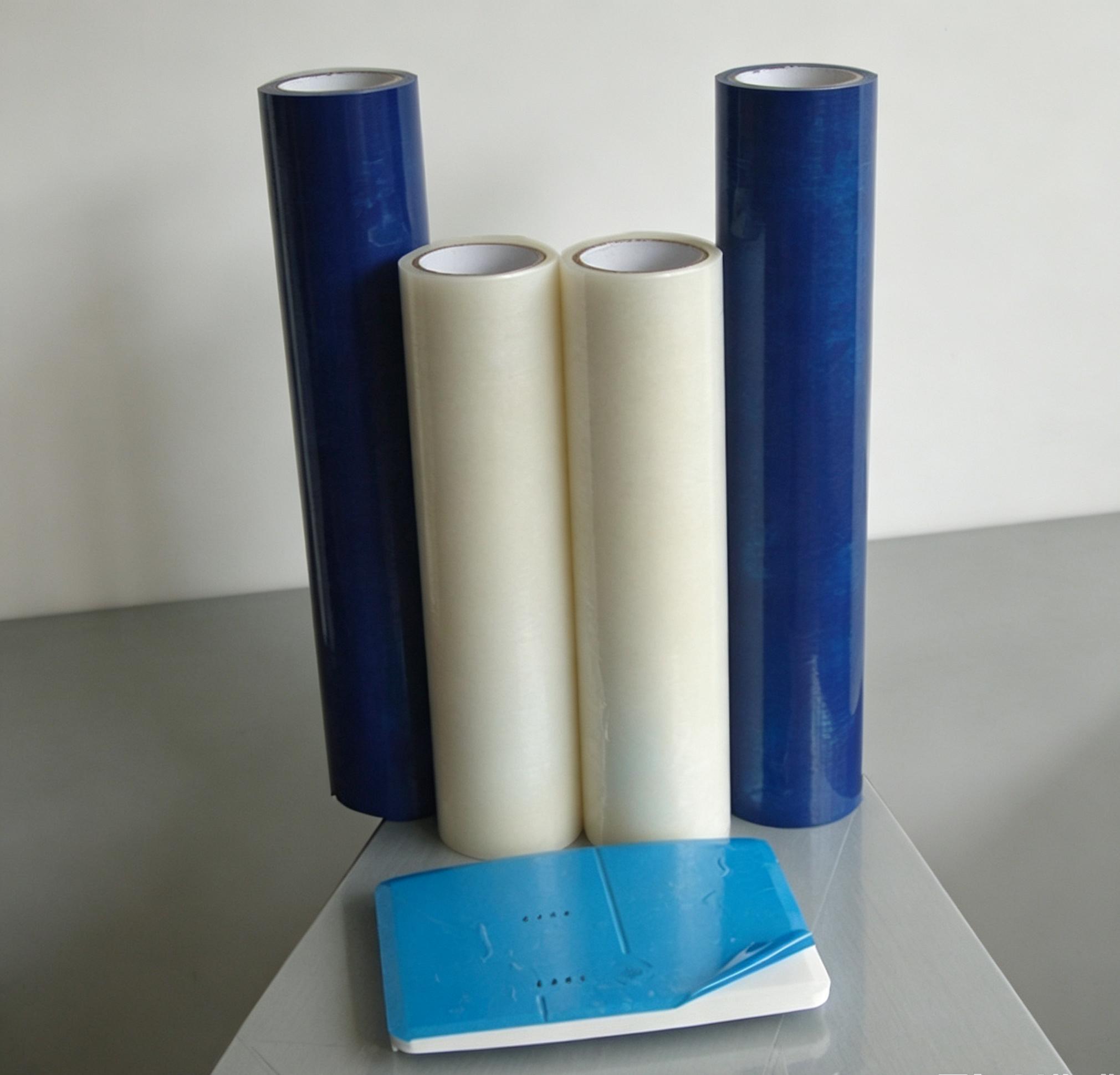
Most custom width requests arrive with a tolerance copied from a standard size, but nobody stops to ask whether that number still makes sense once the proportions change. Did you actually calculate deflection, thermal expansion, or fit clearance for this new width, or are you just recycling a figure from an old drawing because it feels safe?
Here's a harder question: when you specify a tight tolerance on a custom width, are you also telling the supplier where and how to measure it? A width checked with calipers at the center can differ from one scanned by a vision system across the full length, thanks to bow, camber, or edge condition. If your inspection method and the supplier's method don't match, the real problem isn't the tolerance—it's the argument you'll have about numbers that were never comparable.
And the question nobody wants to raise in a kickoff meeting: what does it actually cost to hold that tolerance on a non-standard width? Slitting, laser cutting, and waterjet all leave different edges and heat effects. A ±0.005 inch band might be trivial on a narrow strip but unrealistic on a wide panel without secondary machining. If the only way to hit your number is a slower process or an extra finishing step, are you prepared to pay for it, or are you expecting the supplier to quietly absorb the cost until the relationship sours?
Why Consistency Matters More than the Initial Sample
A single polished demo can deceive. It might be the result of a borrowed idea, a lucky break, or an all-nighter that can't be repeated. Consistency, on the other hand, is a pattern of behavior. When you deliver solid work day after day, people stop wondering whether you can do it and start assuming you will. That shift from doubt to expectation is what turns a one-off success into a dependable reputation.
Think about the creators, teams, or products you return to. Rarely is it because they blew your mind once. It's because they showed up again and again with something worth your time. The initial sample sets a floor, but consistency raises the ceiling over months and years. Each repeated good performance compounds trust, and that trust lowers the friction for future opportunities. No one wants to bet on a flash in the pan; they want to bet on a steady hand.
There is also a practical reason consistency wins. An initial sample captures a single point in time, often under ideal conditions. Consistency is tested in the mess of real-world variation—tight deadlines, shifting briefs, unexpected obstacles. If your quality holds up across that variability, you prove the sample wasn't a fluke. That proof, not the sample itself, is what buys you creative freedom, higher rates, or a loyal audience. The first piece gets you noticed; the hundredth piece gets you remembered.
Haze and Clarity: The Overlooked Specs That Affect Your Product
Most manufacturers fixate on light transmission or colour values, but haze and clarity shape how a product actually looks and feels. Haze measures the scattering of light at wide angles, which creates a milky, washed-out appearance on otherwise transparent surfaces. Clarity, by contrast, describes the ability to see fine details through a material without blurring, even when overall light passage remains high. Both are easy to miss on a standard spec sheet, yet they determine whether a lens, display cover, or packaging window reads as premium or cheap.
High haze can rob a smartphone screen of contrast, leave a car dashboard looking foggy under sunlight, or flatten the colours behind a retail display case. Low clarity causes fine text and intricate patterns to soften, forcing users to squint or reposition the product. These effects often emerge only after the material passes basic transmittance tests, making them a common source of customer complaints that are difficult to trace back to a single parameter.
Because haze and clarity depend on surface roughness, internal particles, and coating uniformity, they demand dedicated measurement rather than a quick visual check. Setting internal limits for both values brings consistency to your supply chain and helps avoid the subtle degradation that creeps in when only total light transmission is monitored. In practical terms, paying attention to these two overlooked specs is one of the simplest ways to elevate perceived quality without changing the base material.
Their Reaction to a Problem Is the Real Partnership Test
When things go smoothly, almost anyone can seem like a great partner. It is easy to be patient, loving, and generous when the sun is shining and the bills are paid. But the moment a real problem appears—a lost job, a family conflict, a health scare, or even just a broken dishwasher on a stressful day—the true nature of the relationship starts to show. How someone reacts to difficulty tells you far more about their character, emotional maturity, and long-term compatibility than all the good times combined. A partner who becomes defensive, shuts down, or starts blaming you when things go wrong is showing you how they will handle the inevitable rough patches of life. On the other hand, someone who can stay calm, communicate openly, and work alongside you to find a solution is demonstrating a rare and valuable kind of reliability.
The key is not whether problems happen, but what each person does when they do. Some people retreat into silence, hoping the issue will disappear on its own. Others lash out, turning stress into aggression or criticism. Neither response builds trust. True partnership means facing the problem together, even when you disagree about the cause or the fix. It means being willing to say, "I don't know what to do, but I'm not leaving you alone with this." That simple stance—choosing to stay engaged rather than escape—is often the clearest sign that the relationship can survive real life. Without it, every minor setback becomes a threat, and every major one becomes a possible end.
Pay attention to patterns, not isolated moments. Everyone has a bad day or reacts poorly once. But if a partner consistently treats problems as personal attacks, refuses to take responsibility, or makes you feel like you are overreacting for wanting to talk about what went wrong, that is not a small flaw—it is a fundamental limit on how safe and honest the relationship can become. The real test is not whether you face problems, but whether you face them as a team. And that is something you cannot afford to ignore.
Low-VOC and Cleanroom Options: Don't Take Their Word for It
When a supplier claims their materials are low-VOC or cleanroom-ready, the burden of proof sits squarely on their shoulders—but rarely do they volunteer the raw data. Ask for third-party test reports, not marketing summaries. Look for specific emission figures measured under conditions that mimic your actual usage, not idealized lab settings. A genuine low-VOC product will have documentation from recognized bodies like ISO 14644 or CDPH Standard Method v1.2, and the supplier won't hesitate to walk you through the methodology.
Cleanroom compatibility goes beyond simply “no particles shed.” You need to consider outgassing, chemical resistance to your cleaning agents, and how the material behaves after repeated wipe-downs. Request samples and subject them to your own wipe-down and particle count tests. A supplier confident in their cleanroom product will welcome side-by-side comparisons with competitors under your facility's conditions. If they balk or insist you rely on their “industry experience,” that's a red flag worth taking seriously.
Finally, remember that batch-to-batch consistency matters as much as a single passing test. Ask how they monitor ongoing production—do they test every lot, or just the initial certification run? A trustworthy manufacturer will have internal quality gates and share their statistical process control data without being prompted. The goal isn't to eliminate trust; it's to replace vague assurances with verifiable facts before you commit cleanroom space or ventilation budgets to an unproven material.
FAQ
Look beyond the data sheets. Ask how they test film on your exact substrate, not a generic glass panel. A supplier worth keeping will run adhesion trials, check for residue after 30 days, and simulate your transit conditions instead of quoting standard specs.
Request samples with three adhesion levels and peel them off your own painted metal, textured plastic, or coated glass after heat aging. The right partner won't guess—they'll send a small roll with labeled variants so you can feel the difference.
Yes, especially on high-gloss or freshly coated surfaces. Ask whether they've tested for plasticizer migration and UV exposure. A manufacturer that understands your application will mention surface energy, cure time, and residue-free removal windows without being prompted.
Expect an extra five to ten working days beyond standard roll stock, but the real variable is tooling. If they have in-house die-cutting and keep common shapes on file, reorders can be quick. If everything is outsourced, your timeline gets longer and less predictable.
Ask for a pre-production sample off the actual production line, not a hand-cut lab swatch. A reliable manufacturer will send a small roll with the exact adhesive, thickness, and liner you'll receive, along with a written record of the settings used.
Watch for vague answers about raw material sourcing or frequent changes in liner color and film thickness. Consistency comes from controlled resin lots and documented coating parameters. If they can't tell you which lot your film came from, that's a problem.
Not always, but it helps when you need fast design tweaks or small buffer stock. The stronger advantage is fewer communication layers and the ability to visit during a trial run. However, a distant partner with dedicated account engineers can still outperform a nearby shop that treats your project as a side order.
Conclusion
Real surfaces make datasheets look naive. A PE protective film that adheres beautifully to a polished steel coupon can slide right off a textured powder coat or a slightly oily plastic part. That's why you need a manufacturer willing to run trials on your actual materials—and honest enough to admit when their standard product isn't the best fit. Custom width and tolerance discussions are equally revealing. If they can't tell you their slitting tolerance or won't provide capability data, expect edge drift and waste on your line. Consistency across batches matters more than the approval sample. One perfect roll means little if the next three arrive with different unwind force or peel levels, forcing you to recalibrate or rework.
Haze and clarity are not cosmetic extras. They change how your product looks under store lighting or through display glass, and a film that starts clear can turn milky over time if the resin or additives are cheap. Ask for optical measurements at your film thickness, not a generic marketing sheet. When a defect appears, the real partnership test begins. A good manufacturer traces the lot, sends replacements fast, and adjusts their process; a bad one blames your application. Low-VOC and cleanroom claims deserve the same skepticism. Demand third-party test reports, ISO class documentation, or an on-site audit. If they hesitate, you're not talking to a partner—you're talking to a sales pitch.
Contact Us
Contact Person: Jack Xu
Email: [email protected]
Tel/WhatsApp: 8615257328825
Website: https://www.temporaryprotectivefilm.com/