

Digital Trunking System Company: Why Choose One for Your Business Communication Needs?
2026-09-07
If your team still juggles separate phone lines, legacy PBX boxes, and patchwork conferencing apps, you already know the cost of poor communication—missed calls, dropped connections, and frustrated clients. Switching to a digital trunking system solves the technical side, but choosing the right company determines whether that fix actually sticks. That’s where lisheng comes in: a digital trunking system company that doesn’t just sell channels, but designs communication backbones around real-world uptime and growth. Curious what separates a true digital trunking partner from the rest? Keep reading.
What a Trunked Network Does That Basic Radios Can't
A basic radio locks you to one frequency, and if that frequency is busy, you wait or talk over someone. A trunked network changes the game by pooling all available channels and assigning one on the fly. When you press the talk button, the system instantly finds an open frequency, hands it to your radio for that transmission, then releases it back into the pool. This means dozens of user groups can share a handful of channels without ever hearing each other or stepping on each other's traffic.
Beyond just avoiding interference, trunking adds a layer of coordination that standalone radios simply lack. The network controller knows which talkgroups are active, which radios are affiliated, and can prioritize emergency calls above routine chatter. If a dispatcher needs to reach one unit or all units in a region, the system routes that call only to the radios that belong to that group, not to everyone scanning the same frequency. Basic radios broadcast to anyone on the channel; a trunked network delivers targeted, managed communication.
Another quiet advantage is scalability. With conventional radios, adding more users or groups usually means licensing more frequencies and dealing with more interference. A trunked system can often absorb that growth without adding spectrum, because it uses the existing channels more efficiently. It also provides features like automatic roaming between sites, so a vehicle driving across a city or county stays connected without the user manually switching channels. These are capabilities that a basic radio cannot replicate, no matter how many knobs it has.
Coverage Your Team Can Count On, Even When Cell Towers Don't
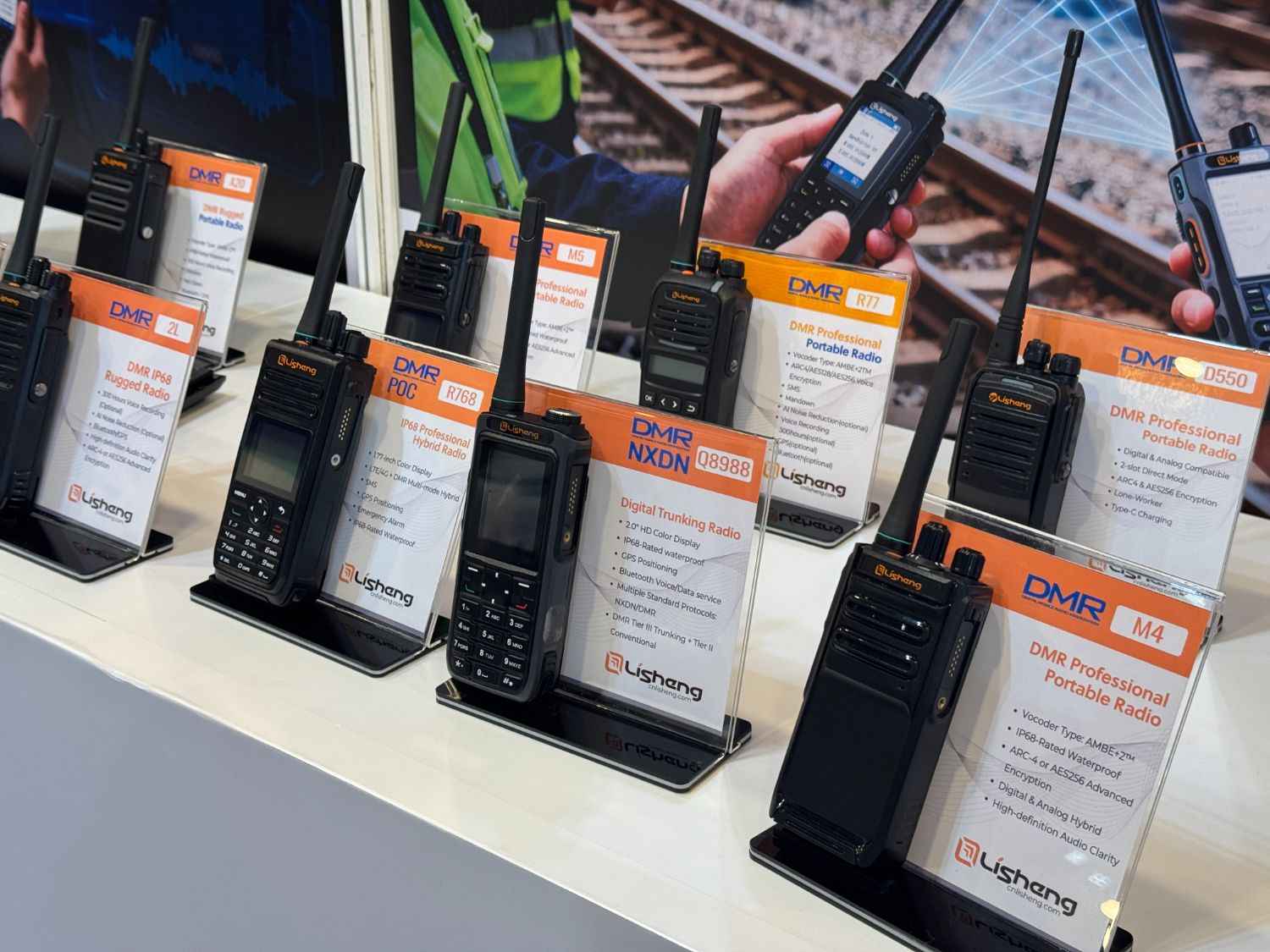
Dead zones used to mean lost hours, missed updates, and frustrated crews. With our satellite-linked mesh devices, your team stays connected in the backcountry, on job sites beyond tower range, or during emergencies when local infrastructure fails. Each unit automatically routes voice and data through the strongest available signal path, so a message sent from a basement or a remote valley arrives just as reliably as one from a downtown office.
We designed the hardware to handle real-world abuse: dust, rain, drops, and temperature swings from desert heat to mountain frost. Battery life stretches across a 72-hour shift without a recharge, and the interface stays simple enough that a new team member can send a status update in under ten seconds. No complicated setup, no IT ticket required.
Whether you're coordinating a search-and-rescue operation, managing a construction crew spread across a rural county, or running a logistics route through areas with spotty coverage, this is the kind of dependable link that keeps projects moving and people safe. You plan around the terrain, not the tower map.
Private Channels for Conversations That Should Stay Private
Not every discussion belongs in a shared group feed. Some conversations carry weight — a sensitive client update, a confidential project pivot, or simply a moment that calls for a smaller audience. Private channels give those exchanges their own locked door. Only the people you invite can see the thread, scroll through the history, or add a reply. That boundary isn't just a setting; it's a quiet signal that this space is different, and what's said here stays here.
What makes these channels feel natural is how they blend into the rest of your workspace. You don't need a separate app or a special login ritual. One click creates the channel, another invites a handful of teammates. The conversation flows the same way it would anywhere else — links, files, quick reactions — but the room itself is off the map for everyone else. It's the difference between talking in the hallway and stepping into a side office where the door clicks shut behind you.
Over time, private channels become a kind of shared memory for small teams or trusted partners. The history stays intact, searchable only by those inside. You can revisit a decision from three months ago without explaining why the channel exists. And when the moment passes, you can archive it just as easily — no lingering public record, no awkward cleanup. The point isn't secrecy for its own sake; it's giving certain conversations the room they need to unfold honestly.
Scaling From Ten Users to Ten Thousand Without Rebuilding
The first ten users rarely reveal the system's real bottlenecks. They might stress a single database table or a monolithic service that hums along quietly until concurrency spikes. Instead of guessing where the next thousand signups will hit hardest, instrument the quiet paths early. Trace every login, every file upload, every background job. Those traces become your map when traffic starts climbing. The goal is not to over-engineer for a million users on day one, but to know exactly which joints creak under pressure so you can reinforce them before they snap.
A common mistake is treating early architecture as disposable. Teams often say, "We'll rewrite it when we grow." That rewrite rarely happens cleanly, and it steals months from shipping features users actually need. The alternative is to design for horizontal movement from the start: keep stateless services behind a load balancer, push asynchronous work into a queue, and avoid hidden single points of failure like a shared local cache or a cron job that only runs on one box. These choices don't add much complexity at ten users, but they mean going to ten thousand is a matter of adding instances rather than tearing down walls.
Capacity planning is not a spreadsheet exercise. It's a habit of reading what the system tells you. Watch the slow query log, the queue depth, the p99 latency. When one of those starts drifting upward, address the root cause before adding more hardware. Sometimes the fix is an index, sometimes it's moving a report to a read replica, sometimes it's splitting a table by tenant. The key is that the system grows by small, informed adjustments instead of a big-bang migration. Ten thousand users should feel like a quieter version of ten, not a different product.
Why Buying Airtime Beats Buying a Whole Infrastructure
Owning a network is like buying a farm when all you need is a meal. The upfront cost of towers, spectrum licenses, and backhaul equipment runs into millions, and that's before maintenance crews, power backups, and regulatory headaches. Airtime, by contrast, is a pay-as-you-go utility: you purchase only the capacity your devices actually consume, and you can stop or scale back whenever demand shifts.
There's also the risk of obsolescence. Infrastructure bought today might be outdated in three years, stranding capital in depreciating hardware. With airtime, the network operator bears that burden. They upgrade base stations, negotiate with carriers, and handle the physics of coverage. You just tap into an existing, already depreciated asset and pay a variable rate that tracks your usage, not your guesses about future traffic.
Flexibility becomes a silent advantage. If you need coverage in a new region, building your own towers means months of site surveys, permits, and construction. Buying airtime means provisioning a multi-carrier SIM or eSIM profile overnight. That speed lets you test new markets without betting the company on concrete and steel.
Local Support That Shows Up With a Replacement, Not Just a Ticket
When a critical piece of equipment goes down at 2 p.m. on a Thursday, the last thing you need is a support line that logs a ticket and promises a callback within two business days. Our local team works differently. The person who answers the phone is often the same technician who'll pull up to your loading dock an hour later with the exact replacement part already in the van. That means no back-and-forth diagnostics over email, no waiting for a courier, and no second visit scheduled "sometime next week." You describe the failure, we grab the part, we drive.
This is possible because our service vans carry a rolling inventory tailored to the equipment most common in the region. We don't show up empty-handed to "take a look" and then order parts from a warehouse three states away. If a drive belt, sensor, or control board is the likely culprit, there's a good chance it's on the truck before we leave the shop. And if the first guess is wrong, the second one is usually a shelf away—not another week of downtime.
That kind of local, show-up-with-a-replacement support changes the math on maintenance. Instead of budgeting for 48 hours of lost production while a ticket bounces between tiers, you're back online before the end of the shift. It's not a service-level agreement on paper. It's a technician in your parking lot, swapping out the failed component and making sure the line starts clean.
FAQ
They design, install, and maintain the radio infrastructure that keeps your teams connected across sites. That includes repeaters, handsets, dispatch consoles, and the backend software for call routing and user management. A good provider also offers training and ongoing support so the system stays reliable as your workforce changes.
Digital trunking packs more conversations into the same spectrum, so you get clearer audio and fewer busy signals even in high-traffic moments. It also enables features like individual calling, group messaging, and emergency alerts that analog simply cannot deliver. For most businesses, the biggest difference is that workers spend less time waiting for a channel and more time acting on information.
Look beyond the hardware list and ask about their track record with businesses of your size and industry. Pay attention to response times for repairs, whether they offer scalable licensing, and how they handle firmware updates and security patches. A provider that asks about your workflows first is usually more valuable than one that pushes a one-size-fits-all package.
It does not have to be. Many companies phase the rollout by site or department, keeping the old system running while new digital equipment is installed and tested. A competent provider can map existing frequencies and talk groups to digital equivalents, so the transition feels familiar to users. The key is planning the cutover windows around your least busy operational hours.
Yes, most modern systems are built for expansion. You can add channels, user licenses, and additional sites without replacing the core infrastructure, as long as the initial architecture was designed with headroom. Ask potential providers about maximum supported users and how they handle multi-site roaming before you commit.
The best implementations include redundancy at the controller level and backup power for repeaters, so communication continues even if a primary site fails. Digital trunking also supports priority calling and emergency override features that give critical teams immediate channel access. Ask for documented uptime figures and examples of how the provider has handled real incidents.
The payoff usually shows up in shorter response times, fewer missed calls, and less time spent coordinating routine tasks. Digital trunking also reduces the need for repeated hardware replacements because the system can be updated through software. Many operations see the value within the first year through improved dispatch efficiency alone.
Many platforms now include dispatcher apps for phones and tablets, as well as APIs for connecting to workforce management or alarm monitoring tools. This means field staff can stay reachable through existing devices while critical voice traffic remains on dedicated radio channels. Clarify integration capabilities early, because retrofitting them later can be costly.
Conclusion
A digital trunking system company offers something that basic radios simply cannot match: intelligent channel allocation across a shared pool. Instead of tying a team to one frequency where collisions and waiting are constant, trunking dynamically assigns available channels, so conversations start instantly even during peak activity. That becomes critical when cell networks fail or struggle in remote sites, warehouses, or disaster zones, and your crews still need reliable push-to-talk coverage. The system also provides private talk groups, ensuring that sensitive operational details stay within the right circle rather than bleeding across the entire fleet. As your operation grows from ten users to ten thousand, the same core infrastructure expands without expensive redesign, which is a practical advantage that direct-mode radios lack.
Choosing a provider that sells airtime rather than demanding full infrastructure ownership changes the cost model. Instead of capital expenditure on repeaters, controllers, and maintenance, you pay for capacity as an operating expense, which frees budget and lets you scale up or down as projects demand. Equally important is local support that delivers a replacement unit in person, not just a ticket number or an online status update. When a radio breaks during a shift, that kind of hands-on response keeps your operation moving. A digital trunking partner combines coverage, privacy, scalability, and operational support in a way off-the-shelf radio gear or consumer mobile apps cannot, making it the more dependable backbone for business-critical voice traffic.
Contact Us
Contact Person: andrea
Email: [email protected]
Tel/WhatsApp: (+86)13960400802
Website: https://www.lishengradio.com/