

EMC Filter Brands That Stand Out for Reliable Noise Filtration
2026-10-20
Noise interference can cripple even the most carefully designed electronics, making reliable filtration a non-negotiable priority. While many brands claim to solve electromagnetic headaches, only a handful deliver consistent performance under real-world stress. Among them, DOREXS has earned a reputation for engineering filters that quietly get the job done — without adding new problems of their own. In this post, we’ll explore the standout EMC filter brands that professionals trust when clean power and signal integrity are on the line.
Filter Brands That Actually Deliver Clean Signals
A lot of brands talk a big game about signal purity, but the moment you plug their gear into a real setup, you get hiss, dropouts, or weird artifacts. The honest ones are the ones whose engineering teams actually obsess over grounding, shielding, and component selection—not just the marketing copy around it. If a company can't show you independent measurements or explain why their design reduces noise, treat that as a red flag.
One practical shortcut is to look beyond the spec sheet. Clean signal delivery shows up in how the device handles imperfect conditions: long cable runs, crowded RF environments, or fluctuating power. Brands worth your money will publish detailed test data, offer firmware updates that genuinely improve stability, and have a track record of users reporting consistent performance over months—not just in a controlled demo.
Don't fall for the trap of algorithmic product roundups that push the same five names because of affiliate payouts. Dig into user forums, repair communities, and audio or data engineering circles where people measure things for a living. That's where you'll find the brands that quietly deliver clean signals without needing a flashy ad campaign to convince you.
Reliable EMC Suppression Without the Guesswork
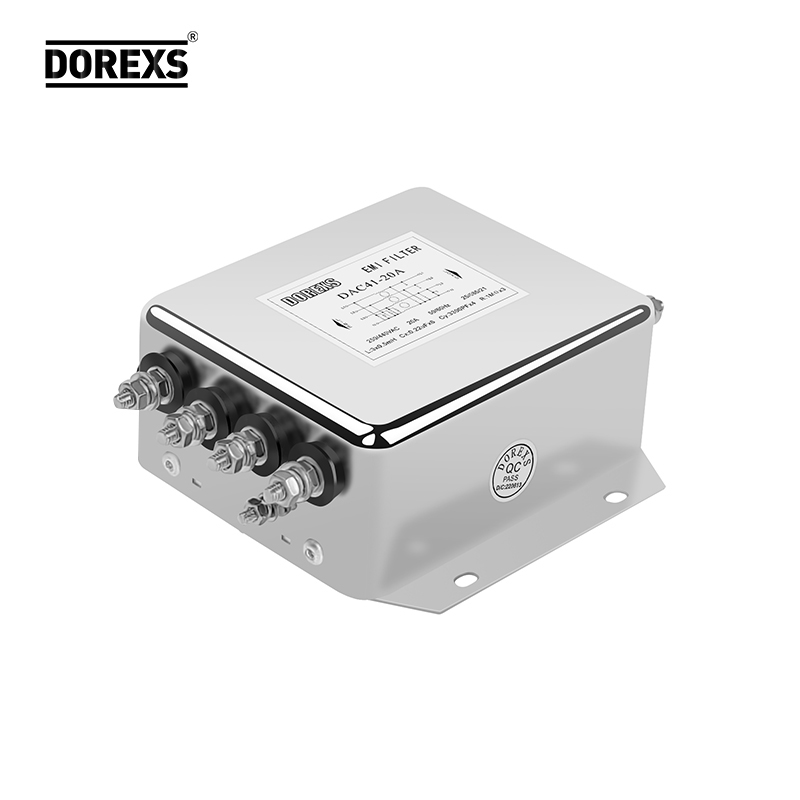
Achieving electromagnetic compatibility often feels like chasing shadows, but it doesn't have to. The old habit of slapping on ferrites and hoping for the best wastes time and boards. Instead, solid suppression starts with knowing exactly where the noise escapes—through common-mode paths, slot antennas, or poorly referenced connectors. Once you map those routes with near-field probes and current clamps, the fix becomes a matter of engineering, not luck.
Simulation tools have matured to the point where you can predict emission hotspots before the first prototype spins. By feeding accurate parasitic models of capacitors, layout parasitics, and cable resonances into a solver, you get a realistic picture of what will radiate. This isn't about replacing bench work, but about arriving there with a shortlist of high-probability suspects rather than a blank stare.
The real payoff shows up in late-stage design changes. When a product fails at the test house, a guess-driven approach means cutting traces and stacking copper tape in desperation. A reliable method, however, tells you whether to adjust the return path, shift a decoupling resonance, or re-route a clock line. Each change is purposeful, measurable, and repeatable—so the second board passes with margin, not by miracle.
Names Engineers Turn to for Noise Control
When a mechanical engineer is chasing down a persistent hum in a ventilation shaft, the conversation almost always drifts toward Owens Corning. Their rigid fiberglass boards have become a shorthand for broadband absorption in ductwork—dense enough to knock out mid-frequency rumble without adding much weight. Rockwool’s stone wool panels are another go-to, especially in industrial settings where fire resistance matters as much as acoustic performance. Both names carry years of field data, which is exactly why engineers mention them before even opening a catalog.
In the realm of active noise cancellation, Bose and Sennheiser are the names that come up when passive treatment hits its limits. Bose’s feedforward algorithms, originally refined for aviation headsets, now show up in everything from forklift cabins to MRI scanner rooms. Sennheiser, on the other hand, has carved out a niche with adaptive systems that tune themselves to changing engine loads—something mining equipment operators have grown to rely on. Engineers don’t just pick these brands for the logo; they pick them because the control loops are stable under real-world vibration and temperature swings.
For structure-borne noise, Lord Corporation—recently rebranded as Parker Lord—remains the quiet heavyweight. Their elastomeric mounts and tuned mass dampers appear in helicopter gearboxes, marine propulsion shafts, and even semiconductor fab tools. Vibro-Acoustics, a smaller but equally respected name, focuses on custom isolators for HVAC chillers and rooftop units, where a poorly chosen spring rate can turn a whole building into a loudspeaker. These companies have built their reputations on failure analysis, so engineers trust their isolation curves more than generic catalog data.
Built to Tame Interference in Demanding Setups
Crowded venues, industrial machinery, and dense urban infrastructure all throw a wall of RF noise at wireless gear. This system doesn't just tolerate that chaos—it actively hunts down clean spectrum. A dedicated front-end filter bank rejects out-of-band energy before it ever reaches the receiver, while a dynamic channel-hopping engine constantly maps the local interference landscape. The result is a link that stays locked even when a dozen other transmitters are screaming on adjacent frequencies.
What really separates this from half-hearted interference mitigation is the closed-loop feedback between antenna and baseband. Instead of waiting for packet loss to trigger a retune, the hardware measures in-band noise floor every few milliseconds and adjusts gain, bandwidth, and modulation depth on the fly. That means the signal doesn't just survive a sudden burst of interference—it barely flinches. Engineers will appreciate that you can see this happening live in the diagnostic stream, complete with spectral snapshots of exactly what got filtered out.
The payoff shows up in situations where a dropped frame costs real money: broadcast trucks parked next to high-voltage lines, theater productions with a dozen wireless mics and IEMs, or automated factory cells with servo drives spamming harmonics. Users report that setups which previously required painstaking frequency coordination now just work after a single scan, leaving them free to focus on the show, the production line, or the live shot instead of babysitting a spectrum analyzer.
Where Consistent Filtration Meets Field-Proven Design
A filter that works perfectly on Monday but drifts by Friday isn’t consistent—it’s a liability. Here, the media is stabilized to keep retention ratings steady as differential pressure climbs, so the first liter and the last see the same cut-off. That kind of hold-the-line behavior comes from controlling pore geometry at the fiber level, not from adding extra layers that choke flow.
The housing, end caps, and bypass valve share the same lineage as systems that have logged thousands of hours in hydraulic and lubrication circuits. Mounting bosses are reinforced where cracks tend to start, seals are sized to survive thermal swings, and the bowl is shaped to shed vibration instead of amplifying it. These are details you notice only after a few teardowns—which is exactly the point.
Put those two halves together and maintenance stops being guesswork. Change intervals stretch because the element doesn’t unload trapped particles when flow pulses, and the housing doesn’t loosen at the threads after repeated torque cycles. Consistent filtration inside a proven shell means fewer surprises downstream, fewer unplanned shutdowns, and a service schedule you can actually trust.
The Quiet Achievers in EMC Component Supply
In the sprawling electronics supply chain, electromagnetic compatibility components rarely grab headlines. Yet behind every reliable vehicle control unit, hospital monitor, and industrial drive sits a network of suppliers who treat ferrite beads, common-mode chokes, and shielding gaskets not as commodity afterthoughts, but as precision instruments for signal integrity. These quiet achievers often operate with little fanfare, yet their catalog depth and failure-analysis rigor determine whether a design passes emissions testing on the first try or spirals into a costly debugging cycle.
What sets the strongest players apart is seldom a single star product. It is the ability to match impedance curves to the exact switching frequency of a customer's converter, to hold tight tolerances on suppression capacitors across temperature swings, and to ship small lots for prototyping without treating engineers as an inconvenience. Their documentation reads like an applications engineer's notebook, with measured attenuation plots and derating guidance rather than glossy marketing promises. Many have spent years refining core materials and winding techniques that remain invisible once the board leaves the factory.
This understated expertise becomes a strategic advantage when time-to-market shortens. A supplier that can quickly suggest an alternative ferrite material or a lower-profile shield clip saves not just BOM cost, but weeks of lab retesting. In a sector where compliance hinges on decibel margins, the quiet achievers are the ones who make passing CISPR or FCC limits feel routine. They do not chase attention; they earn it through repeat business, word-of-mouth engineering trust, and components that simply work when the noise floor rises.
FAQ
Schaffner and TDK tend to dominate here. Schaffner's FN series handles high currents and harsh mains conditions without much derating, while TDK's EPCOS line offers rugged three-phase filters with excellent insertion loss up to several hundred amps. Both have decades of field data from motor drives and automation systems.
Murata specializes in surface-mount and small through-hole filters that don't sacrifice attenuation. Their ferrite bead arrays and common mode chokes fit tight board layouts, and the NFM series is frequently used in automotive infotainment and portable medical gear where space is at a premium.
Yes, Würth Elektronik and KEMET offer solid performance at lower price points. Würth's WE-CLFS line covers common-mode filtering for switched-mode power supplies, and KEMET's film-based filters are a good match for appliance motor control. They aren't the cheapest no-name parts, but they provide consistent quality without the premium of Schaffner or TDK.
For three-phase systems above 100 A, look at Schaffner's FN 3359 and TDK's B84143 series. Roxburgh also makes robust high-current filters that are common in European industrial machinery, with excellent attenuation in the 150 kHz to 30 MHz range. These brands publish detailed insertion loss curves under load, which helps avoid surprises.
Focus on leakage current and safety approvals. Schaffner and Cosel both offer medical-grade filters with leakage below 0.5 mA, which is critical for patient-connected equipment. Check for IEC 60601-1 compliance and ask for test reports under actual load; some cheaper brands only test at 50 ohms, which hides resonance issues.
Yes, mainly in the materials and winding techniques. TDK uses high-permeability nanocrystalline cores in some filters, which boosts low-frequency attenuation without making the part bulky. Murata often uses multilayer ceramic technology for higher-frequency noise. A brand like Schaffner focuses on temperature stability and long-term aging, so the filter won't drift after years of use.
Roxburgh and BLOCK are worth a look, especially for rail and industrial drives. Roxburgh's single-phase filters have excellent differential-mode rejection, and BLOCK's compact designs handle high DC-link voltages well. They aren't as widely stocked in North America, but their datasheets are transparent and the build quality is on par with larger names.
Stick to authorized distributors and check for certification marks like UL, CSA, or ENEC. Reputable brands such as Schaffner, TDK, and Murata have clear traceability and date codes. If a deal seems too good, verify the part number directly on the manufacturer's website—counterfeits often have subtle label differences and perform poorly under surge conditions.
Conclusion
In power electronics, few components earn as much quiet respect as the EMC filters that keep conducted emissions within limits. Schaffner and TDK have spent decades refining input filters, chokes, and feedthrough capacitors that do exactly what their datasheets promise. Engineers don't reach for these names because of glossy marketing; they reach for them after watching a prototype fail emissions testing and finding that a particular series removes the offending noise band without wrecking signal integrity. Murata and EPCOS round out the short list for embedded designs, especially where board space is scarce and thermal margins are tight. These brands consistently deliver clean signals in motor drives, medical equipment, and industrial controls, not by chance but by repeatedly matching attenuation curves to real-world interference profiles.
The less flashy side of the market belongs to the quiet achievers: KEMET, Vishay, and Delta offer filter ranges that rarely make headlines but appear in countless field-proven builds. Their strength lies in consistent lot-to-lot performance and clear documentation, so a suppression strategy works on the first spin rather than after several rounds of trial and error. In demanding setups—variable frequency drives, welding machines, EV charging modules—these filters tame broadband noise and common-mode spikes without adding excessive leakage current or voltage drop. What separates the standout brands is not a single headline specification but the confidence that a selected part will behave the same next year as it did last week. That reliability is why experienced engineers keep returning to the same component families, even when cheaper alternatives sit one row over on the distributor's screen.
Contact Us
Contact Person: Eric
Email: [email protected]
Tel/WhatsApp: 8618117837140
Website: https://www.emcdorexs.com