

Forged Steel Gate Valve Factory: Crafting Durable Solutions for Critical Flow Control
2026-11-16
In high-stakes environments where failure isn’t an option, the choice of a gate valve can define a system’s reliability. At CRXV, we don’t just manufacture forged steel gate valves—we engineer precision barriers that hold the line under extreme pressures and temperatures. But what truly separates a commodity valve from a critical-flow solution? It starts in the forge, where every grain of steel is shaped to resist stress, minimize leakage, and outlast the demands of the toughest industries. This blog takes you inside the advanced process and design philosophy that put CRXV at the forefront of durable flow control.
Where Strength Meets Precision: Inside Our Forging Process
There's a moment in every forge cycle when brute force gives way to something quieter—when a hammered billet, still glowing from the press, begins to take on its final geometry. That's where we live. Unlike machining, which carves away material, forging reshapes the grain flow of the metal itself, aligning it to the contours of the part. The result isn't just stronger—it's more reliable under cyclic loads, more resistant to fatigue. Our shop floor is built around that principle, pairing decades-old hammer instincts with real-time thermal monitoring and closed-loop feedback that adjusts stroke energy within milliseconds.
Precision doesn't mean sterility. Walk through our facility and you'll see sparks flying from an 8,000-ton screw press one minute, then an operator checking die alignment with a laser tracker the next. We've found that true repeatability comes from blending human judgment with sensor-driven oversight—every billet temperature logged, every deformation curve compared against a golden reference. This isn't about chasing tolerances for their own sake; it's about making sure that a forging run of 10,000 parts holds the same microstructural integrity as the first piece that passed inspection. When a customer's gear tooth or connecting rod survives a million stress cycles without cracking, the data proves what our hands already knew.
Underneath it all, the real craftsmanship is invisible. It's in the custom-designed preform shapes that we simulate weeks before a die ever touches steel. It's in the way we nurse the material through its recrystallization window, avoiding grain growth that would undercut performance. And it's in the small, deliberate choices—lubricant formulation, dwell time, cooling rate—that turn a good forging into one that simply never fails. For us, strength and precision aren't competing ideals; they're the same conversation, held in the language of every part that leaves the floor.
Material Integrity That Withstands Extreme Conditions
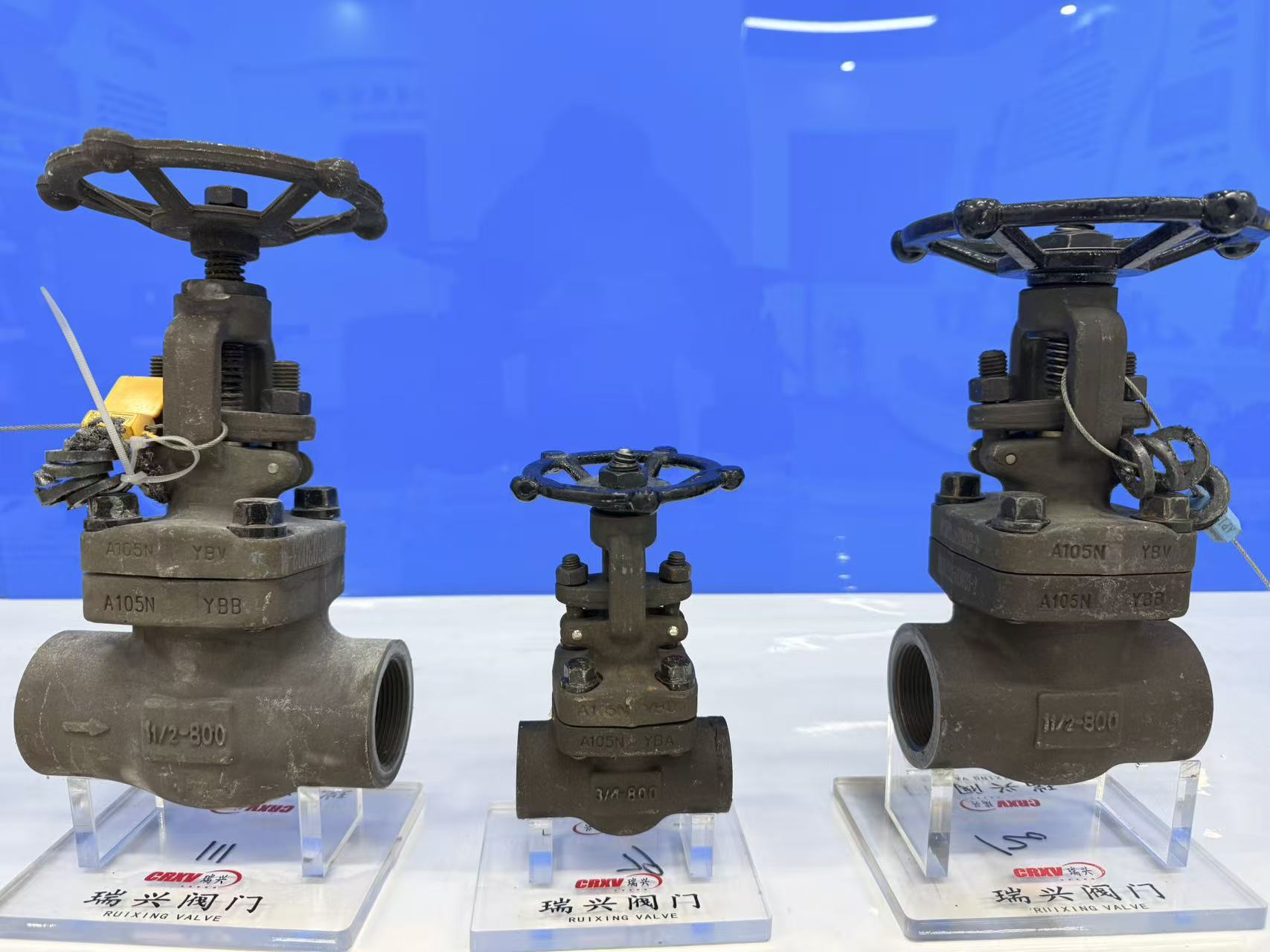
When components are pushed to their thermal or mechanical thresholds, most alloys quietly surrender—microcracks spread like frost across a windowpane. True resilience lives in the material’s grain structure, where stability is engineered at the atomic level long before any stress test begins. Whether facing cyclic thermal shocks above 1000°C or sustained exposure to corrosive brines, the difference between sudden failure and dependable service often comes down to how well the crystal lattice resists dislocation creep and impurity migration.
Under cryogenic conditions, toughness becomes a fragile promise. Austenitic steels and carefully selected nickel-based superalloys maintain their ductility where other metals turn as brittle as glass. This isn’t a happy accident—it’s the outcome of precise control over stacking fault energy and the suppression of ductile-to-brittle transition. The same principle matters at the opposite end of the thermometer, where oxide layers must cling tenaciously to the substrate, refusing to spall even as temperature swings try to peel them away cycle after cycle.
What separates a workhorse material from a liability in aggressive environments is how it ages. Salt fog, sour gas, high-pressure hydrogen—each leaves a unique fingerprint of degradation. The materials that hold their integrity don’t just “resist” these conditions; they develop passive films that self-repair, or they are compositionally tuned so that harmful phases never precipitate along grain boundaries. It’s that deep, metallurgical honesty that keeps a pressure vessel safe a decade after commissioning, in a place where routine inspection is not an option.
Beyond Standard Testing: How Every Valve Earns Its Certification
For many manufacturers, certification is just a checkbox at the end of a production line. Our approach tears up that script. Long before a single metal blank enters the shop, the material’s origin is traced, its chemical composition verified against stricter-than-industry limits, and its mechanical properties tested in advance—not just once, but across multiple heat lots. This front-loaded scrutiny eliminates the weak links that standard tests often miss, setting a foundation where certification isn’t the goal, but a natural byproduct of obsessive material integrity.
What really separates a paper certificate from earned trust is the simulated abuse a valve endures before it ever ships. We don’t settle for running a valve through clean, steady-state conditions. Our test bays replicate real-world punishment: rapid pressure spikes, thermal shocks that swing from sub-zero to scalding in minutes, and seat leakage tests under partial strokes that mimic years of cycling. A single batch may see multiple units pulled at random, then pushed past their rated envelope until they fail—just so the engineers can confirm that the failure mode is gradual and predictable, never catastrophic.
Final sign-off is not handled by an automated printer. Every certification report is compiled by a senior technician who has walked the entire build journey, from raw material inspection to final torque verification on the packing gland. That report includes unredacted test data, time-stamped calibration records for the gauges used, and a signed statement that the specific unit or batch met the company’s internal standards—benchmarks that typically exceed ASME, API, or ISO requirements by a comfortable margin. The result is a certification that holds more than a serial number; it holds an audit trail that customers can remotely review before installation ever begins.
Tailored Flow Control Without the Long Lead Times
Off-the-shelf valves rarely align perfectly with unique process demands, forcing engineers into compromises that ripple through system performance. We’ve replaced that trade-off with a build-to-order approach that starts from a deep library of modular components—trim geometries, actuator interfaces, sealing materials—and configures them to your exact pressure, temperature, and media requirements. The result is a flow control solution that behaves as if it were custom-engineered from scratch, yet moves from specification to shipment in a fraction of the typical wait.
Traditional customization cycles stall on lengthy drawing approvals and one-off machining. By pre-validating a wide matrix of flow characteristics and marrying them with rapid digital prototyping, we collapse what used to be months into weeks. Our assembly teams work directly from live configurator outputs, so the unit you discussed on Tuesday already exists as a production order by Wednesday morning. No back-and-forth, no lost engineering momentum.
What truly sets this apart is that you aren’t locked into someone else’s idea of “standard.” Need a specific Cv curve paired with an ultra-low-emission packing? A face-to-face dimension that matches legacy piping? Those aren’t special requests—they’re starting points. And because the build logic lives in our platform rather than in a paper catalog, repeat orders and site-wide upgrades inherit the same precision without restarting the clock.
Silent Reliability in High-Stakes Environments
In a nuclear submarine hundreds of meters below the surface, a cooling pump operates without vibration sensors screaming for attention. Its bearings glide on a magnetic field, never touching metal—silent not because it is designed to be quiet, but because it is designed not to fail. The crew sleeps undisturbed. This is where reliability loses its voice: not through the absence of noise, but because the system has outgrown the need for alarms. Every component, from the reactor vessel to the ballast controls, has been rehearsed in failure so thoroughly that failure itself becomes a dull, overused script no one expects to perform.
High-stakes environments punish drama. An air traffic control center during a sudden microburst event does not reward the loudest alert; it rewards the controller whose screen calmly re-routes fifteen aircraft while a single amber light blinks once and disappears. Behind that non-event lie decades of layered redundancy, where dual-channel cross-checks happen in nanoseconds and consensus is reached between independent computing lanes before any data reaches the human eye. The system speaks in whispers because it has already decided the answers—the human is there only to witness the resolution, not to command it. Such reliability becomes an extension of the environment itself, like the oxygen content in the room: essential, present, and completely unnoticed.
We often mistake reliability for strength that roars. In truth, it is the opposite: it is the willingness to remove every brittle joint, every single point of contention, until what remains is so coherent that it can be trusted without observation. A deep-space probe’s reaction wheel keeps orientation for a decade without a ground station polling its status. It simply does, while the probe hurtles through void, its silence a form of competence we rarely frame as such. When engineers talk about “graceful degradation,” they are really describing a system that dies politely—by never making a scene. That is the ultimate benchmark: not MTBF numbers on a spec sheet, but the absence of spectacle.
The Engineering Mindset Behind Minimal Maintenance
Engineers who design for minimal maintenance start with a simple but stubborn question: what can quietly remove itself from the equation? They don't set out to build something that needs less care; they set out to build something that makes care unnecessary. This means chasing designs where wear is self-revealing long before it becomes failure, where motions naturally shed debris instead of trapping it, and where access for inspection isn't a second thought carved in after the drawings are done. The mindset reframes maintenance not as a scheduled chore but as a design defect—something inherent in the geometry, material pairings, and load paths that can be systematically engineered out.
A lot of this comes down to orchestrating the unglamorous details. Bearing surfaces get hardened not just where the load is heaviest, but also along edges that would otherwise cold-weld tiny burrs into fatigue starters. Fastener patterns are configured so that loosening is directionally obvious before it becomes dangerous. Instead of adding sensors to monitor component health, the preferred path is to shape the component so that its own slow deformation or acoustic signature telegraphs its condition. That kind of embedded feedback loop eliminates the need for both expensive monitoring gear and the human guesswork that tags along with it.
There's also a quiet obsession with eliminating hidden accumulators—places where moisture, dust, or vibration energy can settle unnoticed. Sloped surfaces, gutters machined directly into castings, and deliberate leak paths that route contaminants away from seals all show up repeatedly. The team doesn't celebrate these moves in presentations; they're just part of the tribal knowledge that turns a prototype into something that can sit unattended for a decade and still wake up ready. Ultimately, the engineering mindset behind minimal maintenance isn't about documenting service intervals. It's about making the interval feel like an insult to the machine's own composure.
FAQ
The valves are built using high-strength forged steel that handles extreme pressures and temperatures without deformation, while the precision-machined seating surfaces ensure zero leakage when fully closed—essential for isolating hazardous or high-value media.
Each valve undergoes a multi-stage heat treatment process that refines the grain structure of the steel, combined with a non-rising stem design that shields threads from corrosive contact, extending service life in chemical plants and offshore rigs.
Every unit is subjected to hydrostatic shell and seat tests at 1.5 times the rated pressure, followed by a helium mass spectrometer leak test on the packing chamber, and a final dimensional inspection using calibrated CMM equipment.
We apply a proprietary hardfacing alloy on both the wedge and seat rings, achieving a differential hardness that resists galling, while the stem is rolled-threaded to reduce friction and protected by a double gland packing system.
We can modify end connections—flanged, butt-weld, or ring-type joint—adjust the wall thickness for unusual pressure classes, and offer actuators from bare stem extensions to fully automated electric or pneumatic setups, all documented through our project engineering team.
Our inventory includes stainless steel grades 316 and duplex 2205, as well as nickel alloys like Inconel 625 for sour service, all sourced from certified mills and verified through positive material identification before machining.
They are heavily specified in oil and gas production, petrochemical refining, and power generation because of their fire-safe design certification and ability to maintain a tight seal even after repeated thermal cycling.
We keep a strategic stock of common configurations in sizes from 2 to 12 inches, class 150 to 2500, and perform final assembly and testing only after order confirmation, so lead times stay competitive while every valve still gets full traceability.
Conclusion
In the heart of the factory, the forging process transforms molten-grade steel into valve bodies with a degree of grain refinement that casting simply cannot replicate. This isn't about following a standard recipe—our metallurgists fine-tune heat ranges and press force for each melt, creating a tightly aligned microstructure that stays intact even when subjected to thermal shocks or abrasive slurries. Before any valve earns its serial number, it undergoes a battery of tests that far outstrip commercial norms: cryogenic cycling, helium leak detection under full-rated pressure, and extended endurance sequences where the gate cycles thousands of times. Only when the material integrity holds and every seal passes at levels traceable to independent audits does the certification plate get fixed to the yoke.
That forged backbone translates directly into tailored flow control. Customers choose from exotic alloy trims for sour gas, compact-bodied designs for retrofit spaces, or special face-to-face lengths—without the punishing lead times that custom work usually demands. Once installed, the valve becomes an anonymous workhorse. It moves with a silent, guided thrust that never telegraphs vibration into the piping, a design detail that prevents the fatigue cracks often missed in adjacent welds. This reliability isn't left to chance. Stem seals dynamically compensate for wear, backseat bushings can be swapped without tearing down the topworks, and the wedge rides on machined guide surfaces that resist seizure. In environments where an unplanned shutdown costs more than the valve itself, that kind of maintenance-minimizing architecture isn't an upgrade—it's the definition of durable.
Contact Us
Contact Person: TIM
Email: [email protected]
Tel/WhatsApp: 8615857807381
Website: https://www.crxv.com/en/