

High-Power Generator Set Vendor Selection Tips for Uninterrupted Power
2026-09-25
Selecting a high-power generator set vendor is never just about horsepower on paper—it's about trusting that your critical operations won't skip a beat. From hospitals to data centers, the cost of a wrong choice is measured in downtime, not dollars. With decades of field-proven engineering, Hichai Power understands that uninterrupted power demands more than a robust engine; it requires a partner who sweats the details others overlook. In this guide, we cut through the noise to highlight the vendor selection tips that separate dependable backup from expensive regret.
Map Your Power Failure Scenarios Before Talking to Any Vendor
Most facilities only think about total blackouts, but your real risk often hides in voltage sags, phase loss, or a generator that fails to transfer. Start by walking the floor during normal operations and asking one question at each machine: what happens if power drops for two seconds, two minutes, or two hours? Write down the exact sequence of events—which drives spin down first, which controllers reboot, which data buffers get wiped. That list becomes your failure map.
Then test a few of those scenarios yourself, even if just on paper. A 200-millisecond sag might crash your laser cutter but leave the packaging line running. A 90-minute outage might be fine for production but lethal for the cold storage room if the backup generator doesn't kick in within 45 seconds. When you sit down with a vendor, don't let them lead with a spec sheet. Hand them your mapped scenarios and ask how their equipment behaves in each one. You'll quickly separate vendors who understand failure from those who only understand wattage.
Ask for Load Bank Test Reports, Not Just Brochure Specs
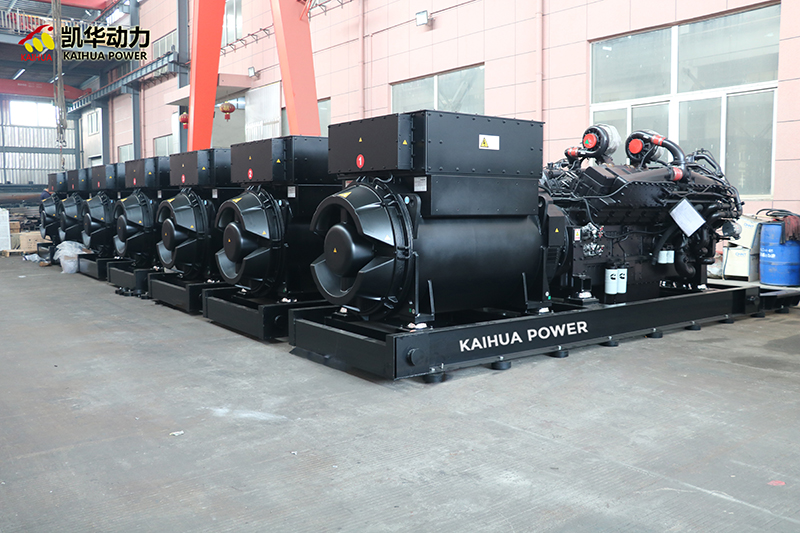
Anyone can print impressive numbers in a glossy brochure, but those figures often come from ideal lab conditions that have little to do with your actual site. When you ask for a load bank test report, you're demanding proof from a real machine under real load, not a theoretical promise. A generator that looks perfect on paper may struggle with voltage dips, frequency swings, or overheating once it's asked to carry a sustained load for hours.
Load bank testing reveals the hidden truth: how the unit handles step loads, how long it takes to recover from a sudden demand spike, and whether the cooling system can keep up when ambient temperatures climb. Reputable suppliers will gladly share these reports because they know their equipment performs. If a vendor hesitates or offers only spec sheets, treat that as a red flag. You're not buying a brochure—you're buying reliability under stress.
Don't settle for calculated ratings. Ask for the test data that shows what happens at 75% load, 100% load, and even a short overload condition. Compare those reports against your actual operating profile, including any motor starting or UPS interactions. The difference between a machine that passes a load bank test and one that merely looks good on a data sheet could be the difference between a brief inconvenience and a costly outage.
Check How Quickly They Can Dispatch a Technician at 3 a.m.
Call at 3 a.m. and see who picks up. If you get an answering service that can only take a message, that's a red flag. A real 24/7 operation has someone on duty who can immediately locate the nearest technician and give you an estimated arrival window.
Ask how they prioritize overnight calls. Some companies treat every after-hours request as an emergency surcharge, while others have a triage system that sends a tech only if it's truly urgent. You want the latter, because it means they're organized enough to respond fast without wasting your money.
Finally, check their track record for middle-of-the-night dispatches. A provider that tracks response times by hour, not just by day, can tell you the average wait at 3 a.m. If they can't show you those numbers, assume their "24/7" promise is mostly marketing.
Visit a Site Where Their Generator Has Run for 48+ Hours Nonstop
A generator that has already logged two full days of continuous operation tells you more than any spec sheet ever could. Look for the hour meter first. If it reads at least 48, someone trusted that machine enough to leave it running through weather changes, fuel refills, and likely at least one oil top-up. That kind of runtime pushes past the honeymoon phase where every new unit seems flawless. Loose fittings, overheating coils, and voltage drift tend to show up only after the first day or two under load.
Ask the owner or site manager how the unit behaved during that stretch. Did the exhaust note stay steady, or did it develop a stumble after hour thirty? Was there any need to reset a breaker or clear an error code? A generator that held a stable frequency and voltage for 48+ hours without intervention has already proven its cooling system, governor response, and fuel delivery in real conditions. That matters far more than a five-minute test run in a driveway.
Pay attention to what the machine leaves behind. Check the oil level and color, look for fuel drips under the skid, and feel the housing for hot spots that might indicate poor airflow. If the site kept a simple log, even a handwritten note with fuel refill times and load changes, read it. Two uninterrupted days create a small but honest reliability record that no glossy brochure can fake.
Compare Five-Year Fuel and Maintenance Costs, Not Purchase Price
The sticker price rarely tells the real story. A car that costs $3,000 less upfront can easily burn through that advantage in fuel and upkeep within three years. Instead of fixating on the number on the windshield, ask for the five-year cost-to-own estimate for any model you're considering. This figure rolls together expected fuel expenses, scheduled maintenance, and typical repair costs based on real owner data. A cheaper car with poor fuel economy and pricey parts might end up costing you more than a slightly pricier model that sips gas and holds up well over time.
Fuel economy is the most obvious variable, but don't stop at the EPA window sticker. Check owner-reported real-world mileage on forums or fuel-tracking apps. A hybrid that costs $2,500 more than its gas-only sibling might pay that back in under four years if you drive 15,000 miles annually. Maintenance is trickier: some brands require expensive synthetic oil changes, dealership-only software resets, or timing belt replacements at 60,000 miles. Others use cheap, widely available parts and simple designs that independent mechanics can service for half the dealership rate.
A practical approach is to build a simple five-year budget for each candidate. List expected annual mileage, average local fuel price, and the manufacturer's recommended service schedule with estimated costs from a trusted mechanic. Then add one or two common repairs based on reliability surveys. You don't need perfect precision—just enough clarity to see which car fits your long-term wallet. Often, the "more expensive" option becomes the bargain once you stop comparing purchase prices and start comparing ownership costs.
Demand Remote Monitoring Access That Your Own Team Controls
Remote monitoring often means handing the keys to a third party, but that doesn't sit well when your infrastructure is the backbone of daily operations. You need visibility without surrendering control. The right approach keeps your team in the driver's seat, deciding who sees what, when alerts fire, and how data gets used. No black boxes, no surprise access requests—just a transparent window into your systems that you can open or close on your terms.
Giving your own people the ability to watch performance, review logs, and respond to anomalies in real time changes the dynamic. Instead of waiting on a vendor's ticket queue, your engineers can pull up the same dashboards, drill into metrics, and correlate events while the context is still fresh. This isn't about adding another management layer; it's about cutting out the middleman so troubleshooting gets faster and quieter. The monitoring tool becomes an extension of your existing workflow, not a separate silo.
Practical control also means granular permissions and audit trails. You might grant read-only access to a junior analyst but reserve configuration changes for senior admins. Or you could set up temporary access for a vendor during a migration and revoke it the moment the work wraps. These aren't just nice-to-haves—they're the difference between feeling watched and actually being in charge. When remote access is something you administer rather than beg for, the whole monitoring setup starts to work for you, not the other way around.
FAQ
Start by defining your actual runtime requirements—expected load, duration, and any redundancy needs. Then filter vendors who have installed and supported units of that size in facilities with similar cyclical or continuous demand. A vendor who asks about your load profile before quoting is usually more dependable than one who pushes a standard package.
Ask for case studies, but go deeper: request contact details for two or three sites that have run the same generator model continuously for at least 8,000 hours. Speak with their operators about unexpected failures, spare part lead times, and how the vendor handled urgent service calls. Site tours reveal more than brochure specs.
It often matters more than the generator brand itself. High-power units rarely fail completely, but when they do, downtime is measured in production losses. A vendor with a stocked regional warehouse, a trained field team, and a guaranteed four-hour response window can save you from a week-long shutdown. Check that service engineers are factory-certified for the specific engine and alternator.
Yes, because emission rules tend to tighten quickly and retrofit costs are steep. Look for vendors who already offer Tier 4 Final or equivalent low-emission packages, and who can document the unit's compliance for your locality. A vendor who dismisses these concerns may leave you with an asset that becomes illegal to run in three years.
Extended warranty exclusions, coolant and oil analysis fees, remote monitoring subscriptions, and load bank testing are easy to miss. Also ask about fuel consumption at 75% load versus 50% load—a cheaper generator can cost far more to run annually. Insist on a written lifecycle cost estimate covering ten years of fuel, maintenance, and typical repairs.
Ask for the list of critical parts they keep in stock locally, not in a central hub overseas. For high-power sets, items like turbochargers, injectors, and control boards should be within same-day reach. Also check whether they use genuine OEM parts or aftermarket substitutes, because mixing both can void engine warranties and shorten kit life.
Generally yes, because it removes finger-pointing when something goes wrong. One vendor accountable for the whole system—fuel supply, electrical integration, cooling, and maintenance—will optimize the design for reliability rather than shifting blame. But include clear performance penalties and an exit clause if they miss agreed response times.
Conclusion
Before shortlisting a high-power generator set vendor, spend real time mapping the specific ways your facility loses power. A hospital basement flooding during a storm demands a different response than a data center brownout at noon. Once you know your failure modes, ask for load bank test reports from independent runs, not glossy brochure numbers. Then push on service response: if a generator fails at three in the morning, will a technician actually arrive before your UPS batteries die? Many vendors promise 24/7 support, but only a few can show dispatch logs from past overnight calls.
A site visit to a customer who ran the same generator for at least 48 hours without interruption often reveals more than any factory demo. Pay attention to fuel consumption under partial load, noise complaints, and how the local tech team handled minor faults. Also shift your spreadsheet away from the initial purchase price. Compare five-year totals for fuel, oil changes, coolant, block heaters, and emergency call-outs. Finally demand remote monitoring that your own engineers control. If the vendor locks you out of the data or charges extra for basic alarms, walk away. A generator that keeps critical loads online is only as reliable as the team and contractual safeguards around it.
Contact Us
Contact Person: Ms. Lu
Email: [email protected]
Tel/WhatsApp: 8618917899306
Website: https://www.hichaipower.com