

Logo Marking Machine Company: Your Ultimate Guide to Precision Branding Solutions
2026-05-18
In the world of manufacturing and product identification, precision and durability are non-negotiable. That's where Danmajet steps in, redefining what it means to brand with confidence. Whether you're marking logos on metal, plastic, or delicate surfaces, the right technology makes all the difference. This guide dives deep into logo marking machine solutions that combine speed, accuracy, and lasting impressions—helping you choose a system that doesn't just leave a mark, but tells a story of quality.
Precision Meets Versatility: The Anatomy of Logo Marking Tech
At the heart of modern logo marking lies a carefully orchestrated interplay between hardware precision and software adaptability. The physical marking head, whether it's a fiber laser, a dot peen stylus, or an inkjet nozzle, must maintain micron-level consistency across thousands of cycles. This demands high-grade linear guides, vibration-dampened mounts, and real-time feedback systems that adjust for temperature drift or material irregularities on the fly. It's not just about making a clean mark once—it's about repeating that mark with exacting uniformity on curved surfaces, rough castings, or delicate electronics.
Software, often overlooked, is what transforms raw machinery into a flexible branding tool. Instead of rigid templates, intelligent layout engines interpret vector artwork and dynamically adapt it to varying product geometries. A logo that looks sharp on a flat aluminum panel might distort when applied to a cylindrical bottle—but advanced algorithms compensate for curvature, surface texture, and even ambient lighting conditions that affect contrast. This seamless translation from design file to physical mark requires deep integration with vision systems that verify alignment in milliseconds, correcting for part placement variations without interrupting production flow.
What sets exceptional systems apart is their ability to toggle between materials and processes without manual recalibration. A single unit might etch stainless steel in the morning, anneal titanium after lunch, and later ablate anodized coatings—all while maintaining crisp, readable logos. This agility stems from modular tooling, auto-switching lens configurations, and material databases that store optimized power, speed, and frequency parameters. The result is a technology that doesn't just mark; it adapts, learns, and consistently delivers the fine detail that defines premium brand identity.
Craftsmanship Codes: Choosing Machinery That Reflects Your Brand
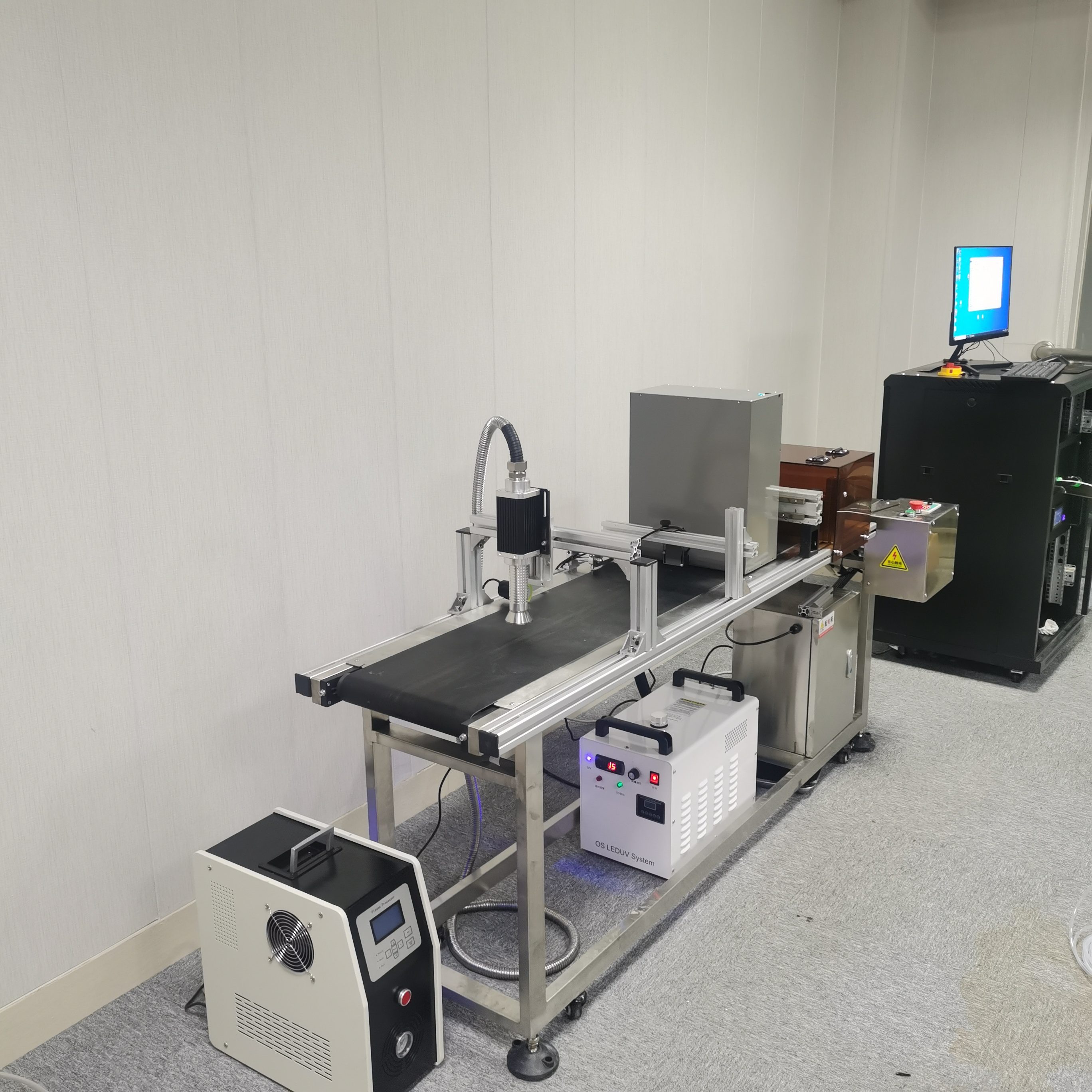
The tools you choose to build with speak volumes before your product ever reaches a customer. When a visitor steps onto your production floor or glimpses behind the scenes, the machinery in motion becomes part of your narrative. It’s worth asking: does the hum of your lathe communicate precision? Does the patina on your press convey heritage? These are the unspoken codes of craftsmanship—subtle signals that align your process with the identity you’ve built. Selecting equipment isn’t just a technical decision; it’s a curatorial one. A brand rooted in tradition might seek out rebuilt mechanical workhorses with a story, while a brand driving innovation leans toward sleek, automated systems that whisper the future.
Beyond aesthetics, the machinery you operate shapes the very texture of your output. A hand-fed planer leaves a surface that no CNC can replicate—a micro-terrain of undulations that catches light differently. These are the hallmarks that connoisseurs learn to recognize. They’re not flaws; they’re fingerprints. The weave of a fabric, the grain of a turned leg, the slight irregularity in a welded seam—these details anchor your product in a specific world of making. When you choose your equipment, you’re encoding these signatures directly into the object. The machinery becomes a silent co-author, and its capabilities define the boundaries of your aesthetic.
There’s also a pragmatic poetry in maintaining a consistent tooling philosophy across your workshop. When every machine shares a common logic—whether that’s a dedication to manual control, a unified digital ecosystem, or an allegiance to a particular era of engineering—the workflow itself starts to breathe. Operators move with less friction, repairs become stories of mastery, and the entire creative rhythm amplifies your brand’s voice. This harmony is palpable, even to outsiders. It translates into reliability, into the sense that your products emerge from a coherent and intentional space. In the end, the machinery isn’t just making objects; it’s underlining why those objects matter.
Metal, Glass, or Polymer: Material-Specific Marking Secrets
Metals don’t take kindly to half measures when it comes to permanent marking. Their high melting points and reflective surfaces mean that a standard approach often results in faint, barely visible results—or worse, damage to the surrounding area. The trick lies in selecting the right wavelength and adjusting pulse duration. Fiber lasers work exceptionally well here, especially for stainless steel and aluminum, because they deliver concentrated energy that can either anneal the surface for a dark, oxidation-based mark or precisely ablate material for deep engraving. Matching the pulse frequency to the metal’s thermal conductivity prevents excessive heat buildup, preserving edge sharpness and structural integrity.
Glass, on the other hand, demands a delicate touch. Too much thermal stress and you’ll end up with cracks radiating from the mark—or the piece shatters altogether. CO₂ lasers are often the go-to, since glass absorbs their wavelength effectively, generating controlled micro-fractures that scatter light to create a frosted appearance. For extremely thin or curved glass, UV lasers offer a low-heat alternative by modifying the surface chemistry without introducing significant thermal gradients. The secret is to keep the power density just high enough to disrupt the silica network without triggering runaway crack propagation, a balance that takes trial runs to dial in perfectly.
Polymers are a different beast entirely. Their low melting temperatures and variable additive packages mean that what works on polycarbonate might destroy polyethylene. Instead of brute-force engraving, the preferred method is often a photochemical reaction triggered by UV or green lasers. These wavelengths break molecular bonds in the pigment or the polymer itself, leading to a color change that remains subsurface—so the mark can’t be rubbed off. For materials that don’t naturally respond well, doping with laser-sensitive additives before molding unlocks high-contrast results. Managing heat is critical; too much energy turns the surface into a gooey mess, while too little leaves behind a weak ghost mark that fades over time.
Designing for Permanence: Software and Hardware Synergy
Creating technology that lasts isn’t just about rugged materials or sturdy casings—it’s a delicate dance between code and physical components. When software updates strain aging processors or drain batteries faster than the hardware can cope, we’re left with devices that feel obsolete long before their shells give out. True permanence comes from designing these two layers to evolve together, with firmware that respects hardware limits and chipsets built to handle future demands gracefully.
We often treat software and hardware as separate realms, but their fates are intertwined. A sensor might be perfectly functional after a decade, yet without drivers that speak its language on modern platforms, it becomes electronic waste. The key is building abstraction layers that insulate longevity—updatable interfaces that let physical components outlive their original operating systems, while keeping the core functionality intact and responsive to changing user needs.
The most resilient systems aren’t the ones with the longest warranties, but those where software acts as a steward rather than a consumer of hardware resources. By prioritizing efficiency-first development and modular design on both sides, we can create devices that feel timeless—adapting through thoughtful iterations rather than demanding replacement the moment a new protocol emerges.
Beyond the Machine: Support, Training, and Scalability
True growth doesn’t happen in isolation. Behind every powerful platform lies a team that knows your name, understands your workflows, and shows up before you even realize you need them. We embed support into your journey—not as an afterthought, but as a foundational layer. Whether it’s a quick troubleshooting session or a deep dive into advanced configurations, our specialists treat your challenges as their own. No ticket numbers, no robotic scripts—just thoughtful, human conversations that respect your time and intelligence.
Training transforms tools into instincts. We don’t offer one-size-fits-all webinars or forgettable walkthroughs. Instead, we design learning experiences that match your team’s rhythm: role-specific workshops, hands-on sandboxes, and micro-lessons woven into daily tasks. The goal isn’t simply feature adoption—it’s building the confidence to improvise, adapt, and push boundaries. When your people feel capable, the technology fades into the background, becoming an effortless extension of their expertise.
Scalability often gets reduced to server capacity or database load, but real scalability is about human systems. It’s the quiet discipline of anticipating growth, streamlining permissions, and designing onboarding flows that feel welcoming at 50 or 50,000 users. We engineer flexibility into every layer—licensing models that flex with seasonal spikes, moderation tools that evolve with your community norms, and integration pathways that connect without cramping. Growth shouldn’t feel like breaking things; it should feel like a natural exhale, supported by infrastructure you trust.
In the Trenches: Success Stories from Actual Production Floors
On a sweltering afternoon at a midwest assembly plant, a line supervisor named Maria noticed something that data logs had missed: a slight wobble in a conveyor belt that was causing micro-delays in door panel installation. Instead of waiting for the next maintenance cycle, she grabbed a torque wrench and gathered two technicians. Within forty minutes, they had realigned the belt and added a simple visual indicator—a strip of reflective tape—to make future misalignment visible at a glance. The fix cost less than a cup of coffee per unit and saved the line over two hours of downtime per week. Maria’s story isn’t about high-tech overhaul; it’s about the power of floor-level attentiveness and the courage to act on a hunch.
Across the ocean in a small Japanese machine shop, veteran operator Kenji Tanaka pioneered what his team now calls “tool whisperer rounds.” Every morning before the CNC machines whir to life, he walks the floor, listening for subtle changes in spindle hum and feeling for vibration in the casings. Six months ago, this ritual caught a bearing failure two days before it would have halted production. But the real success lies in how the practice has spread—three younger operators now do their own rounds, and the shop’s unplanned stoppages have dropped by a third. Kenji’s story underlines a truth often lost in boardroom strategies: the most valuable sensors are the ones with calloused hands and years of experience.
In a different corner of the industry, a pharmaceutical packaging team faced a recurring issue: labels peeling off vials due to condensation from cold storage. The prescribed solution was an expensive humidity-control system with a six-month lead time. But a night-shift tech named Luis had another idea. He prototyped a pre-warming tunnel using spare heat lamps and a conveyor segment from a retired line. The improvised setup gently brought vials to room temperature before labeling, eliminating the peel-off problem at a fraction of the projected cost. Management was initially skeptical, but month-over-month defect rates told a convincing story. Luis’s initiative not only solved the immediate headache but also planted a seed: today, the plant holds a quarterly “innovation jam” where any floor worker can pitch a fix. Real production floors are where theory meets friction, and these quiet acts of ingenuity show that the best success stories are often written in grease and sweat, not in slide decks.
FAQ
Start by looking at your materials, production speed, and the mark's purpose. Laser systems work well for high-precision etching on metals and plastics, while dot peen markers are rugged for heavy-duty parts. Inkjet options suit porous surfaces and high-speed packaging. We help match the tech to your workflow, so you're not overcomplicating things.
It's the combination of in-house engineering and real-world testing. We don't just resell machinery—we fine-tune every unit for consistency under tough conditions. Customers often tell us our quick-change fixtures and intuitive software save them hours compared to generic setups.
Absolutely. We've designed specialized fixtures and adjustable power settings for curved, textured, or sensitive materials like glass and ceramics. For instance, our laser markers use auto-focus to adapt on the fly, so you get a crisp logo even on uneven surfaces.
Think of us as an extension of your team. We provide on-site training, remote diagnostics, and a dedicated service line that picks up within three rings. Most parts are in stock, and if you're ever stuck, our engineers can guide you through fixes in real time—no runaround.
Typically, a standalone unit can be up and running in a day. Full-line integration with conveyors or cobots might take a few days, depending on complexity. We pre-configure software and often do a dry run before shipping, so you're not wasting time on adjustments.
We're deep into automotive for VIN marking, aerospace for traceability, medical devices for UDI compliance, and even jewelry for personalization. Our team understands the specific regulations and durability needs in each sector, so you're not getting a one-size-fits-all pitch.
Of course. We encourage it. Send us your samples and we'll run demos, then share high-res videos of the results. You can also visit our lab or do a live virtual trial. It's the best way to see if the mark meets your standards without any pressure.
We focus on mark depth, contrast, and environmental durability. For metals, we might recommend annealing or deep engraving instead of just surface marking. We also provide abrasion testing data so you know exactly how the mark holds up against chemicals, UV, or heavy use.
Conclusion
A logo marking machine company worth its salt doesn’t just sell hardware—it engineers a seamless bridge between precision engineering and creative brand expression. The anatomy of modern marking tech reveals a careful balance: lasers, dot peen, or scribing systems are fine-tuned to deliver micron-level accuracy across metals, glass, and polymers, each material demanding its own secret sauce of power, speed, and wavelength. Real versatility lies in how effortlessly a single machine can switch from deep engraving stainless steel to annealing a delicate polymer without sacrificing clarity. But the magic truly solidifies when software and hardware work in lockstep—intuitive interfaces allow complex designs to translate into permanent marks with repeatable consistency, while built-in vision systems verify every stroke. Designing for permanence means anticipating wear, corrosion, and handling, so the synergy between robust mechanics and intelligent software ensures marks outlast the product itself.
Choosing the right machinery, however, goes beyond technical specs. It’s about finding equipment that mirrors your brand’s identity—whether that means compact benchtop models for boutique workshops or fully automated inline systems for high-volume lines. The best partners offer more than a machine; they bring hands-on training, responsive support, and a roadmap for scaling as your needs evolve. On production floors, this commitment shows: an automotive supplier might reduce rework by 30% after switching to a tailored dot peen setup, while a glassware artisan discovers new revenue streams with UV laser marking. These success stories aren’t just about throughput or ROI; they highlight how the right branding solution turns every product into a durable ambassador, combining craftsmanship with industrial reliability in a way that off-the-shelf options simply can’t match.
Contact Us
Contact Person: Jacky
Email: [email protected]
Tel/WhatsApp: 086 15000607053
Website: https://www.danmajet.com