

Mobile Trailer Generator Manufacturing: Essential Processes and Best Practices
2026-11-16
Walk through any job site running off a mobile trailer generator and you’ll hear the same unspoken question: will it hold up when the load spikes and the weather turns? The answer usually traces back to manufacturing choices made months earlier on the factory floor. At DINGBO POWER, those choices aren’t left to chance. This guide breaks down the essential processes behind a reliable mobile trailer generator—from frame welding and sound attenuation to load bank testing—and the best practices that separate equipment built for real field conditions from units that only look good in a brochure.
Designing the Trailer Chassis to Handle Full Generator Weight Without Flex
A trailer chassis built to carry a full generator load without flexing starts with the main rails. Instead of relying on standard C-channel, many builders switch to rectangular tubing or reinforced I-beams. The taller the section height, the stiffer the rail against vertical bending. Pair that with a thicker wall—typically 3/16 inch or more for heavy units—and the frame resists the sag that shows up as door gaps or misaligned couplers. Crossmembers shouldn't be an afterthought either. Spacing them closer under the generator's mounting points distributes the weight into the rails rather than letting the deck plate bow between supports.
Another overlooked factor is how the generator mounts to the chassis. If the engine or alternator feet bolt directly to a flat plate, vibration and static load concentrate at four small spots. A better approach is to weld mounting pads or a subframe that ties into multiple crossmembers. This spreads the downward force over a larger area and keeps the chassis from twisting when the trailer sits on uneven ground. Gussets at the junction of crossmembers and rails also help, especially at the front and rear where the frame transitions to the tongue and rear bumper.
Finally, don't underestimate the value of a quick deflection check before the trailer ever hits the road. You can calculate the expected bending under full generator weight using simple beam formulas, or run a basic finite element analysis if you have the software. Even a rough hand calculation will tell you whether to step up the rail size or add a center spine. If you're modifying an existing trailer, jack stands placed under the axle and generator mounting area will reveal any flex as you lower the load—watching the frame twist or settle unevenly is a clear sign that additional stiffening is needed before towing.
Selecting Coatings and Hardware That Outlast Constant Towing and Weather
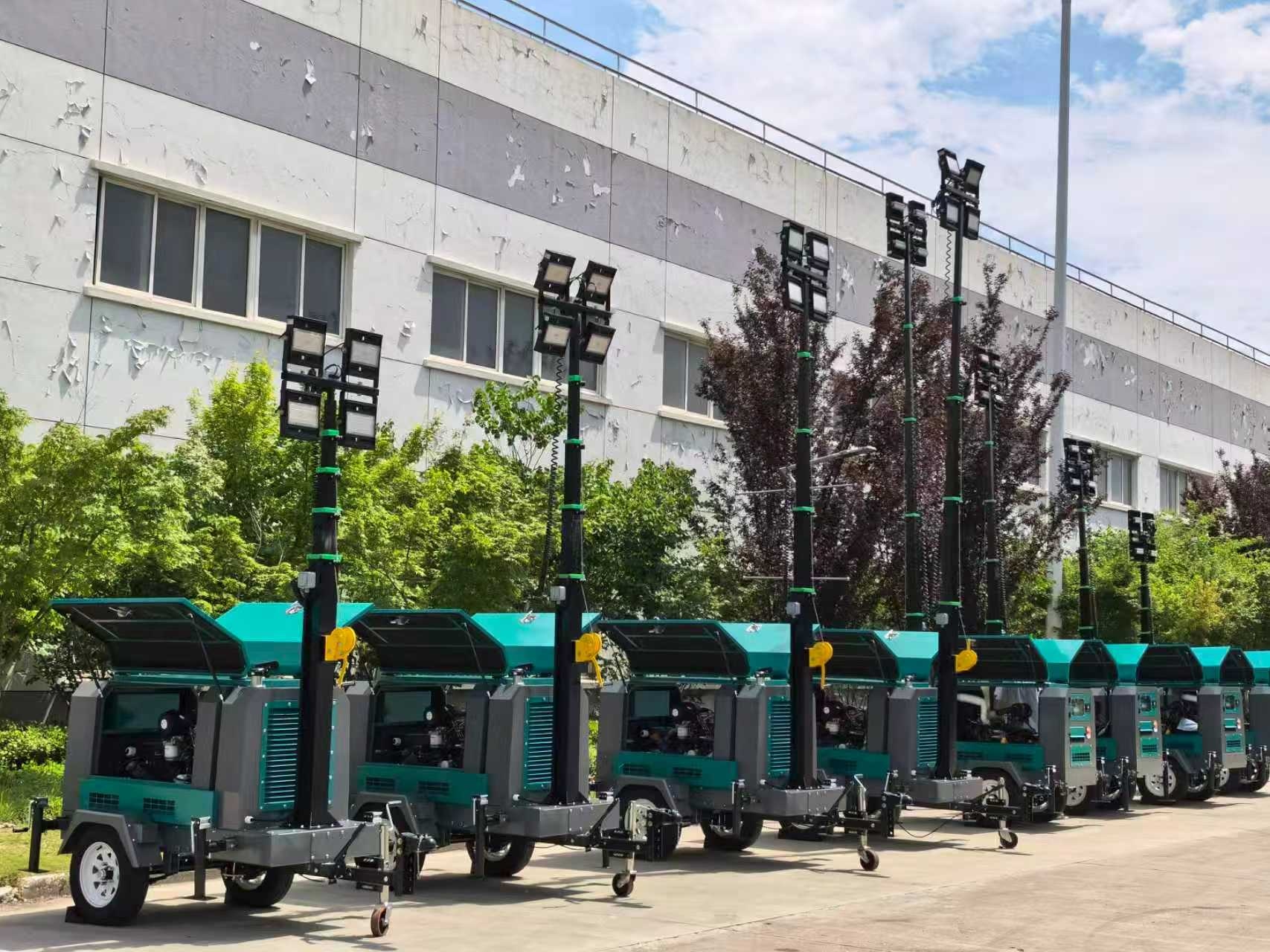
Towing puts stress on every exposed surface, but the real enemy is often the combination of road salt, UV exposure, and rapid temperature swings. A coating that looks tough on a showroom floor can start failing at the edges and welds within months if it wasn't tested for flexing, impact, and humidity cycling. Instead of relying on generic terms like "marine grade" or "heavy duty," ask for actual test results: salt spray hours, adhesion ratings after thermal shock, and hardness measurements. These numbers tell you more than any glossy finish ever will.
For steel parts like hitches, brackets, and trailer frames, hot-dip galvanizing delivers a thick, sacrificial zinc layer that survives scratches far better than paint alone. Powder coating over galvanizing adds color and an extra barrier, but only if the surface was properly blasted and primed first. Avoid liquid enamel on high-wear areas—it chips easily and traps moisture underneath. If you're using aluminum, skip raw surfaces and anodize or apply a chromate conversion coating, then seal with an epoxy primer. Pay special attention to drilled holes, weld seams, and any place where two different metals meet; these are where corrosion starts and spreads silently.
Hardware selection is just as critical. Stainless steel isn't one material—304 will pit near coastal salt spray, while 316 or duplex grades hold up much longer. Fasteners should have a locking mechanism that doesn't rely on thread deformation alone, since vibration from towing loosens ordinary nuts quickly. Look for hinges and latches with drainage channels or weep holes so water doesn't pool and freeze. And don't forget the small stuff: rubber gaskets, plastic bushings, and nylon washers can isolate dissimilar metals and stop galvanic corrosion before it eats through your hardware. A quick monthly wipe-down of exposed joints and a dab of anti-seize on threads will extend the life of every component more than any single coating choice.
Welding in Sequence So the Frame Stays Square Under Real Loads
When you weld a frame together, the heat doesn't stay where you put it. Each bead pulls the metal as it cools, and if you chase one side around the perimeter, that cumulative shrinkage will rack the whole assembly out of square before you even set it down. The trick is to let the frame fight itself evenly—weld opposing joints in pairs, move around the workpiece instead of working linearly, and give the heat a chance to spread instead of pooling in one corner.
A practical sequence might start with short tack welds at all four corners, then backstep the long seams from the center outward, alternating between opposite sides. This balances the thermal load so no single member gets overstressed. You're not just avoiding visible distortion; you're preventing locked-in stress that shows up later when the frame is actually carrying weight. A frame that measures square on the bench can still twist under real load if the welds were laid in a way that left one side tighter than the other.
Under working conditions, a frame that's out of square by even a small amount will transfer load unevenly through its joints, leading to premature cracking or fatigue. Sequencing the welds to keep the structure balanced isn't about being fussy—it's about building something that stays true after the clamps come off and the real forces hit it. Get the order right, and the frame will hold its shape without needing a torch and a come-along to persuade it back.
Mounting and Wiring Power Components for Easy Service Access
Position high-failure items like contactors, fuses, and terminal blocks near the front edge of the panel, leaving at least 100 mm of clear space above and below for tool entry and heat dissipation. Route power conductors in dedicated finger-safe channels with snap-on covers, keeping control wiring in a separate duct to avoid induced noise during maintenance probing. Use DIN-rail-mounted disconnect terminals for each incoming phase, and label every termination point with heat-shrink markers that read clearly from a standing position—not printed on the wire insulation where they rub off after a few service calls.
Where space allows, add a service loop of 150–200 mm on each power lead before it enters the component, so a burnt contactor can be swung out without cutting cable ties or pulling on adjacent terminals. For components over 5 kg, drill mounting holes in a removable subplate rather than directly on the enclosure back wall; this lets a technician unbolt the entire assembly and bench-test it under good light. Avoid stacking fused disconnects behind large transformers or cable troughs—if a downstream short takes out a fuse, you want the replacement to take under two minutes, not require removing six other modules first.
Load Bank Testing Every Unit Before It Earns a Serial Number
Before any generator set gets stamped with a serial number, it has to prove itself under real electrical stress. We don't just bolt components together and hope for the best—every assembled unit is connected to a load bank that simulates the exact conditions it will face in the field. Resistive and reactive loads are applied in steps, from 25% up to 110% of rated capacity, while our technicians watch voltage regulation, frequency stability, and thermal behavior. If the engine stumbles or the alternator dips below tolerance, the unit gets pulled off the line and torn down to find the root cause.
This isn't a quick pass/fail check. The load bank runs each machine for hours, cycling hot and cold to expose weak solder joints, faulty insulation, or cooling system flaws that would otherwise hide until the first outage. We log every parameter into the unit's build record—oil pressure under full load, exhaust temperature at max kW, recovery time after a sudden block load. Only when those numbers repeat within spec across three separate runs does the unit earn its serial plate. Even then, a second technician signs off independently, because a nameplate means nothing if the data behind it is soft.
The real payoff shows up years later, when a hospital transfers to backup power during a blackout and the generator takes the full building load without a flicker. That confidence comes from the load bank ritual—no shortcuts, no sampling, no "representative testing" of a batch. Each unit is an individual, and each one gets the same brutal welcome before it's allowed to carry our name and serial number.
Final Walkthrough and Documentation That Prevents Field Headaches
Before anyone packs a tool bag, grab a clipboard and walk the actual site with the people who'll be doing the work. Not the project manager, not the sales lead—the electrician, the installer, the crew lead. Have them point out every spot where the drawing says one thing and the wall says another. Write those mismatches down in plain language. A final walkthrough isn't a formality; it's your last chance to catch a buried conduit, a reversed door swing, or a missing anchor point before it becomes a four-hour argument in the sun.
Documentation that actually prevents field headaches doesn't read like a spec sheet. It reads like a note from a friend who's already been burned. Include photos with arrows and circles, not just reference numbers. Write down what was agreed, who agreed to it, and when it changed. If a dimension moved three inches on the plan, say so in the margin next to the new measurement. Field crews don't have time to cross-reference three different PDFs on a phone screen. Give them one clear sheet per task, and update it the same day the change happens.
The real trick is to document decisions, not just conditions. When the owner says "we'll handle that later," write down exactly what "later" means and who owns it. When a trade overlaps another, record the handoff point and the expected sequence. A good final walkthrough doesn't eliminate surprises—it just makes them boring. The crew shows up, sees the note, shrugs, and gets to work. That's the goal: no phone calls, no rework, no standing around waiting for a decision that should have been made last week.
FAQ
Most builders stick with either powder-coated steel or aluminum. Steel offers higher tensile strength for rough terrain but adds weight; aluminum resists corrosion better in coastal or humid environments. The choice usually depends on where the trailer will operate and how often it will be moved.
Generators produce constant vibration, so mounting them directly to the trailer frame leads to cracked welds and premature component failure. Using rubber isolators or spring mounts between the engine base and the trailer bed absorbs most of that movement. This also reduces noise transfer into the frame.
Use stranded copper wire rated for outdoor exposure and route it through flexible conduit. Separate AC and DC lines to prevent interference. Every connection should be sealed with heat-shrink tubing and dielectric grease, especially near the engine where heat and moisture are common.
Running the unit under a simulated full load reveals issues that no-load startups miss, such as voltage drops, overheating, or governor instability. It's better to discover a weak connection or undersized breaker in the shop than at the customer's site.
Key points include verifying the axle rating exceeds the fully loaded weight by at least 20 percent, checking the tongue weight is within 10 to 15 percent of total mass, and using safety chains rated for the gross vehicle weight. Brake systems, if required by local law, should be tested on both axles.
A zinc-rich primer followed by a two-part polyurethane topcoat holds up well against road salt and gravel chips. For coastal areas, stainless steel fasteners and sealed wiring harnesses reduce long-term rust. Washing the undercarriage after exposure to de-icing chemicals also extends life.
Match the tank capacity to the intended run time at 75 percent load, not just the engine's maximum consumption. Add about ten percent extra volume for expansion and reserve. Place the tank low and centered over the axle to maintain stable towing.
Include a load test report, a wiring diagram with wire gauge and color codes, a torque chart for critical fasteners, and a maintenance schedule broken down by hours. Photos of hidden assemblies before closure help troubleshoot future issues without disassembly.
Conclusion
A mobile trailer generator lives or dies by its chassis. The frame must be engineered around the exact weight and vibration profile of the generator set, not just adapted from a stock trailer. Extra crossmembers, gussets at high-stress joints, and a calculated rail height all work together so the deck doesn’t twist or sag when the unit is loaded and towed over rough ground. Coatings matter just as much as steel thickness: a zinc-rich primer under a two-part polyurethane topcoat will shrug off road salt and UV far better than a single enamel. Every bolt, hinge, and latch gets chosen for corrosion resistance and repeated use, because hardware failures show up long before structural ones.
Welding sequence is where many builders go wrong. Tack the frame in the wrong order and it pulls out of square before the first full pass. Shops that build these units consistently weld from the center outward, alternate sides, and recheck diagonal measurements after every few beads. Once the skeleton is stable, the power side gets mounted with service in mind: breakers, fuel filters, and control panels are positioned so a tech can open one door and reach everything without crawling over the engine. Before any unit gets a serial number, it runs a full load bank test at rated output to expose weak connections and overheating. Then a final walkthrough checks torque marks, wire routing, fluid levels, and every decal, and the documentation pack includes wiring diagrams, torque specs, and a startup checklist. That last hour of paperwork and inspection prevents most of the phone calls from the field.
Contact Us
Contact Person: Rita
Email: [email protected]
Tel/WhatsApp: +8613481024441
Website: https://www.dbdieselgenerator.com/