

N52 Magnet Company: Premium Neodymium Magnets for High-Strength Applications
2026-08-24
Most magnets can hold a photo to a fridge. The N52 grade neodymium magnets from DAWA are built for a different job—locking down components in high-vibration machinery, motors, and precision assemblies where a weak grip isn't an option. If your design is pushing the limits of compact strength, this is where you start.
N52 Pull Force Numbers That Surprise First-Time Buyers
Most people shopping for their first N52 magnets expect something strong, but they rarely anticipate just how much force a tiny cube can deliver. A 10 mm N52 cube, for instance, might list a pull force of around 15 kg against a thick steel plate. That number sounds impressive on paper, but it often leads to a false sense of security—or a bruised fingertip. The real surprise comes when you realize that figure assumes direct, flush contact with a clean, flat surface. Add a thin layer of paint, a slight gap, or even a bit of rust, and the actual holding power can drop by half or more.
Another detail that catches beginners off guard is how pull force doesn't scale the way you'd guess. Doubling the diameter of a disc magnet might quadruple the pull force, while doubling the thickness often yields only a modest gain. So a fat, stubby magnet can hold less than a wider, thinner one—even if both are labeled N52. That's because pull force depends heavily on the contact area and the shape of the magnetic circuit. First-time buyers who skip the fine print end up with magnets that either crush their expectations or fail to hold a simple cabinet door.
Perhaps the most surprising number is the gap between rated pull force and practical use. If a magnet is meant to hold something through a layer of wood, plastic, or even air, the force drops rapidly with distance. A magnet rated at 20 kg direct contact might manage only 3 kg at a 2 mm gap. For anyone new to N52 magnets, this is the single most important number to understand—because it explains why a "strong" magnet can feel weak in real life.
The Right Coating for N52 Magnets in Wet or Salty Environments
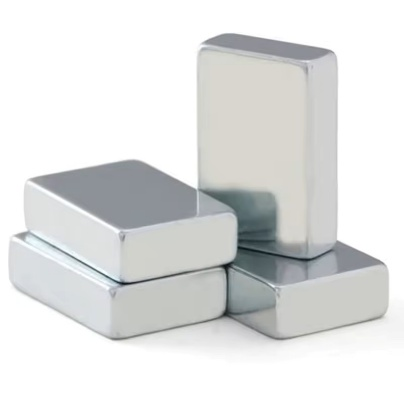
Standard nickel-copper-nickel plating works fine for indoor gadgets, but once salt spray or constant humidity enters the picture, that thin metallic layer turns into a liability. Pitting and flaking start at the edges where the coating is thinnest, and from there the corrosion eats straight into the neodymium core. For anything mounted outdoors near the coast or inside a bilge pump, you need a barrier that actually seals the surface rather than just decorating it.
Epoxy coatings remain the most dependable everyday choice. They are applied thick enough to bridge minor surface imperfections, and they resist both moisture and salt fog far better than metallic finishes. For truly harsh conditions, Parylene offers a level of protection that is hard to beat: it conforms to every microscopic contour and leaves no pinholes. The trade-off is cost and application complexity, so it tends to show up in marine sensors or medical devices rather than bulk hardware.
Zinc and gold are sometimes mentioned as alternatives, but neither holds up long in a salty environment. Zinc sacrifices itself too quickly, and gold, while corrosion resistant on its own, is usually too thin and porous over a magnet to stop galvanic reactions. If you must use a metal finish, look for a multi-layer system with a thick nickel undercoat and a passivated top layer. But in practice, epoxy or Parylene is the only sensible way to keep an N52 magnet structurally intact when water and salt are part of the daily routine.
At What Temperature Does N52 Start to Lose Its Grip?
N52 magnets are the strongest grade of neodymium magnet you can buy, but that strength comes with a temperature ceiling. Under continuous heat, an N52 starts to show a noticeable drop in holding force around 80°C (176°F). This is the point where the magnet's internal alignment begins to degrade, and it can no longer maintain the same pull it had at room temperature.
Many people miss the difference between temporary and permanent loss. As the magnet warms up, it loses a bit of grip even below 80°C, but the loss is reversible once it cools back down. However, once you push past that 80°C threshold, the losses become permanent. The magnet isn't ruined immediately, but each exposure above that temperature shaves away a little more of its original strength.
If your application runs hot, don't just assume N52 is the right fit. A lower grade like N42 or N45 might actually hold up better under heat, even though they're slightly weaker at room temperature. Matching the magnet grade to the actual working temperature is far more practical than chasing the highest pull force on a spec sheet.
Custom N52 Shapes Without the Long Lead Times
Most suppliers treat custom N52 shapes like a special order that takes eight to twelve weeks. We don't. Our in-house wire EDM and multi-axis grinding equipment lets us cut arcs, wedges, stepped blocks, and radial rings directly from sintered N52 blanks, so the shape you need doesn't have to come from a mold or a slow overseas tooling run.
Send a sketch or a STEP file and we'll quote the part same day. Because we keep a deep stock of un-magnetized N52 blocks and discs, we can often machine, coat, and magnetize a custom profile in under two weeks. Tight tolerances—down to ±0.05 mm on critical faces—are handled by the same team that runs our production line, not an outsourced shop.
If your design changes, you're not stuck waiting for new tooling. Adjust the CAD, and we recut from existing blanks. That's how engineers get N52 performance in a footprint that was never in a catalog.
Why Standard Magnet Shapes Fall Short in High-Strength Designs
Standard magnet shapes—blocks, discs, rings—are designed around general-purpose mounting and uniform field assumptions. In high-strength applications, these forms create abrupt transitions at edges and corners. The magnetic flux crowds at those sharp boundaries, producing local saturation that lowers the usable field in the gap. Mechanically, the same edges act as stress risers. Sintered rare-earth magnets are brittle, and a sharp corner under clamping pressure or thermal cycling is often where a crack starts.
A cylindrical or rectangular cross-section also forces the magnetic circuit to follow a predetermined path, leaving little room to compensate for back-iron saturation or to steer flux away from regions where demagnetization risk is highest. When designers push standard shapes to higher coercivity grades, they typically end up increasing volume rather than improving field quality. Custom contours—tapered poles, radiused transitions, non-uniform cross-sections—spread both magnetic flux and mechanical load more evenly, which is why high-strength designs abandon off-the-shelf geometries early in the prototyping stage.
N52 vs N35: When the Strongest Grade Actually Pays Off
Most buyers default to N35 because it is cheap, available, and works fine for fridge magnets or basic latches. But that logic collapses the moment your design has a hard size limit. If you are squeezing a rotor into a drone motor, a smart lock actuator, or a compact magnetic coupling, the extra 20–30% energy product of N52 is not a luxury—it is the difference between hitting torque targets and starting over. You are not paying for “stronger” in the abstract; you are paying to keep the same force in a smaller footprint or to push more force through the same volume.
The real payoff shows up in weight-sensitive and heat-managed applications. N52 shines when every gram counts, like in portable medical devices or high-speed servo systems where a lighter magnet means less inertia. But do not mistake it for a universal upgrade. N52 maxes out around 80°C before irreversible losses become a concern, while a good N35 can handle a bit more heat and costs less per unit. So the smart move is to ask: is the bottleneck size, weight, or performance density? If yes, the premium for N52 usually pays for itself in the first design iteration. If not, you are just spending more for bragging rights and a fragile magnet.
FAQ
The energy product is much higher, so you get substantially more holding force in the same footprint. That lets engineers shrink assemblies without giving up pull strength, which matters a lot in compact motors, sensors, and mounting systems.
You'll find them in high-end audio drivers, brushless motors, magnetic bearings, quick-release fixtures, and even retail display hardware. Anywhere a design needs to pack serious magnetic force into very little space tends to steer toward N52.
Nickel-copper-nickel is the standard workhorse and fine for most indoor uses. For moisture or salt exposure, go with epoxy or a zinc/nickel hybrid. The coating isn't just cosmetic—it blocks oxidation and keeps the magnet from crumbling over time.
Keep them away from pacemakers, credit cards, and any ferrous tools you aren't prepared to have snap together. Use non-magnetic spacers when separating stacked discs, and wear gloves if you're dealing with larger blocks—pinch injuries are real.
Yes, we regularly quote arc segments, rings with countersinks, trapezoids, and custom assemblies with steel cups or housings. Send a rough sketch or a STEP file and we'll advise on magnet orientation, tolerances, and whether a machined or near-net shape makes more sense.
Standard N52 starts to lose some strength above about 80°C, and that loss can become permanent if pushed too far. If your application runs hot, we'll often suggest a high-temperature grade like N52SH or N50H so you don't trade away too much pull for thermal headroom.
It comes down to consistency. We batch-test for flux density, coating adhesion, and dimensional tolerance, so the magnet you prototype with behaves the same as the ones on the production line. That reliability matters more than a spec sheet number.
Conclusion
First-time buyers often do a double take when they see N52 pull force charts. A magnet small enough to sit on a fingertip can hold dozens of pounds, but that number drops fast if you ignore surface contact or thickness. At N52 Magnet Company, we walk you through those real-world numbers so you're not relying on idealized specs. The right coating matters just as much. In marine or coastal installations, a bare neodymium magnet will corrode within weeks. Our nickel-copper-nickel plus epoxy or PTFE options keep N52 magnets working in wet, salty air without losing grip. Temperature is the other quiet killer: N52 starts to lose performance above 80°C, and by 150°C it's a shadow of its rated strength. We help you pick a grade and coating that matches your actual thermal environment instead of guessing.
Standard disc and block shapes often waste material or force in high-strength designs. An off-the-shelf magnet might be too thick where you need thin, or too wide where you need a narrow, focused field. Our custom N52 shapes—arcs, rings, countersunk discs, even trapezoids—ship without the long lead times you'd expect from a specialty shop. That means you can prototype and test in days, not months. And when does the strongest grade actually pay off? If you're comparing N52 to N35, the upgrade only makes sense when space or weight is the limiting factor. In a compact latch or sensor, N52 can deliver the same holding force in a fraction of the volume, cutting material cost and design headaches. For oversized mounts with room to spare, N35 might do the job. We'll help you decide, so you're not paying extra for strength you don't need.
Contact Us
Contact Person: Kelvin Lo
Email: [email protected]
Tel/WhatsApp: 0769-88561131
Website: https://dawamagnetic.com/