

Protein Bar Line Supplier: Key Considerations for Reliable Manufacturing Partnerships
2026-11-16
Choosing the right protein bar line supplier isn’t just about equipment specs—it’s about securing a partner who understands your production pressures. From mixing consistency to precise cutting and cooling, every stage shapes your brand’s reputation. GUSU has seen firsthand how the wrong fit leads to downtime and wasted batches. In this guide, we break down the must-ask questions that separate reliable manufacturing allies from costly trial-and-error.
Engineering for Viscosity Swings in Protein Doughs
Protein doughs rarely hold a steady viscosity through mixing and resting. The moment water hits gluten or plant protein isolates, hydration kinetics and competing water-binding events create a moving target. Rather than chasing a single target viscosity, it helps to map the swing itself: early stiffening from rapid water uptake, a temporary breakdown under shear, then a slow rebuild as disulfide bonds and non-covalent networks set. Formulators can flatten that curve by pre-hydrating the protein fraction, adjusting salt timing, or using a portion of pre-gelled starch to buffer free water.
Temperature is the underappreciated control knob. A few degrees shift in dough temperature changes both enzyme activity and protein mobility, which can turn a manageable viscosity swing into a runaway one. Probe trials with a farinograph or a simple torque rheometer can reveal the inflection points. Once those are known, small changes—like using cold water in summer, delaying fat addition, or switching to a coarser protein grind—can keep the dough within a workable window without reformulating the entire recipe.
In production, the goal is not to eliminate viscosity swings but to make them predictable and repeatable. This means tracking batch-to-batch variation in protein quality and moisture, then adjusting water addition or mixing energy accordingly. A dough that swings too fast often signals over-hydrolysis or an overly reactive protein surface; one that barely moves may have hydrophobic aggregation blocking hydration. Engineering around these signals, rather than fighting them, tends to produce more robust dough handling and consistent baked or extruded textures.
Sanitary Welds and Clean-In-Place Realities
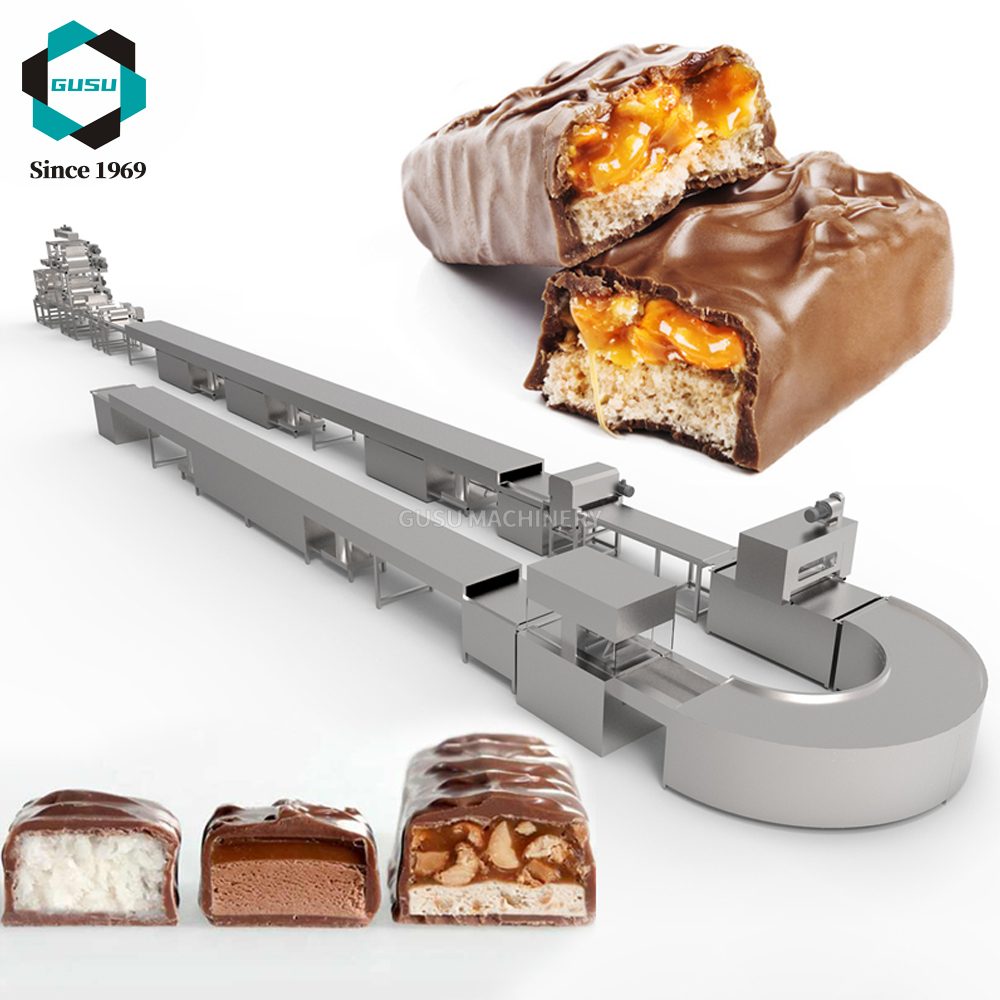
Achieving a truly hygienic weld in stainless steel piping is not just about making a smooth bead. It requires controlling the purge gas, managing heat input to avoid sugaring on the back side, and then verifying the result with borescope inspection or riboflavin testing. Even a small imperfection can harbor bacteria and defeat the purpose of a clean-in-place system, where chemical solutions must reach every surface without being trapped in crevices.
The real challenge surfaces when a CIP cycle runs on a system that was never properly designed for drainage. Dead legs, low spots, and poorly aligned ferrules can leave standing liquid after the rinse step, which then dilutes the next chemical wash or creates a breeding ground between production runs. Many facilities learn this only after repeated micro failures that trace back to weld geometry rather than the cleaning chemistry itself.
In practice, the best sanitary welds are invisible: they do not interrupt flow, they do not create shadows for spray balls, and they hold up under thermal cycling without cracking. But getting there demands a welder who understands the entire CIP sequence, not just the arc. That is why some plants prefer orbital welding for repeatability, while others still rely on skilled hand welders who can feel the difference between full penetration and a cosmetic pass.
Modular Depositing Heads for Inclusion Variety
Modular depositing heads redefine how production lines handle inclusion-rich recipes. Instead of forcing a single nozzle geometry to cope with every particle size, these systems pair interchangeable manifold blocks, piston chambers, and shaped outlets so that fruit pieces, nut fragments, or chocolate chips stay intact during portioning.
The practical benefit appears most clearly during rapid product changeovers. Operators can swap a head segment in minutes rather than rebuilding an entire depositor, which keeps chunky cookie dough, granola clusters, and filled snack bars running on the same base unit without cross-contamination.
Design choices such as gentle rotary valves, low-shear impellers, and quick-release clamps further support inclusion variety by preserving particle identity and letting each recipe use the most suitable flow path instead of a compromise setting.
Spare Parts Kits That Match Your Uptime Targets
Downtime doesn't wait for a convenient moment, and neither should your inventory strategy. A well-planned spare parts kit aligns directly with the uptime you've promised your operation, whether that's 95% or 99.9%. Instead of stocking everything “just in case,” focus on the components with known failure rates, lead times, and criticality to your process. When the kit mirrors your actual reliability targets, you stop overbuying low-risk items and start closing the gaps that cause unexpected stops.
Think of the kit as a physical expression of your maintenance philosophy. If a single pump failure costs you four hours of production, the spare seals, bearings, and impellers for that pump belong in the kit before extra fuses or generic bolts. Likewise, if your target allows only one unplanned stop per quarter, you'll need to include parts for the second and third most common failure modes—not just the primary one. Matching the kit to uptime means calculating mean time between failures for each critical asset and stocking enough to cover the repair window, including shipping delays and shift changes.
Regular review keeps the kit honest. After every unplanned downtime event, ask whether the needed part was on hand. If not, update the kit's contents and adjust quantities based on actual consumption rates. This turns a static box of parts into a dynamic uptime tool that evolves with your equipment's aging patterns and operating conditions. When spare parts kits match your uptime targets—not just your best guess—you spend less on emergency freight, reduce stress on your team, and keep production flowing at the level you've designed for.
Pilot Testing Before Final Capacity Commitments
Locking in capacity too early often means paying for assumptions that haven't survived contact with a real production line. A short pilot run exposes whether the promised throughput, changeover times, and defect rates hold up when your actual materials and operators are involved, not just the vendor's demo batch. It also reveals how the supplier handles mid-run adjustments, which is harder to fake than a polished spec sheet.
Running that pilot before signing a final commitment shifts the conversation from hypothetical guarantees to measured performance. You can negotiate minimums, penalties, and ramp-up schedules based on observed output rather than projections. Even when the pilot uncovers problems, it's cheaper to learn about them in a limited run than after you have already reserved months of capacity.
Audit Trails Without Piling on Paperwork
Most teams still picture audit trails as binders full of signed forms and manually time-stamped logs. That image is outdated. Modern systems can capture the same level of detail—who accessed what, when, and what changed—without anyone printing a single page. The trick is to lean on structured event logging built into the tools you already use, then let those logs flow into a searchable archive automatically.
The real paperwork problem rarely comes from the audit itself. It comes from retroactive documentation: chasing down approvals after the fact, recreating timelines from memory, or stapling screenshots into a compliance folder. When you shift to automatic capture at the point of action, the audit trail becomes a byproduct of work instead of a separate chore. A well-configured system records the actor, timestamp, and before/after values for every meaningful change, and it does so silently.
That doesn't mean you can ignore governance. You still need to decide which events matter, how long to retain them, and who can view the logs. But those decisions are made once, not repeated for every transaction. The result is a detailed, defensible record that satisfies auditors without turning your team into clerks.
FAQ
Dig into case studies from brands with similar bar formats—layered, extruded, or high-protein. Ask for a reference call with a current client who runs comparable volumes. A supplier that hesitates to connect you with existing partners often has gaps in delivery consistency or after-sales support.
Request video footage of a live run using a dough at 20–30% protein content, not just a brochure spec sheet. Inquire about their scraper blade materials, belt release coatings, and typical cleaning intervals between batches. If they cannot show real production data on residue buildup, treat that as a red flag.
Cross-contact with dairy, peanut, or soy can trigger recalls that wipe out margins even if the line runs fast. Ask how they isolate allergen-free runs—dedicated tooling, air handling, or full washdowns between SKUs. A slower line with rigorous allergen scheduling often beats a high-speed line that contaminates batches.
Beyond commissioning, their engineers should help fine-tune die shapes, cooling tunnels, and cutting tolerances as your recipes change. Look for a supplier that assigns a specific process engineer to your account for at least six months, not just a hotline ticket system.
Ask them to map out the shear, temperature, and residence time differences between their pilot line and target production line. If those variables shift too much, your protein bars may crack, dry out, or lose coating adhesion at scale. A strong supplier will offer a scale-up trial with your actual ingredients before you commit.
Spare parts for wear-prone items like extruder screws and slitter blades, software licenses for recipe management, and freight for oversized frames often get left out. Request a 12-month total cost of ownership breakdown that includes preventive maintenance visits and energy consumption per kilogram of bars.
Many suppliers coordinate with flow-wrap and cartoning machine makers, but the interface—transfer conveyors, timing screws, and reject stations—needs one accountable party. Make the bar line supplier responsible for the mechanical and software handshake with downstream packaging, even if they sub-contract parts.
Ask about their oldest installed line still running, their spare parts availability window, and whether they maintain backward compatibility when releasing new models. Also check if they offer remote diagnostics or training for your in-house maintenance crew rather than locking you into service contracts.
Conclusion
Reliable protein bar manufacturing depends on selecting a line supplier who understands the material behavior, not just the machinery. Protein doughs vary widely in viscosity from batch to batch and across different formulations, so the depositing system must be engineered to handle those swings without constant manual adjustment. That engineering shows up in details like sanitary welds that actually hold up to daily CIP cycles, not just look clean on a spec sheet. Inclusions like nuts, fruit pieces, or protein crisps require modular depositing heads that can be swapped quickly without retooling the entire line. And because any downtime in bar production quickly erodes margins, the supplier should provide spare parts kits scaled to your actual uptime targets, not a generic list of consumables.
Before committing to final capacity numbers, insist on pilot testing with your own dough and inclusion mix. This reveals viscosity behavior, depositing accuracy, and cleaning challenges that no brochure can predict. A supplier that offers real pilot runs rather than a scaled-down demo is more likely to deliver a line that performs on day one. Finally, audit trails matter, but they shouldn't turn your floor team into data-entry clerks. Look for systems that capture batch records, CIP logs, and changeover events automatically from the PLC and HMI, so compliance doesn't require extra paperwork. The right supplier treats these six areas as interconnected engineering problems, not as a checklist of features. That's the difference between a line that installs smoothly and one that becomes a daily source of variance.
Contact Us
Contact Person: Zhang Wei
Email: [email protected]
Tel/WhatsApp: 8618662577837
Website: https://www.chocomachinery.com