

Smart Street Furniture Brand Innovations Making Cities More Livable
2026-09-12
City streets are no longer just concrete and crossings—they're becoming intelligent living spaces. Smart street furniture is quietly transforming how we experience urban life, and brands like zemso are at the forefront. From solar-powered benches that charge your phone to bus stops that purify the air, these innovations aren't just about convenience; they're about making cities genuinely more livable. But what exactly makes street furniture 'smart,' and why should you care about the brands behind it? Let's explore the design thinking and real-world impacts that are reshaping public spaces—one smart bench at a time.
Benches That Breathe: Solar-Powered Rest Stops for Urban Wanderers
Most benches are dead weight—concrete slabs that bake in the sun or stay damp for hours. A breathing bench is different. Under its slatted seat, a slim solar panel powers a silent fan that draws warm air through a bed of moss and ferns tucked into the base. The plants filter dust, and the moving air cools the surface by a few degrees. You notice it first as a faint, leafy smell, then as a soft current against your ankles. It’s not air conditioning; it’s more like the bench exhaling.
The solar cells are worked into the armrests and backrest, angled to catch morning and afternoon light without turning the bench into a hot plate. Excess energy goes to a small battery that runs a low strip of LEDs after dark, so the rest stop doesn’t vanish when the streetlights flicker. There’s also a hidden USB port behind a rubber flap, but it’s almost an afterthought. The real draw is the microclimate—on a sticky July afternoon, the wood stays cool enough to touch, and the air around it moves instead of hanging still.
For people who wander the city on foot—delivery riders, late-shift workers, insomniacs, or just someone with nowhere to be—these benches change the rhythm of a walk. Instead of perching on the edge and leaving, you sit back. You hear the fan’s low whir mixed with traffic, and the plants tremble slightly. It’s a small rebellion against hard, hot, unwelcoming streets.
Streetlights That Listen: Adaptive Illumination for Safer Neighborhoods
A sharp crack of gunfire or the screech of tires near an intersection triggers something most pedestrians never notice: the nearest streetlight jumps from a dim ambient glow to full brightness in under half a second. These fixtures aren't running on timers or simple motion detectors. Small microphone arrays embedded in the pole pick up sudden acoustic spikes, run them through a local classification chip, and decide whether the sound matches a threat pattern worth illuminating. A car backfiring gets ignored; a window shattering or a person shouting for help floods the block with light. That split-second shift does more than reveal what's happening—it interrupts the anonymity that nighttime crime relies on.
For residents, the change is subtle but tangible. Evening dog walkers no longer carry flashlights past the park, and late-shift workers stepping off the bus find the sidewalk already brightening as their footsteps register. Because the lights only surge when needed, they avoid the harsh all-night glare that used to leak into bedroom windows and wash out the stars. The result is a neighborhood that feels less like a surveillance zone and more like a place where the infrastructure pays attention—quietly conserving energy until the moment it hears something worth seeing.
Bus Shelters Reimagined: Real-Time Transit Hubs with a Human Touch
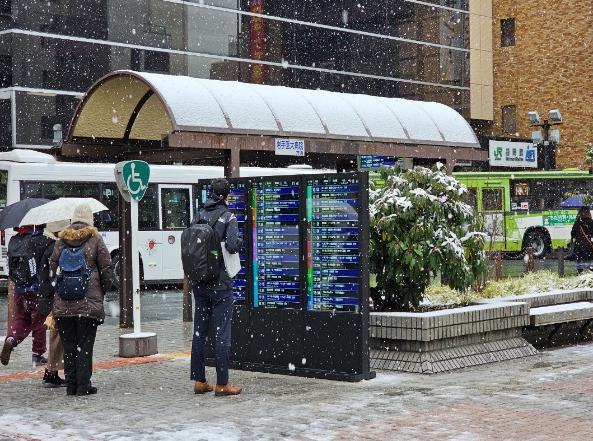
Most bus shelters do little more than block the wind, and even that is generous. You stand there guessing whether the next bus is two minutes or twenty away. A reimagined shelter starts from a different question: what would make waiting feel less like lost time? The answer isn't a bigger screen bolted to the glass—it's a space designed around the real rhythms of transit and the people caught in them.
Real-time hubs earn that label by turning raw arrival data into something legible at a glance. Live maps show where buses actually are, not just when they're scheduled. Overhead displays shift between route updates, transfer options, and service alerts. But the information layer should extend to peripheral vision: a soft chime when your bus turns the corner, a subtle glow that changes color as departure nears, even a low-energy e-ink strip listing next departures without shouting.
The human touch shows up in details that no transit app can provide. Benches with armrests and backs, not just cold metal slabs. A few hooks for grocery bags, a charging pad set into the handrail, a small green wall that absorbs noise and breaks the concrete monotony. Shelters should also account for wheelchairs, strollers, and canes without making anyone feel like an afterthought. When real-time information is paired with physical comfort, waiting becomes a manageable pause rather than an ordeal.
Waste Bins That Talk: Smart Sorting for Cleaner Streets
You toss a coffee cup toward the nearest bin, and before it lands, a calm voice says, “That lid goes in the recycling side, not the trash.” It’s not a hidden worker—it’s the bin itself, fitted with a small camera and a speaker that can spot common mistakes in real time.
These talking bins don’t just scold; they teach. When someone hovers with a greasy pizza box, the bin might explain that the lid can be recycled but the stained base should go to compost. Over a few weeks, regular passersby start sorting without being prompted, because the guidance feels more like a conversation than a rule.
Street crews notice the difference quickly. Fewer plastic bags jam the sorting machinery, and less food waste leaks onto the pavement. The bins collect data on what people get wrong most often, which helps cities adjust signage and pickup schedules. Cleaner streets become less about enforcement and more about giving people the right nudge at the exact moment they need it.
Digital Kiosks as Urban Concierges: Wayfinding Beyond Maps
City streets are filled with small moments of hesitation: a glance at a street sign, a phone pulled from a pocket, a turn taken too late. Digital kiosks step into this gap not as oversized maps but as patient, local guides. Instead of simply showing a blue dot and a route line, they interpret the urban fabric—pointing out that the quiet lane two blocks east has a shaded walkway and a coffee cart worth the detour. These kiosks read the rhythm of the neighborhood, suggesting paths that a generic navigation app would never surface.
The real shift is in how these kiosks answer questions people haven’t asked yet. A visitor might stop to find the nearest train station, but the kiosk also knows that a summer thunderstorm is rolling in and suggests a covered walkway through a historic arcade on the way. It layers practical route guidance with sensory cues—quiet courtyards, busy intersections, steep stairways—so that moving through a city feels less like following a line and more like receiving whispered advice from someone who actually lives there.
What distinguishes these digital concierges is their ability to turn static wayfinding into a dialogue. Rather than presenting a fixed list of directions, they adapt to the time of day, local events, and even the pace of the person standing in front of them. A lunchtime query might prioritize quick, lively routes; an evening question might favor well-lit paths with open late cafés. In this way, kiosks become more than infrastructure—they become a form of urban hospitality that remembers the city is made for people, not just destinations.
Green Pockets on Paving: Self-Watering Planters That Cool the Block
Tucked between the seams of sun-baked sidewalks, these slim green pockets do more than soften hard edges—they slowly exhale moisture into the air, pulling street temperatures down a few precious degrees on the hottest afternoons. Each planter hides a narrow reservoir beneath its soil, drawing water upward through capillary action so the ferns and trailing sedums never sit thirsty, even when the city forgets to send a watering crew.
Neighbors notice the change first at ankle level: a cooler breeze skimming off the leaves, less glare bouncing up from concrete. Kids trail fingers through the low foliage while waiting for the bus, and dogs nose at the damp soil rim. It’s a small civic kindness—no pipes torn up, no grand redesign—just a strip of living green wedged into the pavement, sipping slowly, shading its own roots.
Over a single summer, one block can shift from heat trap to micro-refuge. Shopkeepers prop their doors open instead of running fans full blast, and the evening walk home feels less like crossing a griddle. The planters weather into the street’s character, their edges scuffed by strollers and delivery carts, but still working—quiet, green pockets stitching the block back to something breathable.
FAQ
It covers pieces like benches, bus stops, lamp posts, and waste bins that have sensors, connectivity, or power features. Many include solar charging, Wi-Fi hotspots, air quality monitors, or footfall tracking, turning ordinary street objects into service points.
Soofa from Boston makes solar-powered benches with device charging and environmental sensing. Strawberry Energy out of Serbia focuses on smart benches with Wi-Fi and charging. Smaller studios in Barcelona and Copenhagen are also testing interactive bus shelters and adaptive lighting.
They reduce stress from dead phone batteries, offer real-time transit or weather updates at stops, and help cities spot overcrowding or air pollution earlier. Well-placed smart furniture can also create more inviting places to rest, especially for older adults or people with disabilities.
Most systems gather anonymous counts of usage, temperature, noise, or air quality rather than personal identifiers. Privacy concerns arise if cameras or Wi-Fi tracking are added, so transparent policies and local data storage are important for public trust.
In London, upgraded bus shelters with live arrival screens, air quality readings, and hearing-loop support have made waiting less stressful. Copenhagen's solar-powered trash bins that signal when full have cut down on overflowing waste in busy squares.
Upfront cost, ongoing maintenance, and the need for reliable power and connectivity are big hurdles. Vandal-resistant design and navigating slow public procurement cycles also slow down adoption, even when residents like the idea.
Many use recycled aluminum or plastics, low-power e-ink displays, and solar panels. Some kinetic floor tiles convert footsteps into small amounts of electricity, though the main eco benefit comes from smarter resource use and fewer maintenance trips.
Conclusion
Across many cities, the humble bench, light pole, and bus shelter are being quietly reinvented. Solar-powered benches now offer a place to rest and charge a phone, their slatted surfaces angled to catch both sun and conversation. Streetlights no longer simply burn through the night; they sense movement and adjust their glow, keeping sidewalks safe without wasting energy. Even the bus stop has become a small living room—real-time updates on a softly lit panel, a sturdy rail for leaning, and a roof that actually keeps the rain off. These pieces of street furniture are no longer passive objects but active participants in daily urban life.
The shift goes deeper than convenience. Waste bins now guide your hand toward the right slot, using simple lights or gentle prompts to make sorting feel natural rather than like a chore. Digital kiosks have shed their clunky interfaces, offering not just maps but a sense of place—where to find a quiet courtyard, which bakery opens early, how to reach the river path without a car. Even planters have gained a kind of autonomy, with self-watering systems that turn hard paving into cool, green pockets. Taken together, these innovations do more than add function; they make a street feel cared for. And that, perhaps, is what makes a city truly livable.
Contact Us
Contact Person: Leo
Email: [email protected]
Tel/WhatsApp: +86 18901905138
Website: https://www.zemsogroup.com/