

The Ultimate Cold Brew Coffee BIB Manufacturer for Consistent Quality
2026-07-22
Cold brew coffee has taken the industry by storm, but let’s be honest—maintaining that smooth, rich flavor at scale is a nightmare many businesses face. One batch tastes perfect, the next falls flat, and suddenly your customers are questioning your quality. That’s where Kody steps in. As the ultimate BIB manufacturer for cold brew, we’ve engineered a solution that locks in consistency, simplifies your workflow, and keeps every cup just as delicious as the last. Ready to discover the secret behind hassle-free, premium bag-in-box cold brew?
Crafting Consistency: The Art of Cold Brew at Scale
Scaling cold brew from a weekend craft to a full production line demands more than just larger tanks. It’s a meticulous dance of grind size, water chemistry, and steep time, where even a minor drift can throw an entire batch off profile. We learned early that consistency isn’t about rigidity—it’s about building a system flexible enough to accommodate raw material variations while keeping the end cup unmistakably ours.
One underappreciated lever is agitation. In a 500-gallon steep, coffee grounds don’t behave like they do in a mason jar; stratification can leave pockets under-extracted. We’ve settled on a gentle recirculation pattern that mimics the slow bloom of a pourover, timed to the phase of extraction. Paired with in-line TDS monitoring, it gives us a real-time map of what’s happening inside the tank, not just a final number on a clipboard.
Filtration is where the art truly meets engineering. The wrong mesh or pressure curve can strip body as easily as it clarifies. We’ve found success with a staged approach—coarse sieving, then a tighter polish—that preserves the syrupy mouthfeel people expect from cold brew. It’s these invisible touches, iterated over years, that make a thousand gallons taste startlingly close to the first small test batch.
Beyond the Bag: Engineering Flavor Stability from Tap to Cup
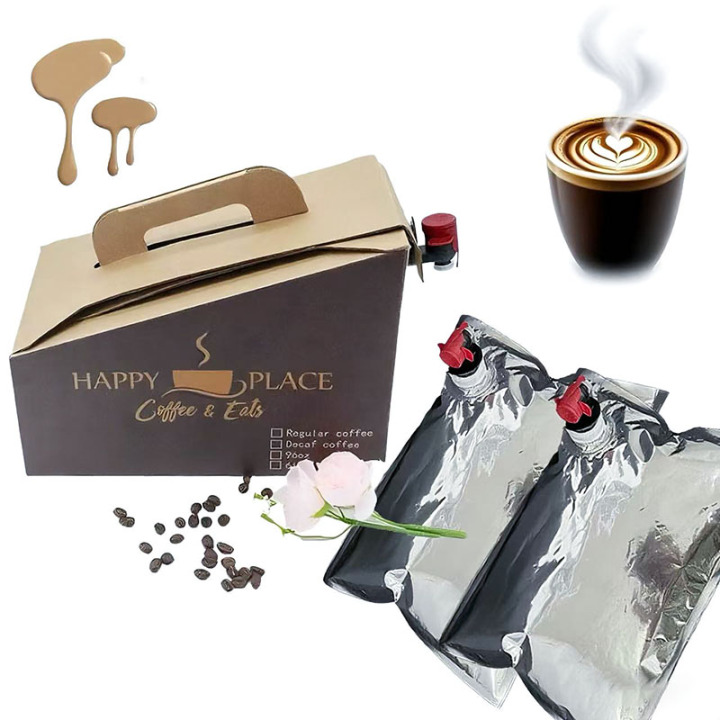
Achieving flavor stability isn’t just about sealing beans in a bag—it’s an end-to-end challenge that starts the moment they’re roasted. We’ve engineered a system where every element, from package architecture to brewing mechanics, acts as a guardian of volatile aromatics. Micro-perforated degassing valves, tuned to release CO₂ without admitting oxygen, are paired with multi-layer films that actively scavenge residual O₂. Meanwhile, our grinder geometry and showerhead design in the brewer minimize frictional heat and turbulence, preserving delicate notes that often dissipate before the first sip.
The real magic happens in the transition from static storage to dynamic extraction. Traditional methods allow a bloom of off-gassing that can carry away subtle esters and terpenes; we address this by controlling the gradient of pressure and temperature during pre-infusion. By precisely timing the dwell phase and modulating water distribution, we lock in the full spectrum of flavors that were cultivated at origin and captured during roasting. This isn’t just packaging innovation—it’s a holistic rethinking of the journey from roasted whole bean to finished cup.
The result is a cup that tastes remarkably true to the coffee’s potential, even weeks off roast. Where others see separate stages—bag, grinder, brewer—we see a continuous environment that can be fine-tuned. Every valve, every micron of coating, every fluid dynamic calculation works together to ensure that the blueberry note in an Ethiopian natural or the caramel sweetness of a washed Colombian doesn’t fade into flatness. It’s flavor stability built not on hope, but on deliberate, layer-by-layer engineering.
Precision Extraction, Uncompromised Freshness
Every step of our extraction process is calibrated to lock in the purest essence, capturing volatile compounds that degrade within hours of harvest. By controlling temperature, pressure, and timing with laboratory-grade accuracy, we bypass the rough handling that strips away character. The result is a profile so vivid it feels alive.
Freshness isn’t just a promise; it’s engineered into every droplet. From source to seal, our closed-loop system shields delicate aromatics from oxygen and light, preserving what lesser methods waste. You taste the difference in layers that unfold immediately, without any stale or flattened notes.
Why Top Cafés Trust Our BIB for Signature Cold Brew
Our bag-in-box system came out of a simple frustration: we wanted cold brew that tasted just as vibrant on day thirty as it did on day one, without the annoying ritual of purging kegs or babysitting nitrogen lines. The BIB’s multi-layer barrier locks out oxygen at every stage, so the natural chocolate-caramel notes in a signature roast stay intact, batch after batch. For baristas, that means no last-minute panics over flat coffee; for customers, it’s a consistently smooth, full-bodied cup that never tastes like the bottom of a pot.
Top cafés are picky about equipment, not because they love gadgets, but because every piece has to earn its counter space. Our BIB plays well with everything from a basic tap tower to a high-end under-counter dispenser, and the setup is genuinely tool-free — think “tear, drop, and pour” rather than a plumbing degree. That simplicity matters during a 7 a.m. rush when speed and reliability separate the pros from the pretenders. Plus, the compact footprint frees up precious fridge real estate for milk jugs and pastry trays, not bulky kegs.
Scale is the quiet killer of café creativity. When you’re known for a signature cold brew, you can’t afford batch variation between your downtown flagship and a new suburban outpost. Our BIB removes that headache with pre-calibrated, ready-to-tap packaging — no measuring, no dilution guesswork. It’s why multi-location roasters and busy independents both tell us the same thing: they finally trust that their cold brew will taste exactly the way they designed it, no matter who opens the box. That kind of trust doesn’t come from a spec sheet; it comes from tasting it yourself, day after day.
Sustainable Sips: Eco-Conscious Packaging Without Sacrifice
When you reach for your favorite beverage, the last thing you want is a package that fights you before you can enjoy a sip. For years, eco-friendly options came with a trade-off: flimsy cups that lost their shape, lids that never quite sealed, or earthy-tasting straws that dissolved mid-drink. That’s changing. Thoughtful design now means you can twist open a cap made from sugarcane, sip through a straw that feels like plastic but is home-compostable, and hold a cup that’s sturdy enough to last through your longest meeting—all while knowing nothing ends up in a landfill for centuries.
The secret lies in materials that work smarter, not just greener. Plant-based bioplastics, reclaimed ocean fibers, and water-based coatings have replaced the clunky, compromised packaging of the past. These innovations don’t scream “eco,” they simply perform—keeping your cold brew cold and your hot tea hot, without a hint of soggy cardboard. Even the inks and adhesives have evolved, ensuring that the entire vessel can be recycled or composted as one piece, no disassembly required. It’s a quiet revolution that respects both your daily ritual and the planet.
What makes this shift truly stick is that it doesn’t demand sacrifice. You don’t have to remember a reusable cup on hectic mornings or settle for a beverage that tastes like its container. Brands are finally treating sustainability as a design challenge, not a box to check, and the result is packaging that feels indulgent—smooth finishes, satisfying clicks, and clean graphics—yet bids farewell responsibly. So go ahead, take that sip. The only thing you’re leaving behind is a lighter footprint.
From Single Origin to Ready-to-Drink: Seamless Scaling
Scaling a coffee brand from a single-origin roaster to a ready-to-drink powerhouse isn’t just about bigger batches. It’s about preserving the nuance of the bean while adapting to a completely different production rhythm. The early days are intimate—small lots, direct relationships with farmers, and a roasting profile tuned to highlight one specific harvest. That meticulous approach creates a blueprint. When ready-to-drink enters the picture, that blueprint has to translate across cold brew tanks, flash pasteurization, and distribution timelines that span continents. Without careful calibration, the character that made the coffee special vanishes in the can.
The transition demands more than just recipe conversion. It requires rethinking supply chains to handle the consistent volume of green coffee needed for RTD lines, often securing contracts years in advance. Roasting for a canned beverage flips the script: instead of aiming for peak flavor in a pour-over, we’re optimizing for how a coffee will taste after dilution, chilling, and weeks on a shelf. Extraction methods—whether steeped cold brew or hot brewed and flash-chilled—reshape the flavor arc, sometimes muting delicate florals, sometimes amplifying chocolatey depth. The trick is to design backwards from the final sip, building a bridge from the roastery bench top to the canning line that leaves no sensory gap.
Partnerships become the glue at scale. Working closely with manufacturers who understand the fragile chemistry of coffee means iterative testing: adjusting grind size, contact time, and water composition in hundred-gallon trials, then tasting against the original single-origin profile. Packaging technology matters too—nitrogen dosing, can linings, and light barriers all affect how those bright Ethiopian citrus notes survive the journey to a convenience store fridge. When the process clicks, a ready-to-drink product doesn’t just mimic the single-origin experience; it translates it into a new format that reaches people who might never walk into a specialty café. That’s the real scale story: making exceptional coffee accessible without losing its soul.
FAQ
They’ve honed a multi-stage filtration and precision brewing process that eliminates batch variation. Every bag-in-box tastes exactly like the last, even months apart, because they control everything from bean sourcing to nitrogen dosing in-house.
It’s not just about sealing—they use a proprietary oxygen barrier film and flush with food-grade nitrogen before filling. The BIB is engineered to minimize agitation during transport, so the coffee arrives as fresh as the day it was brewed.
Absolutely. They don’t force you into a one-size-fits-all formula. You can specify the roast degree, extraction yield, and even the TDS target. Their team works with you through bench-top trials to nail your exact profile before scaling up.
Every batch goes through inline refractometry, micro-filtration, and sensory panels. They log data from every production run—brew temp, contact time, pressure—so if anything ever drifts, they catch it before it becomes a problem. Traceability is baked into the process.
Yes, it’s designed for universal fit. The connectors are industry-standard, and they offer multiple bag sizes from 2L to 20L. They also test each batch with common dispenser brands to ensure trouble-free flow and zero leaks.
They scale horizontally—more brewing vessels running the same verified process rather than supersizing a single batch. This keeps extraction parameters identical, so offering consistency isn’t compromised whether you need 50 bags or 5,000.
They offer a bag-in-box made from renewable plant-based materials, with the outer carton sourced from certified sustainable forestry. The bag itself is designed for low-energy recycling where facilities exist, and they’ll take back used packaging in bulk through a closed-loop program.
Typically 90–120 days refrigerated, but they also offer an aseptic-filled version that stays stable at ambient for up to 9 months without preservatives. Shelf life is validated through real-time and accelerated aging tests, not just theoretical modeling.
Conclusion
Scaling cold brew without losing its character takes more than large tanks and a strong brand. It’s a tight choreography of bean sourcing, extraction precision, and packaging that behaves like a guardian of taste. We pull from single-origin lots, adjusting grind profiles and steep times to hit that sweet spot of body and clarity—then lock it in. The bag-in-box format doesn’t just transport liquid; it actively defends against oxygen, light, and temperature swings that dismantle flavor. From the first draw off the tap to the last cup of the day, the brew stays true. This kind of stability isn’t accidental. It’s engineered layer by layer, from film barriers to dispensing valves, so that a café’s signature cold brew never wavers, no matter how many kegs they go through in a week. Baristas get a product that needs zero finishing adjustments—just pour and serve—which turns consistency into a quiet, everyday reality rather than a constant worry.
The cafes that stick with us do so because they’re safeguarding their craft, not just buying a package. Their regulars notice when a cold brew drifts, and ours simply doesn’t. Behind that reliability is an extraction system that treats time and temperature as precision variables, not rough estimates, preserving delicate aromatics that cheaper methods obliterate. Sustainability threads through every decision, too. The packaging cuts down on single-use waste without compromising the physical shield that protects the coffee—so the conscience stays as clean as the cup. We’ve stripped away the complexity of scaling from test batch to regional rollout, handling the production hurdles so a roaster’s journey from single-origin beans to ready-to-drink pours becomes a straight line. Freshness isn’t a date stamp we hope holds up; it’s a measurable reality, confirmed in every draw. When rigorous engineering meets environmental sense and a zero-compromise stance on flavor, the result is a cold brew program that earns loyalty pour after pour.
Contact Us
Contact Person: Cindy Lee
Email: [email protected]
Tel/WhatsApp: 8613622669331
Website: https://www.dgkody.com