

Top Galvanize Methods for Long-Lasting Metal Protection
2026-11-16
Metal fails quietly—until rust takes over. If you're relying on standard coatings, you're already losing years of service life. The real difference between structures that survive decades and those that corrode early comes down to one thing: the galvanizing method you choose. At LANYUN, we've seen how the right zinc application transforms vulnerable steel into a self-healing, long-lasting asset. But with so many techniques claiming to be "the best," how do you know which one actually delivers? In this guide, we cut through the noise and rank the top galvanize methods that truly hold up against moisture, chemicals, and time.
Hot-Dip Galvanizing Still Rules for Heavy Steel
Heavy steel sections demand a different level of discipline in the galvanizing kettle. Unlike thin sheet or small fabrications, thick flanges and webs hold heat longer, which means immersion time and withdrawal speed must be tuned to the mass of the part rather than a generic recipe book. Operators who treat a 40mm plate like a 6mm angle will end up with uneven zinc layers or, worse, bare spots at sharp corners where the steel cooled too quickly before entry. The old rule still stands: preheat heavy members to the kettle temperature or slightly below, and never rush the dip.
Surface preparation remains the quiet killer of quality on heavy steel. Mill scale, weld slag, and deep rust pockets do not simply vanish in the acid bath, no matter how long you leave the beam in there. Mechanical cleaning—grinding or shot blasting—is not optional for structural members with rolled edges or flame-cut ends. A quick visual check for a uniform grey surface after pickling is still the most reliable gate before fluxing. If the steel shows any dark patches or smut, stop and re-clean. Galvanizing will not hide lazy prep work; it will highlight it with lumpy, brittle coatings.
Finally, the cooling and inspection phase for heavy sections breaks many modern shortcuts. Thick steel retains heat long after withdrawal, so forced-air cooling or a water quench is needed to freeze the zinc layer before it sags or drips from the lower flange. Inspectors should measure coating thickness at multiple points—especially on webs and inside corners—and look for pinholes or ash inclusions that form when dross is stirred up by the slow entry of a heavy beam. The rules are simple, but they punish anyone who assumes that heavier steel forgives sloppiness. It does not.
Electroplating for Tight Tolerance Zinc Layers
Holding a zinc deposit to a couple microns across a complex part starts well before the rectifier is switched on. Rack design matters more than most shops admit—shields, thieves, and anode spacing have to be tuned to the part geometry, not just the tank. Once the current is flowing, ripple and agitation often decide whether the edges run heavy while recessed areas stay thin. Bath temperature, zinc concentration, and brightener carry can drift through a shift, so sampling every few loads keeps the window from closing unnoticed.
Tight-tolerance work also forces a harder look at post-plate measurement. A single handheld gauge reading on a flat zone rarely tells the whole story; we pull parts from fixed locations on the rack and check thickness at sharp corners, bores, and thread roots. When readings sit near the lower limit, the fix is rarely more amps alone—it usually comes down to repositioning anodes, adjusting a shield, or changing the rack contact points to even out the current distribution.
Zinc Thermal Spray Reaches Where Tanks Can't
Zinc thermal spray doesn't rely on immersion or dipping, so it can coat surfaces that a galvanizing kettle simply cannot reach. Field-erected tanks, pipe supports, and structural members often have overlapping plates, blind bolt holes, and weld backings where corrosion starts unnoticed. A hand-held or automated spray gun directs molten zinc particles into these recesses, producing a uniform layer that follows the steel profile without pooling or bridging.
When a tank is already in place or a structure is too large to transport, hot-dip galvanizing becomes impractical. Thermal spray equipment moves with the crew, allowing repairs and new coatings to be applied on site. Damaged areas on tank bottoms, nozzle connections, or underside flanges can be stripped and re-sprayed without cutting the component out of service for days. The zinc layer bonds mechanically as particles flatten on impact, filling micro-crevices that brushes or rollers leave bare.
Edges and complex geometries often end up with thinner protection from liquid coatings, and sharp corners can drip or accumulate excessive zinc during dipping. Thermal spray delivers a dense, overlapping metallic coating even on threaded rods, stiffener intersections, and around rivet heads. For splash zones, bridge bearings, or tank chime areas where maintenance access is poor, this method restores sacrificial anode protection exactly where it is needed most.
Mechanical Plating Sidesteps Hydrogen Embrittlement
Unlike electroplating, mechanical plating never introduces hydrogen into the steel substrate. The cold-welding process relies on impact energy from tumbling media, not an electrochemical reaction, so there is no cathodic charging or acid pickling step that generates atomic hydrogen. This eliminates the need for post-plating baking to drive out trapped hydrogen, saving both time and process complexity.
The coating builds up through repeated mechanical peening of fine metal powder onto the part surface. As the media tumbles, each impact flattens and bonds particles together without any applied current. Since the entire operation occurs in an aqueous slurry with no hydrogen-producing reactions, high-strength fasteners and springs can be plated without risk of delayed brittle failure. Parts retain their original fatigue life and load-bearing capacity.
This makes mechanical plating a preferred choice for safety-critical components in automotive and aerospace applications. Engineers no longer have to compromise between corrosion protection and mechanical integrity. The process delivers uniform, dense deposits while keeping hydrogen embrittlement completely off the table, even for hardened steels with Rockwell hardness above 40 HRC.
Sherardizing Bakes Zinc into Small Complex Parts
Sherardizing works by tumbling small metal components inside a sealed, rotating drum filled with zinc dust and sand. As the drum heats to around 380 °C, the zinc vaporizes and diffuses into the surface of the parts, forming a hard, tightly bonded zinc-iron alloy layer. This closed system lets the coating reach into threads, recesses, and blind holes that dipping or electroplating often misses.
The real advantage shows up on awkward geometries like tiny screws, springs, washers, and hinge pins. Because the parts are constantly tumbled during the bake, every face gets the same exposure, so coating thickness stays uniform even on sharp edges and interior corners. The resulting layer is dull gray, slightly rough, and far less prone to chipping than conventional zinc plating.
Another practical point is the absence of hydrogen embrittlement. Since the process relies on dry zinc vapor rather than an acidic bath, high-strength steel fasteners keep their toughness after coating. That makes sherardizing a frequent choice for automotive clips, electrical conduit fittings, and other small parts that need corrosion resistance without sacrificing mechanical properties.
Continuous Galvanizing Runs Nonstop for Sheet Metal
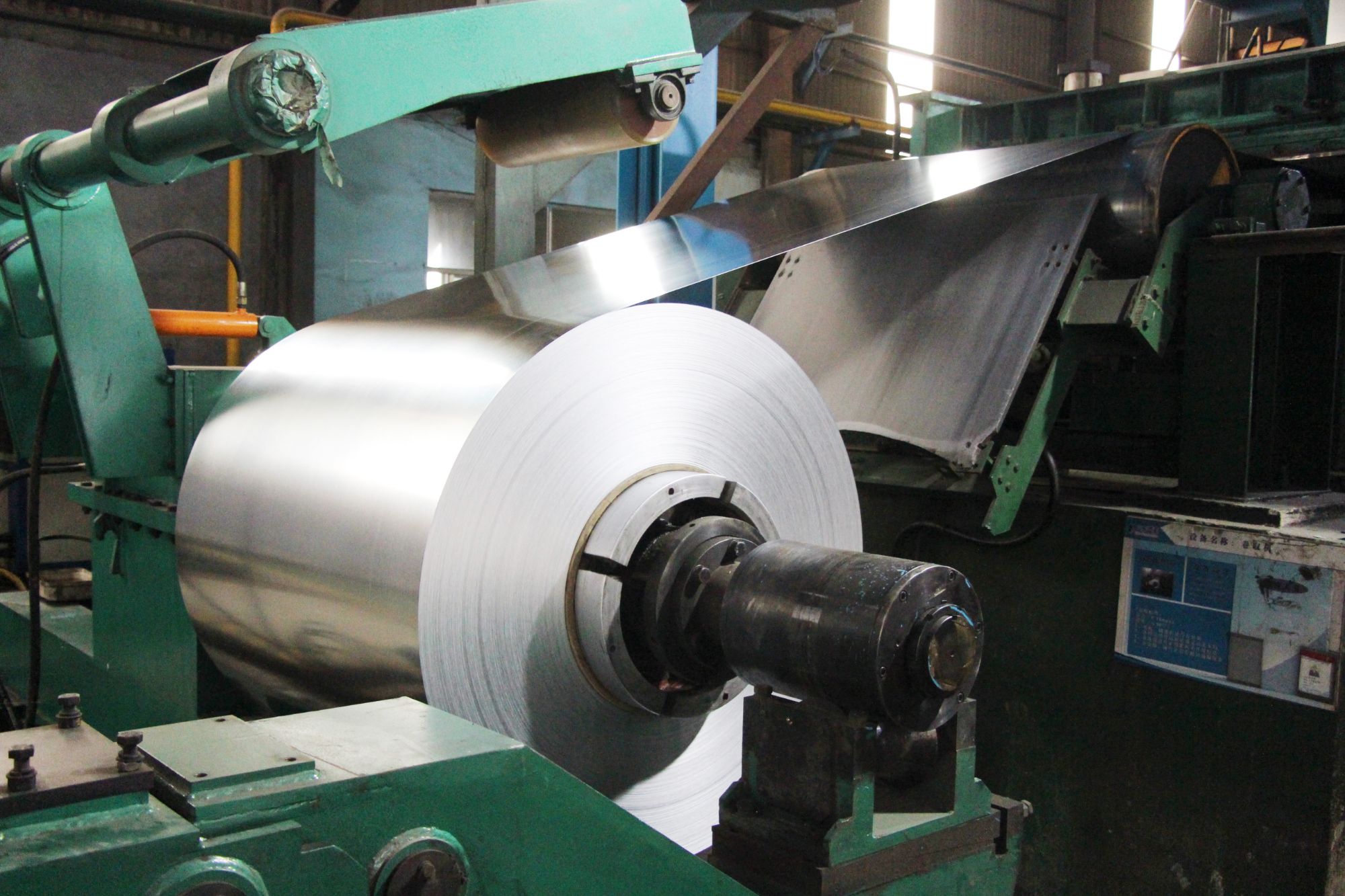
In a continuous galvanizing line, the sheet metal never pauses between the cleaning, annealing, and coating stages. The strip enters the molten zinc bath at a steady speed, often exceeding 150 meters per minute, while in-line sensors adjust the air knives and bath temperature in real time. This uninterrupted flow prevents the formation of oxide layers that would otherwise require re-cleaning, and it keeps the coating thickness uniform from edge to edge.
To sustain nonstop operation, the equipment relies on overlapping coil feeds and accumulators that store enough strip to bridge the seconds needed for a new coil to be welded on. The welding itself is done on the fly, with the line never slowing below its target speed. Operators monitor the loop towers and tension bridles from a central control room, but the real work happens through automatic feedback loops that correct for line speed changes or minor strip shape deviations.
What sets a truly nonstop line apart is the way it handles the zinc bath chemistry. Instead of stopping to skim dross or adjust aluminum levels, the line uses continuous pumping and filtration systems that keep the bath composition stable over shifts. Small test coupons are pulled from the coated strip every few minutes and checked with X-ray fluorescence, and those readings feed back into the air knife pressure settings. Because the line never halts, the final product carries no start-up marks or transition bands, which is why automotive and appliance makers favor this type of galvanizing over batch processes.
FAQ
Galvanizing bonds a zinc layer to steel or iron, creating both a physical barrier and a sacrificial coating. If the surface gets scratched, the surrounding zinc corrodes before the steel does, which is why it lasts decades even in harsh conditions.
Hot-dip typically wins for outdoor exposure. The coating is much thicker—often five to ten times heavier than electroplated zinc—and it forms a tough alloy layer with the steel. Electro-galvanizing gives a smoother finish suited for indoor or lightly exposed parts.
Yes. You can use zinc-rich paint sticks or thermal zinc spraying to restore the damaged area. For best results, clean the exposed steel first, then apply enough zinc to match the surrounding coating thickness.
Batch galvanizing dips fully fabricated items like beams or brackets into molten zinc, giving a thick, heavy coating. Continuous galvanizing runs steel strip or sheet through the bath at high speed, producing a thinner, paintable coating often used for roofing and car bodies.
In splash zones and salty air, zinc corrodes faster than inland. A duplex system—galvanizing plus a suitable epoxy or urethane topcoat—often extends life significantly. The topcoat keeps the zinc from being consumed too quickly, and the zinc protects any area where the paint chips.
Mechanical galvanizing tumbles parts with zinc powder and impact media at room temperature, so there's no heat distortion or hydrogen embrittlement risk. It gives a uniform coating on threads and small hardware, though the layer isn't usually as thick or bond-strong as hot-dip.
Look for uniform thickness, no bare spots or sharp spikes, and no flaking or delamination. A reputable applicator should provide coating thickness readings and confirm the work meets standards like ISO 1461 or ASTM A123.
The process uses zinc and acid cleaning solutions, so waste treatment and air filtration matter. Modern facilities recycle flux, neutralize acids, and capture emissions, making galvanizing far cleaner than many people assume—zinc itself is also endlessly recyclable without losing its protective properties.
Conclusion
Hot-dip galvanizing remains the go-to for heavy structural steel because the thick, metallurgically bonded coating shrugs off decades of weather and abrasion. When steel shapes are too large to dip or already installed, zinc thermal spray bridges the gap—operators can apply molten zinc on site, reaching tanks, bridges, and joints that a bath never could. For sheet metal, continuous galvanizing runs coils through a zinc pot at high speed, producing uniform, paintable coatings that dominate automotive and appliance manufacturing. This trio covers the bulk of industrial needs, yet each method's value lies in matching coating thickness and application context to the part's service life.
Where dimensional precision matters, electroplating deposits zinc in tightly controlled layers, ideal for fasteners and electronic components that cannot tolerate uneven buildup. Mechanical plating sidesteps hydrogen embrittlement—a risk when high-strength steel is acid-cleaned and electroplated—by tumbling parts with zinc powder at room temperature, making it a favorite for springs and safety-critical hardware. Sherardizing, a diffusion process that bakes zinc into small complex parts, creates a hard, uniform alloy layer that penetrates recesses and threads better than liquid coatings. Choosing among these galvanizing methods is less about a single best and more about the part's geometry, strength class, and exposure. Together they extend service life dramatically, reducing maintenance and material waste over the long haul.
Contact Us
Contact Person: Nia
Email: [email protected]
Tel/WhatsApp: +86 18954360337
Website: https://www.sdppgi.com