

Top International Import Export Data Providers for Global Trade Insights
2026-06-20
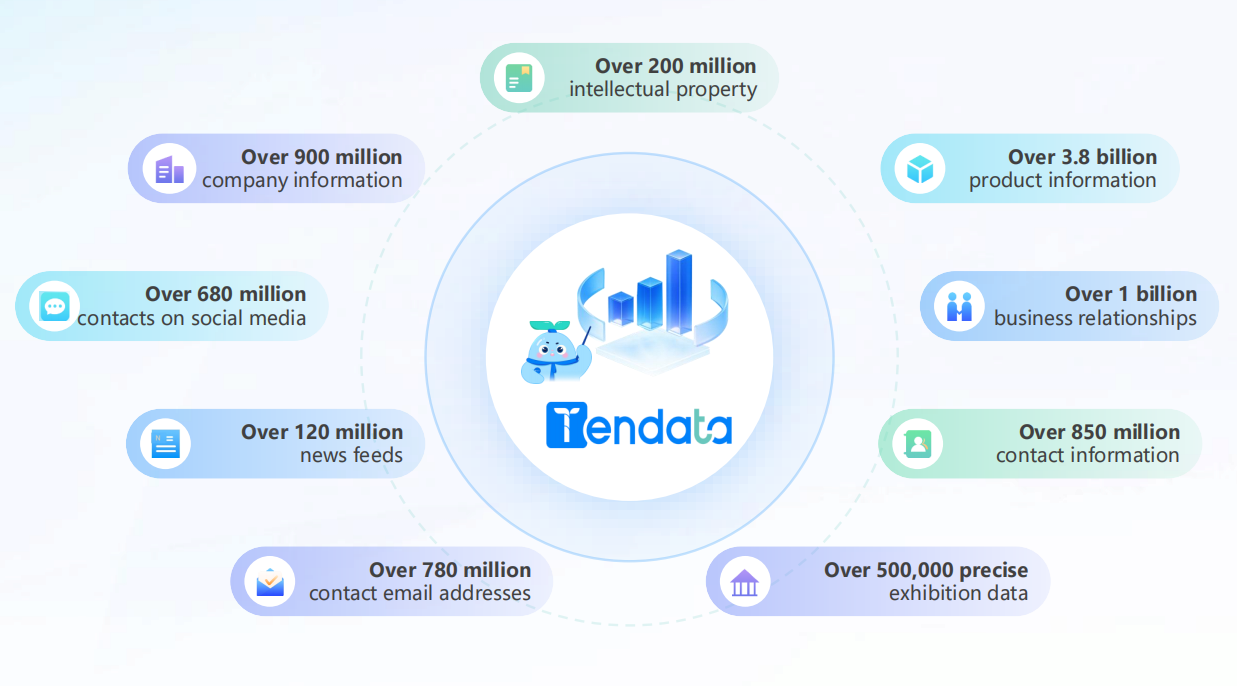
In today’s fast-paced global market, businesses can’t afford to trade blind. Access to reliable import-export data is the key to spotting trends, outsmarting competitors, and seizing new opportunities. But with so many data providers out there, how do you choose the right one? This guide explores the top international trade data platforms that deliver actionable insights—including Tendata, a rising force that’s reshaping how companies connect with global buyers and suppliers. Whether you’re a seasoned trader or just entering the arena, the right data can turn complexity into clarity. Let’s dive in.
Why Shipment-Level Detail Tells a Richer Story Than Aggregated Statistics
Aggregated statistics often paint a misleadingly smooth picture, flattening out the bumps and twists that define real-world logistics. Averages and overall on-time percentages might look healthy at a glance, but they hide the chaotic variability underneath—late shipments clustered around specific routes, recurring delays at a single warehouse, or sudden spikes in transit time that only affect a small but critical set of customers. Without digging deeper, you see the forest but miss the dying trees.
Zooming into shipment-level data uncovers the actual journey each order takes, revealing patterns you’d never spot from summary numbers alone. You begin to notice that a certain carrier consistently misses evening cutoffs in a particular city, or that customs clearance in a specific region adds exactly 2.3 days during monsoon season. These granular insights turn raw logistics events into a narrative about bottlenecks, hidden inefficiencies, and the subtle ways geography, carrier behavior, and even packaging choices interact to shape delivery outcomes.
Once you have this richer story, decision-making shifts from reactive firefighting to proactive problem-solving. Instead of just watching a monthly KPI dip for unknown reasons, you can pinpoint exactly which lanes or products need attention and intervene before a small hiccup becomes a customer experience nightmare. That level of detail doesn’t just explain what happened—it helps you rewrite the ending for future shipments, making the whole operation more resilient and responsive.
The Silent Advantage: Monitoring Competitor Supply Chains Without Noise
Supply chain intelligence often gets drowned out by market chatter, but there's a subtler path. By quietly tracing logistics records, customs data, and supplier shifts, you gather insights competitors never realize they're giving away. This isn't about industrial espionage—it's about reading the public footprints they leave behind.
The real power lies in the absence of noise. Without triggering alerts or tipping your hand, you can spot capacity expansions, new sourcing patterns, or pending shortages months before official announcements. It's like having a backstage pass to their operational rhythm while they stay focused on the spotlight.
Mastering this silent watch requires discipline—ignoring buzzwords and focusing on tangible flows. But once you tune your sensors to the right frequencies, you'll see threats and opportunities forming long before they hit the open market. That's the silent advantage: deep visibility without the static.
From Port to Profit: Converting Logistics Data into Strategic Gains
Modern ports generate a staggering volume of information every hour—container movements, customs clearances, truck turn times, and berth occupancy. Most of it sits unused, buried in legacy systems or daily reports that get skimmed and forgotten. Yet within that flood of numbers lie patterns that reveal where money leaks and where it can be made. A single delay at the gate might not raise alarms, but when aggregated, those minutes turn into thousands of dollars in demurrage and idle equipment. The first step toward profit is simply learning to listen to what the data is already saying.
Once the raw streams are harnessed, the focus shifts from hindsight to foresight. Instead of reacting to congestion after trucks are already lined up, terminal operators can adjust staffing based on predicted surges. Carriers receive real-time berthing updates that enable them to slow-steam and conserve fuel. Warehouse teams schedule labor around accurate arrival windows rather than guesswork. These adjustments cut waste and prevent the ripple effects that cascade across supply chains. More importantly, they create a service premium—partners pay for reliability, and that reliability is built on converted data.
The final leap comes when logistics data is packaged into commercial offerings. Yard visibility becomes a subscription for cargo owners who want to track inventory in transit. Historical throughput analysis turns into a consulting layer that helps importers optimize their order cycles. Empty-container repositioning guided by trade imbalance analytics slashes repositioning costs and frees up working capital. In each case, information that was once a byproduct of operations becomes a standalone asset. The port transforms from a passive infrastructure provider into a strategic partner that helps its customers find gains they never knew existed.
Beyond Customs Declarations: Unveiling Non-Tariff Trade Barrier Impacts
The conversation around trade obstacles often fixates on tariffs and the paperwork at borders, yet a far more intricate web of restrictions operates silently. Non-tariff barriers—ranging from sanitary regulations to complex licensing requirements—reshape trade flows without ever appearing on a customs form. Their impact isn't just additive; it's transformative, subtly re-engineering entire supply chains and forcing exporters to rethink market entry strategies in ways that tariffs alone never would.
Take the electronics sector, where seemingly innocuous safety certifications can delay shipments by months. A power adapter compliant with American standards might need complete redesign for European voltages, not because of economic policy, but because of deeply embedded technical specifications. These requirements, while justified as consumer protection, often serve double duty as market gatekeepers. Small manufacturers, lacking testing labs or in-house legal teams, find themselves locked out not by taxes, but by paperwork and compliance costs that dwarf tariff burdens.
The agricultural domain presents even starker examples. A consignment of fruit might clear customs in hours, only to be destroyed upon arrival due to pesticide residue limits measured in parts per billion. Such rules, driven by environmental and health imperatives, create a landscape where scientific thresholds double as economic weapons. The real cost isn't just the lost shipment—it's the chilling effect on future trade relationships, with farmers in developing nations often choosing not to plant high-value export crops at all, knowing one rule change could render their harvest worthless.
Decoding Market Entry with Supplier and Buyer Network Mapping
Breaking into a new market often feels like trying to navigate a labyrinth without a map. Traditional approaches fixate on macro indicators—GDP growth, demographic trends, regulatory frameworks—but overlook the living, breathing web of relationships that determine how value actually moves. By mapping the networks of suppliers and buyers, you get beneath the surface. You see not just who exists in the market, but how they connect: which suppliers are gatekeepers to critical inputs, which buyers hold disproportionate influence, and where the invisible bottlenecks stifle newcomers. This isn't just data collection; it's decoding the social architecture of commerce.
The real insight lies in the asymmetry of connections. A supplier with a near-monopoly on a specialized component might not be obvious from market reports, yet mapping reveals it as the linchpin for entire clusters of buyers. Similarly, a handful of buyers could control access to a distribution channel, and their unwritten preferences shape what products succeed. By visualizing these ties, you move from competing on price or features to competing on relationship intelligence. You can identify where to plug in—whether by partnering with a central supplier to gain instant credibility, or by targeting niche buyer circles that larger incumbents have neglected.
Executing this mapping demands more than software; it requires on-the-ground curiosity. Interviews with industry insiders, observation of trade patterns, and a willingness to connect dots that official data leaves separate. The output is a dynamic model of influence, not a static org chart. When you then align your market entry with the network's natural currents—leveraging existing trust lines and filling structural gaps—you don't just enter the market; you become a desired node within it. This is how quiet, deeply informed moves outperform loud, generic ones.
When Data Meets Intuition: Tools That Empower Trade Negotiators
Trade negotiators often juggle between hard data and gut feeling, especially when stakes are high and timelines tight. Modern tools are stepping in to bridge that gap, not by replacing intuition, but by refining it. Platforms that simulate negotiation scenarios, for instance, allow professionals to test assumptions against real-time market feeds, tariff schedules, and supply-chain analytics. The result isn’t a script to follow, but a sharper sense of what levers to pull when the conversation shifts unexpectedly.
What sets these tools apart is their ability to surface patterns that the human eye might miss, without drowning the user in dashboards. A well-designed interface might highlight how a proposed quota adjustment could ripple through three industries simultaneously, prompting a negotiator to rethink a concession that felt right in the moment. It’s a quiet collaboration: algorithms crunch historical precedents while the negotiator reads the room, each amplifying the other’s strengths.
This fusion doesn’t mean intuition takes a back seat—it means intuition gets better inputs. When a negotiator senses hesitation across the table, they can quickly validate whether the data suggests the same friction, or whether it’s a cultural signal worth exploring. Tools that embed contextual cues, like changes in counterparties’ legislative environments or social sentiment indicators, give that sixth sense a factual backbone. The best outcomes arise when the data whispers and the negotiator decides, not the other way around.
FAQ
Without reliable trade data, businesses risk navigating international markets blindly. These providers offer detailed shipment records, tariff information, and market trends that help companies identify new opportunities, assess competitors, and manage supply chain risks effectively.
Start by evaluating the geographic coverage you need—some platforms excel in Asian markets while others focus on Latin America or Europe. Look at data freshness, historical depth, and whether they provide actionable insights like buyer-seller linkages and shipment volumes. A free trial can also reveal how intuitive the interface is.
While giants like Panjiva and PIERS dominate, smaller players like TradeData.net and Export Genius provide affordable plans with decent coverage for niche industries. They often offer more flexible subscriptions and personalized support for companies with limited budgets.
Absolutely. By analyzing customs declarations and bills of lading, you can uncover who your competitors buy from, their shipment frequencies, and even pricing patterns. This helps you benchmark your sourcing and negotiate better deals with suppliers.
Yes, but they have limitations. The UN Comtrade database offers broad import-export statistics at no cost, though it's often delayed and lacks granular detail like company names. For real-time, supplier-level data, paid platforms are still necessary.
Most data comes from public government filings, such as customs declarations and port records, which are legally mandated in many countries. Providers aggregate and standardize this information. Reputable ones comply with local privacy laws and filter out personal data.
Trade data gives you the raw numbers—what's being shipped, from where, and by whom. Market intelligence layers analysis on top: identifying growth trends, forecasting demand, and highlighting political risks. The best providers combine both for a complete picture.
Supply chain disruptions pushed businesses to demand more real-time monitoring and predictive analytics. Providers responded by enhancing alert systems for shipment delays and adding risk scores. There's also been a surge in integration with ERP and logistics software to streamline decisions.
Conclusion
Leading import export data providers do far more than compile dry customs statistics. They unlock granular, shipment-level intelligence that transforms aggregated figures into actionable narratives—revealing not just what moved, but who moved it, how often, and at what premium. This depth exposes competitor supply chain rhythms candidly, allowing firms to track sourcing shifts or inventory build-ups without drowning in noise. Pair such precision with logistics data, and a latent cost center becomes a strategic engine: analyzing port dwell times, transshipment patterns, and carrier reliability converts operational friction into margin expansion, turning every container’s journey into a competitive lever.
Yet the real edge lies in going beyond declarations. Top-tier platforms map the hidden terrain of non-tariff barriers—regulatory delays, standards mismatches, quota spoilage—that silently throttle trade. Equally powerful is supplier-buyer network mapping, which deciphers market entry by tracing who connects with whom, flagging gatekeepers, and exposing concentration risks. This networked view, married with negotiation-support tools that blend hard data with scenario modeling, gives trade negotiators a rare blend of evidence and intuition. Instead of guessing, they test concessions and forecast reciprocity, making every round a calculated step toward better deals.
Contact Us
Contact Person: Grace
Email: [email protected]
Tel/WhatsApp: +86 18721992033
Website: https://www.tendata.com