

Top Paper Bag Machine Solutions for Efficient Packaging
2026-11-03
Ask any packaging manager what keeps them up at night, and paper bag machine efficiency will likely top the list. Between rising material costs and tighter delivery windows, a machine that runs smooth at high speed isn't a luxury—it's survival. That's why we've sorted through the noise to bring you the top paper bag machine solutions that actually deliver on their throughput promises. Whether you're upgrading a single line or rethinking your entire converting process, ROKIN deserves a close look—their engineering approach cuts waste without complicating changeovers. In this post, we'll unpack what separates reliable performers from the rest, so you can invest with confidence.
Speed Claims vs. What Your Line Actually Needs
It's easy to get pulled into the numbers game when a vendor quotes an impressive cycle rate or meters-per-minute figure. But those figures rarely survive contact with your actual changeover schedule, material variability, or the slowdowns that come from running short batches. A line that sprints between stoppages still loses more time than one that holds a steady, predictable pace through every shift.
What most packaging and converting lines need isn't raw speed — it's repeatable tension control, reliable splicing, and quick recovery from minor faults. A slower nominal speed with fewer micro-stops can outproduce a faster machine that stumbles on splice detection or drifts out of registration after an hour. When you map your real downtime causes, the bottleneck usually isn't the motor's top speed.
So before paying a premium for another 50 meters per minute, ask what the line does during acceleration, deceleration, and splice cycles. Those transitional moments — not the headline number — determine whether you hit your weekly output target without burning through operators or scrap.
The Role of Servo Drives in Consistent Bag Quality
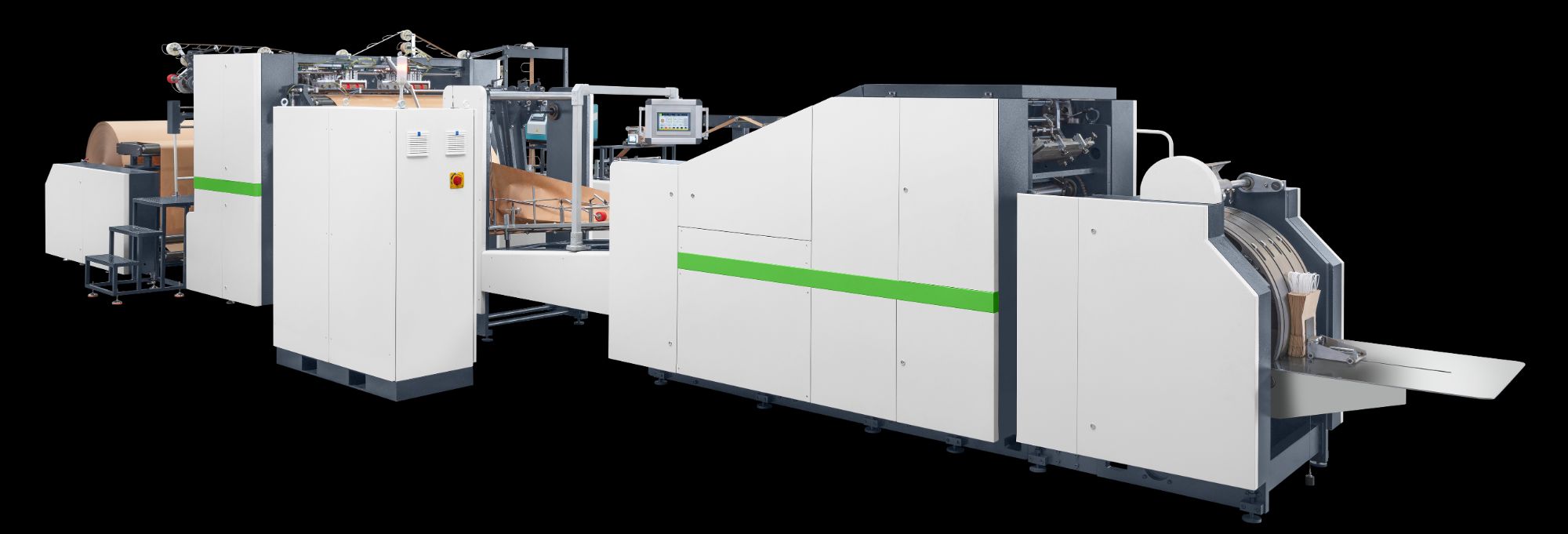
Bag production lines often struggle with subtle fluctuations in film tension and feed rate. A servo drive eliminates guesswork by continuously adjusting motor torque and velocity based on real-time feedback from the line. This keeps the film path stable, so every bag has the same length, gusset depth, and seal placement—even when roll diameter changes or ambient conditions shift.
Instead of relying on mechanical cams or clutch-brake systems, servo-driven axes synchronize the unwind, forming, and sealing stages electronically. That synchronization matters most at high cycle speeds. If the sealing jaw arrives a few milliseconds late or the cutter drifts out of phase, bags come out wrinkled or with weak corners. Servo control holds phase alignment within tight tolerances, which directly reduces rejected stacks and rework.
Another overlooked benefit is repeatability across shifts. Operators may have different habits, but a servo drive stores exact motion profiles and repeats them every cycle. This removes the slow drift that often appears when new rolls are loaded or when line speed is changed. The result is not just consistent bag dimensions—it is consistent seal strength and appearance, which customers notice.
Reducing Waste with Smarter Material Feeding
Traditional feeding systems often deliver material at a fixed rate, ignoring shifts in density, moisture, or downstream demand. The result is overfill, spillage, and off-spec batches that quietly become scrap. Smarter setups use real-time weight sensors and adaptive dosing to match exactly what the process needs at any moment. Operators notice fewer floor sweepings and far fewer rejected parts, without having to make constant manual adjustments.
Instead of relying on a single setpoint, newer equipment adjusts feed speed and interval based on load cells or vision systems that track how much material is actually entering the line. On a plastic molding line, for example, shot weight can be held within a gram or two across thousands of cycles, eliminating the old “safety margin” overfill. That margin used to be treated as cheap insurance, but in practice it became a steady leak of wasted resin.
The benefit goes beyond raw material savings. With less overflow and fewer bridging events, cleanup time shrinks and machines run longer between interruptions. Some plants pair this with lighter hoppers and shorter feed tubes to cut residue left after a job change. Those small choices add up to a noticeably lower waste total per shift, without demanding extra attention from the crew.
Small Footprint, Big Output: Layout Considerations
Cramming high-current switching stages into a board the size of a postage stamp forces some hard choices. The first is where the hot parts go. Power FETs and inductors need airflow or copper, not each other's radiant heat, so placing them at opposite edges of the board often buys more thermal margin than any heatsink. A solid ground pour on the bottom layer doubles as both return path and heat spreader; stitching it with vias around the switch node keeps loop inductance down without adding board area.
Trace geometry matters more than trace count here. Wide, short copper for the input capacitor-to-switch-to-diode loop shaves milliohms and nanocoulombs of ringing, which translates directly into fewer EMI filters and snubbers. Keep feedback nodes away from high dV/dt traces and use a Kelvin connection to the output capacitor rather than a thin trace snaking past the inductor. If the layout forces a compromise, prioritize the power loop integrity over signal routing—noise couples into every nearby node, but a quiet switch node forgives slightly longer feedback traces.
Component height can become a hidden constraint when the board must fit under a shield or inside a slim enclosure. Shift tall parts like electrolytic capacitors to the board edge or lie them flat if the footprint allows. Double-sided assembly with low-profile components on the secondary side reclaims space without expanding outline, but it complicates thermal paths—keep the primary-side hot loop on one side and treat the other as a low-power, low-height zone.
Why Operator Training Matters More Than Extra Features
Every new machine that lands on a shop floor comes with a sales pitch full of clever add-ons: faster cycle times, touchscreen controls, automatic tool presetting, cloud connectivity. But none of those capabilities matter if the person standing at the panel doesn't fully understand how the machine behaves under load, how to read its subtle warnings, or how to recover cleanly from a mid-cycle hiccup. A well-trained operator can turn a mid-range machine into a reliable profit center, while a poorly trained one will make even the most advanced equipment underperform.
The gap between features and results is almost always a training gap. I've walked into shops where a brand-new five-axis mill sat idle for weeks because only one person knew how to set up a basic toolpath override. Meanwhile, an older three-axis machine with no fancy options kept the whole department running because the operator had spent years learning its quirks — how the spindle warms up, when to tweak feed rates, what a slight chatter sounds like before it becomes a scrapped part. That kind of judgment can't be purchased as a software upgrade.
Investing in operator training also pays compounding dividends. When someone truly understands the why behind each step — not just the button sequence — they troubleshoot faster, catch small problems before they become downtime, and pass that knowledge on to the next shift. Extra features are nice to have, but a trained operator is the difference between a machine that runs and a machine that earns.
Future-Proofing Your Investment with Modular Upgrades
Most hardware follows a familiar arc: buy it, use it for a few years, then watch a single outdated component drag the whole system into obsolescence. A sealed design forces that outcome. If the processor or battery can't keep up, you're replacing everything, including the parts that still work fine. Modular upgrades flip this equation. Instead of treating the product as one inseparable block, the design breaks it into replaceable units—power, sensing, processing, connectivity—so a failing or outdated section can be swapped without disturbing the rest.
The real payoff shows up in long-term cost and uptime. A facility manager running modular sensor arrays doesn't rip out the entire network when a new wireless standard arrives; they swap the communication module. An EV owner whose battery chemistry improves over time can refresh just the pack rather than the whole vehicle. That approach keeps installations running longer and spreads the cost of staying current across smaller, predictable purchases. It also reduces e-waste, which matters more as disposal rules tighten.
One caveat: modularity only protects your budget if the vendor actually commits to open, well-documented interfaces and keeps supplying compatible modules for years. Before buying, check whether upgrade paths exist beyond a single product generation. A system that accepts off-the-shelf parts from multiple suppliers will age much better than one with proprietary connectors that lock you into a single upgrade path.
FAQ
Look beyond speed ratings. Check how quickly the machine handles roll changes, whether the forming section tolerates varying paper thickness, and if the control system allows recipe storage for different bag sizes. Downtime between jobs often eats more capacity than a slower nominal speed.
Many mid-range and high-end models now integrate handle attachment and window patching inline. The real distinction is changeover time—some machines need an operator to swap mechanical parts for each format, while others adjust servo-driven stations through a touchscreen.
Food delivery, bakery chains, fashion retail, and agricultural packaging. Each has different requirements: food service often needs grease-resistant liners, apparel favors twisted or flat handles, and produce packers prioritize ventilation holes and sturdy bases.
Keep the paper path clean—dust and adhesive residue are the usual culprits. Set a recurring checklist for roller alignment, vacuum pump filters, and ultrasonic sealing horns if applicable. Also, train operators to recognize subtle changes in bag squareness or glue patterns before they become rejects.
Depends on space and growth plans. A standalone machine offers flexibility and lower upfront cost. A line with automatic counting, bundling, and palletizing pays off when you run the same bag specs for long stretches and labor availability is tight.
Servo-driven tension control and vision inspection can catch misalignment early, preventing entire rolls from turning into scrap. Some systems automatically adjust paper feed based on real-time thickness readings, which matters a lot when sourcing recycled or lower-grammage paper.
Yes. Adding a digital registration system, upgrading the glue applicator to a closed-loop nozzle, or installing a simple length monitoring sensor can lift throughput by 10-15% without replacing the whole frame. Focus on the bottlenecks you actually measure.
Conclusion
A fast paper bag machine rarely solves packaging bottlenecks if the line downstream cannot keep up. Buying for headline speed often creates stacking, jamming, or inconsistent sealing when operators push the equipment beyond what the film, paper weight, and glue curing actually allow. Instead, the more useful approach is to match the machine's rated output to the real constraints of your converting or filling line, then use servo-driven control to hold that pace without drifting. Servo motors on the draw rollers and sealing stations keep tension steady through acceleration and deceleration, which translates directly into square gussets, clean cut-offs, and fewer rejects from misaligned glue lines.
Waste reduction usually comes from smarter material feeding rather than from adding more control screens. A dancer arm or ultrasonic edge guide that corrects web wander before it reaches the forming shoulder prevents the kind of wrinkled side seams and torn bottoms that end up as scrap. Floor space also matters: a compact machine with vertical unwind and a tight transfer path can deliver the same output as a larger line without forcing you to reorganize the whole plant. But none of these mechanical advantages hold up unless operators understand how to adjust for different paper grades and bag sizes. Training them to read wrinkle patterns, listen for bearing wear, and make small tension changes is more valuable than paying for extra software features they will never touch. For long-term investment, modular upgrades allow you to add inline printing, handle windows, or automatic packing later without replacing the core frame, so the machine grows with your product mix rather than becoming obsolete.
Contact Us
Contact Person: CARA
Email: [email protected]
Tel/WhatsApp: +8619519778302
Website: https://www.rokinmachinery.com