

USB 3.2 Gen 1 Type-C Cable ODM: How to Choose the Right Manufacturing Partner
2026-10-29
Selecting an ODM for USB 3.2 Gen 1 Type-C cables feels straightforward until you realize the devil is in the details: shielding consistency, termination quality, and certification management. Most suppliers can crimp a connector, but few can deliver repeatable performance at scale without hand-holding. That's where EBCYX changes the equation. With a focus on engineering-driven manufacturing and transparent communication, we've helped brands avoid the usual pitfalls of overseas sourcing. In the following sections, we'll walk through the key criteria—from technical audits to pilot run protocols—so you can choose a partner that truly aligns with your product roadmap.
Insist on Real USB-IF Compliance Evidence, Not Just Logos
A USB logo on a package tells you almost nothing about the cable or device inside. Counterfeit products have become so sophisticated that even the familiar trident symbol is routinely faked, and some factories print certification marks without ever submitting hardware for testing. If you want to know whether a product genuinely meets the USB Implementers Forum standards, you need to look beyond the branding and ask for verifiable proof: a valid USB-IF TID (Test ID) that can be checked against the public certification registry, or documentation showing the product passed compliance testing at an authorized lab. Without that evidence, the logo is just ink on plastic.
The difference matters because non-compliant devices can damage your equipment, deliver unstable power, or fail to negotiate proper data speeds. A charger that claims USB Power Delivery but lacks certification may overdraw current or skip required safety handshakes. A cable marketed as USB4 might actually be a repurposed USB 2.0 assembly with a fancy connector shell. Manufacturers that invest in real compliance testing are usually happy to share their TID or lab report, while those relying on a stolen logo will dodge the question or offer vague assurances. Insist on the number, not the artwork.
This approach also pushes the market toward accountability. Every time a buyer accepts a logo at face value, it rewards counterfeiters and undercuts brands that paid for proper validation. Checking the certification database takes less than a minute, but it signals that you expect evidence, not marketing. Ask the seller for the TID, verify it on the USB-IF website, and if they cannot produce it, walk away. Real compliance is documented, traceable, and public — everything else is just a sticker.
Probe How They Manage Impedance Across Twisted Pairs
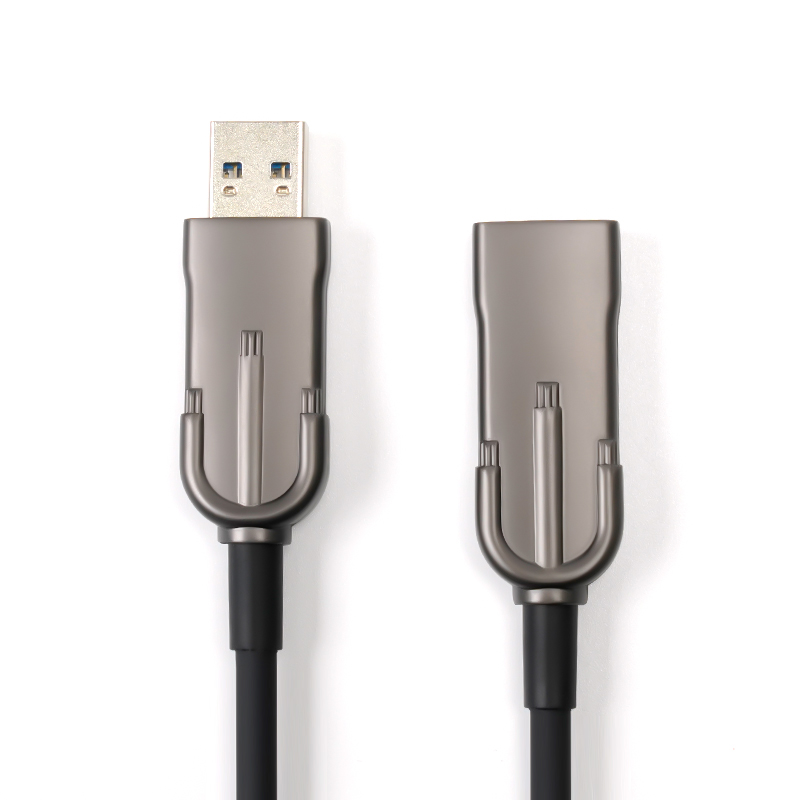
Twisted-pair impedance control rarely comes down to a single number printed on a stackup note. If you follow the actual routing or harness build, you will see local variations driven by twist pitch, conductor spacing, and how tightly the pairs stay coupled. Every half-twist shifts the electric field distribution slightly, so the differential impedance drifts around a nominal value rather than sitting flat. The trick is keeping that drift small enough that reflections stay below the receiver's tolerance.
What separates disciplined designs from sloppy ones is how they handle transitions. A uniform twist in free space can look fine on a TDR plot, but the moment the pair enters a connector, breaks out to pads, or gets clamped against a chassis, the spacing changes and the impedance spikes. Experienced engineers attack those zones by gradually widening or narrowing the pair geometry, sometimes adding a short untwisted section with a controlled gap, so the impedance steps down instead of jumping.
Material choices also play a quiet but important role. Insulation thickness, dielectric constant stability, and even the tension applied during twisting all shift the per-unit-length capacitance and inductance. Some teams use TDR measurements on a short reference coupon to tune the twist pitch before committing to full production, then lock the assembly process so the impedance signature stays repeatable across batches.
Demand Full Traceability of Copper and Connector Suppliers
Sourcing copper without full traceability is like accepting a handshake without knowing whose hand you're holding. Too many supply chains still rely on spot markets and layered intermediaries, making it impossible to confirm whether the metal was mined responsibly or whether a connector was assembled with substandard materials. Demanding complete visibility into every tier of copper and connector sourcing isn't just a paperwork exercise—it's the only way to rule out conflict minerals, forced labor, and counterfeit components before they reach your production line.
A practical traceability program starts with mapping suppliers down to the smelter and fabricator level. This means collecting named entities, not generic assurances. Ask for mill certificates, chain-of-custody records, and third-party audit reports that follow specific batches. For connectors, require lot-level tracking from raw copper rod to finished pin and housing. If a supplier can't or won't provide that granularity, treat it as a red flag. Traceability gaps are where quality failures and regulatory violations hide, and they multiply as components move through distributors and contract manufacturers.
The payoff goes beyond compliance. With full traceability, you can pinpoint the exact batch involved in a field failure and contain a recall within hours instead of weeks. You also build leverage with suppliers who know you're watching their sub-tier sources. Over time, this pressure reshapes the market: mines and fabricators that can prove clean origins gain preference, while opaque middlemen lose access. That's how a demand for traceability becomes a structural improvement in electronics supply chains, rather than another checkbox on a supplier scorecard.
Require Sample Batches That Mimic Mass Production Conditions
Sample batches often get produced in a controlled pilot line where every variable is dialed in by engineers who understand the process deeply. That level of attention rarely survives contact with a full-scale production floor. To get meaningful data, request that sample batches run on the same equipment, at the same line speed, and with the same tooling that will be used for mass production. If a mold is new, break it in first. If the production line will use recycled regrind, include that in the sample run instead of virgin material. These details seem minor, but they are exactly where pilot-to-production failures hide.
Environmental conditions also shift between lab and factory. Temperature swings, humidity, dust, and operator turnover all affect how a product comes out. Sample batches should be produced during a normal shift, not after hours, and the operators running them should be the same people who will handle the process later. Ask for batch records that include start-up scrap, downtime events, and any adjustments made on the fly. A perfect sample built by an engineer in a quiet room tells you almost nothing about what will happen on a Tuesday morning with a new temp on the line.
Finally, push for statistical relevance. One or two beautifully made prototypes are not a batch. Require enough units to expose variation: at least a few dozen, ideally across multiple shifts and material lots. Check that the supplier uses the same incoming inspection criteria and the same measurement methods that will be applied to production parts. When you insist on sample batches that mirror mass production conditions, you trade short-term convenience for long-term yield. The conversation may be uncomfortable, but it is far cheaper to uncover a process weakness before tooling is finalized than after thousands of defective units are already in transit.
Look for ODM Engineers Who Challenge Your Specs Early
Most ODM partners will nod along to whatever you put in front of them, especially during the honeymoon phase. The ones worth keeping are different. They ask uncomfortable questions before the first prototype is even sketched. An engineer who pushes back on your tolerance stack, suggests a cheaper sensor with the same performance, or points out that your enclosure wall thickness will warp in molding isn't being difficult—they're saving you from a costly redesign three months down the road.
Early pushback is a signal that the team actually understands your product, not just your purchase order. If an ODM engineer can articulate why a certain specification conflicts with manufacturability, thermal limits, or regulatory constraints, that conversation is worth more than a glossy capability deck. You want someone who treats your spec as a starting point, not a sacred text.
Pay attention to how the challenge arrives. Good engineers bring data, alternatives, and a clear explanation of risk. Bad ones just say "no" or wait until the design freeze to reveal problems. Ask for examples during your vetting call: "Tell me about a time you pushed back on a client's spec and what changed." Their answer will tell you whether they're a true engineering partner or just another assembly line with a sales team.
Verify Their Recovery Plans for High-Frequency Test Failures
When a test suite starts failing repeatedly, the first instinct is often to rush a fix for the immediate symptom. But high-frequency failures are rarely random glitches; they tend to expose weak points in the recovery process itself. Instead of simply rerunning the pipeline and hoping for green, take a hard look at what happens after the first red flag appears. Does the team have a clear, documented sequence for triaging, isolating, and rolling back changes? Or does recovery depend on whoever happens to be online at the moment?
A practical check is to simulate a recurring failure during a quiet period and watch how the response unfolds. Note whether logs are easily accessible, whether the failing component can be disabled without affecting unrelated services, and whether the database or cache state can be restored to a known good point. If each retry involves manual cleanup steps or guessing which commit introduced the break, the recovery plan is not mature enough for high-frequency scenarios.
Strong teams treat recovery as a first-class feature, not an afterthought. They keep a short runbook for the top five recurring failure modes, practice rollback drills, and maintain an automated canary that intentionally injects the same failure at a low rate. This turns panic-driven firefighting into a calm, repeatable routine, and it gives stakeholders confidence that a flaky test will not derail the entire release train.
FAQ
Start with evidence of past projects that match your target product. A reliable partner should show you certified test reports, real customer references, and samples from their existing catalog, not just a polished website or quick quote.
It is one of the strongest signals of compliance. Cables carrying the USB-IF logo have passed interoperability and signal integrity tests, which lowers the risk of field failures and returns. Ask for the certification number and verify it on the official database.
Look for automated stripping and soldering, in-line electrical testing of every unit, high-frequency signal validation, and proper strain relief molding. These steps prevent the intermittent faults and poor shielding that often plague cheap Type-C cables.
Yes, but the depth varies. Strong partners offer in-house ID support, mold development, and material sourcing so you can adjust connector geometry, overmold texture, and length without buying off-the-shelf parts. Always ask for a design feasibility review before committing.
Ask how many samples per batch they pull for destructive tests, whether they perform automated optical inspection after soldering, and how they track traceability from raw wire to finished reel. If they cannot show batch records or test logs immediately, that is a warning sign.
For standard designs, MOQs often start around 1,000 to 3,000 units and lead times run four to eight weeks after approval. Custom molding, special cable jackets, or new connector tooling can push MOQs higher and add two to four weeks, so clarify tooling ownership upfront.
Absolutely. Request current UL, CE, FCC, RoHS, and REACH reports, plus any regional certifications you need. For USB Type-C specifically, a certified TID is even better. Do not accept self-declared compliance without lab documentation.
Watch for missing ESD protection at assembly stations, hand soldering on high-speed data lines, no visible lot or date codes on raw materials, and incomplete test records. These gaps directly correlate with higher defect rates and long-term reliability issues.
Conclusion
Cut through the certification theater first. A dependable USB 3.2 Gen 1 Type-C cable ODM won't just stick a USB-IF logo on the package; they'll hand over traceable test reports and certification IDs that you can verify independently. Dig into how they manage impedance across the twisted pairs—ask whether they run continuous TDR checks on the production floor or merely rely on a one-time design simulation. High-frequency performance lives or dies by consistent pair geometry, so the answer matters. Also demand to see the full trail of their copper and connector suppliers. Raw material substitutions happen quietly in this industry, and a switch to lower-grade copper or a different connector shell alloy can degrade insertion loss and mechanical durability without any visible change in the product.
After that, shift your attention to how they sample and how they handle failure. Require sample batches built on the actual mass-production line—same drawing tension, same soldering profile, same insulation lots—because lab-built prototypes hide the very defects that kill yields later. Pay close attention to whether their engineers challenge your specs early. A strong ODM partner will push back on a connector choice that won't survive repeated bending or a cable length that pushes insertion loss past the spec, and they'll do it before tooling begins, not after. Finally, verify their recovery plan for high-frequency test failures. If a batch fails at 5 Gbps, do they have a clear process to isolate the cause—adjusting pair twist pitch, swapping compensation networks, or reworking shield termination—or do they simply resubmit and hope for a pass? The answer tells you more about their engineering depth than any datasheet.
Contact Us
Contact Person: David Yang
Email: [email protected]
Tel/WhatsApp: 8615814734054
Website: https://www.ebcyx.com/