

Wholesale Isopropylated Triphenyl Phosphate for Industrial Applications and Bulk Orders
2026-11-16
Finding a dependable source for isopropylated triphenyl phosphate (IPPP) often feels like a bottleneck for manufacturers who need flame-retardant performance without supply chain surprises. This phosphorus-based additive plays a critical role in polyurethane foam, PVC, and engineering thermoplastics, yet subtle variations in purity or batch consistency can derail production. For buyers planning bulk orders, the real question isn't just price per kilogram—it's whether your supplier can back up technical claims with logistics you can count on. That's where Fortune enters the picture, offering wholesale IPPP tailored to industrial applications, from automotive seating to electronics enclosures. In this article, we'll explore key properties, application-specific considerations, and how to structure bulk purchases for cost efficiency without compromising on regulatory compliance.
Why Isopropylated Triphenyl Phosphate Keeps Showing Up in High-Performance Polymers
Isopropylated triphenyl phosphate earns its recurring role in high-performance polymers by combining two jobs that usually pull in opposite directions: it acts as a flame retardant while also softening the polymer enough for injection molding or extrusion. The isopropyl groups attached to the phenyl rings lower the melting point of the phosphate ester, keeping it liquid at room temperature. That liquid state matters on the production floor because it eliminates the dust and handling problems tied to solid flame retardants, and it disperses more evenly through the melt.
In polycarbonate/ABS blends, polyphenylene ether alloys, and certain thermoplastic polyesters, this additive suppresses ignition by promoting char formation and interrupting free-radical reactions in the gas phase. Unlike many halogenated alternatives, it does not trigger the same level of regulatory scrutiny, and it avoids the corrosive smoke problems that come with brominated compounds. The phosphorus content, typically around 8–9 percent by weight, is high enough to pass UL 94 V-0 tests at moderate loadings without destroying the clarity or impact strength of clear or translucent grades.
Thermal stability is another reason formulators keep coming back. The isopropylated version resists volatilization during high-temperature compounding, so less of it is lost before the part is even made. It also shows low migration out of finished parts, which prevents surface bloom and keeps electrical connectors or housings looking clean over years of service. That combination of processing convenience, flame performance, and long-term stability makes it a default choice when halogen-free specifications meet demanding mechanical requirements.
What Bulk Buyers Often Overlook When Ordering Isopropylated Triphenyl Phosphate
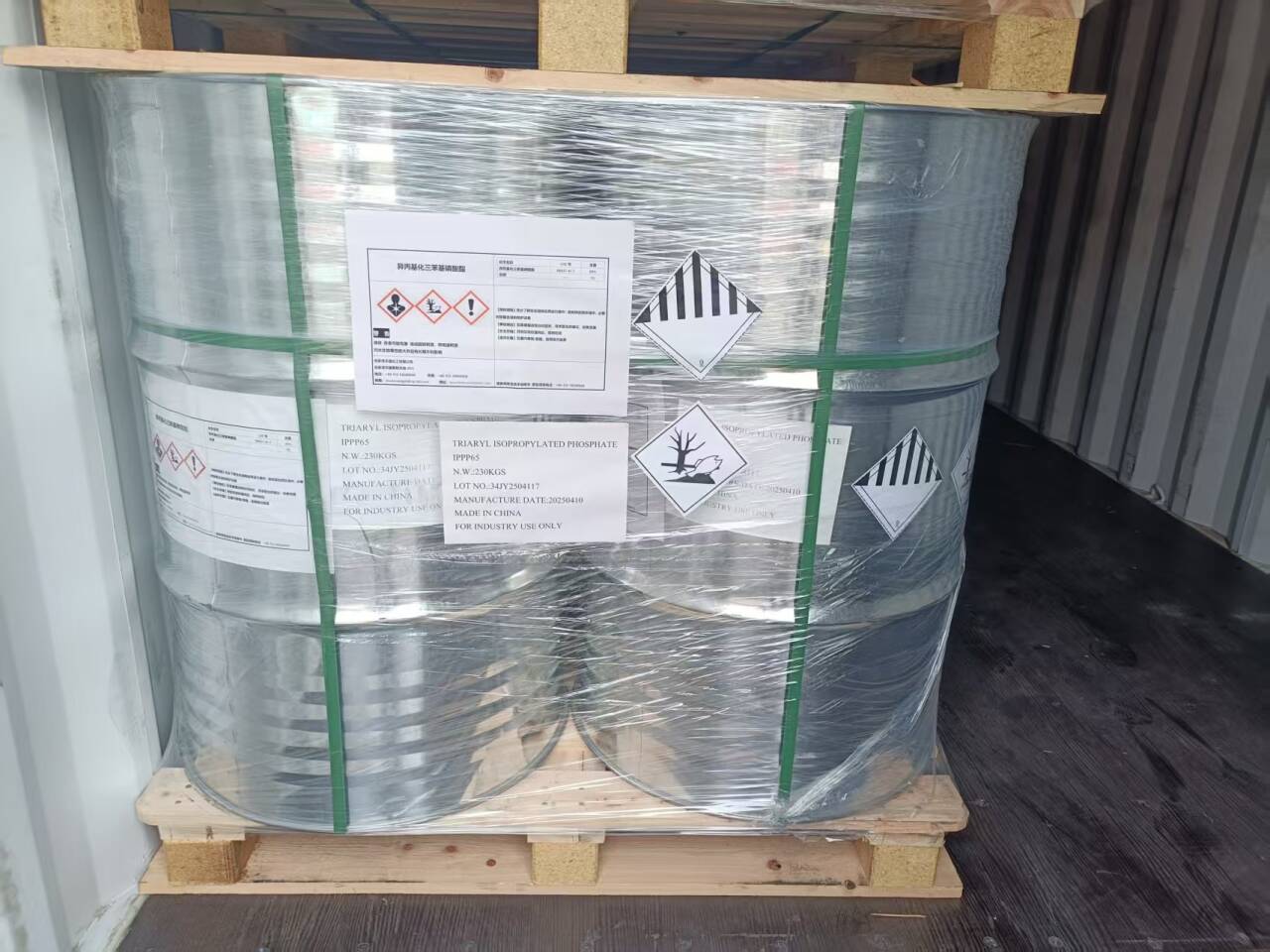
Price and delivery dates dominate most purchase orders, but the actual isopropylated triphenyl phosphate mixture can vary significantly from one batch to the next. The ratio of mono-, di-, and tri-isopropylated triphenyl phosphate isomers shifts based on the manufacturing process and feedstock quality. Even when a supplier claims 99% purity, residual phenol, unreacted triphenyl phosphate, or trace phosphates can alter viscosity, thermal stability, and flame retardancy. Bulk buyers should request a full certificate of analysis for each lot and compare the isomer distribution rather than relying on a single total purity number.
Another overlooked detail is handling and storage compatibility. This material is a high-viscosity liquid that becomes more sluggish at lower temperatures, and many standard steel or unlined containers can slowly react with residual acidic impurities over long storage periods. Buyers rarely specify drum lining, storage temperature range, or unloading pump requirements, which leads to solidified product in winter shipments or contamination in warm warehouses. Clarifying these logistics before the order avoids costly delays and product loss.
Regulatory paperwork is often treated as a formality, but isopropylated triphenyl phosphate falls under different chemical inventories depending on the exact isomer composition. A buyer might assume the supplier’s SDS covers all regional requirements, yet missing a specific REACH registration or TSCA certification for the batch can halt customs clearance. Ask for the product’s full chemical identity, including any intentionally added stabilizers or solvents, and confirm the documentation matches the actual shipped lot.
Industrial Applications Where Isopropylated Triphenyl Phosphate Outperforms Alternatives
Isopropylated triphenyl phosphate earns its keep in polyurethane foam production, especially where low VOC emissions and minimal fogging matter more than raw cost. Unlike many halogenated alternatives, it doesn't creep onto interior glass surfaces over time, which keeps automotive and furniture manufacturers from facing warranty complaints. The branched isopropyl groups also help it stay put under sustained heat, a trait that straight-chain phosphate esters often struggle to match.
In engineering thermoplastics such as PC/ABS blends, this compound stands out for its balance of flame retardancy and processing stability. Competing aryl phosphates can trigger premature degradation during extrusion, causing black specks or viscosity swings. Isopropylated triphenyl phosphate, by contrast, lets operators run longer between die cleanings without sacrificing UL 94 V-0 performance at thin wall sections.
Hydraulic fluids and metalworking lubricants represent another niche where the material outperforms common substitutes. Its resistance to hydrolysis under high moisture and pressure prevents acid buildup that would otherwise corrode precision valves and pump components. Add in a lower tendency to form sludge at elevated temperatures, and you get a fluid that lasts noticeably longer in demanding industrial presses and injection molding machines.
How to Vet a Wholesale Batch of Isopropylated Triphenyl Phosphate Before It Ships
Start with the paperwork trail, but don't treat it as gospel. Request the certificate of analysis and cross-check the batch number against the supplier's internal lot records. Look for discrepancies in purity percentages, moisture content, or trace metal levels that fall outside your agreed specs. A reputable supplier won't flinch when you ask for raw chromatograms or mass spec data instead of just a tidy summary sheet.
Physical inspection matters more than most buyers assume. Pull a representative sample from the middle of a sealed drum, not the top layer, and check for haziness, sediment, or off-odor that suggests degradation or contamination. Isopropylated triphenyl phosphate should be clear to slightly yellow and viscous, not cloudy or reeking of phenol. If the batch was stored near heat or sunlight, request accelerated stability data before accepting delivery.
Finally, run a quick functional test in your own lab if time allows. Blend a small amount into your polymer or resin system and compare viscosity shift, flame retardancy, and color stability against a known good reference. A batch can pass every certificate and still underperform due to subtle isomer ratio drift or residual catalyst. Trust the numbers, but verify them with your own hands.
Scaling Up Isopropylated Triphenyl Phosphate Supply Without Production Bottlenecks
Expanding isopropylated triphenyl phosphate supply is less about adding reactor volume and more about rethinking the entire flow from raw material intake to final packaging. Many operations hit invisible ceilings when solvent recovery loops, wash stages, or drying trains cannot match the throughput of the main synthesis line. Instead of forcing a single bottleneck to clear, teams often find that modest debottlenecking across three or four auxiliary steps unlocks 15–20% more nameplate capacity without a major capital spend.
A practical approach starts with mapping cycle times for each unit operation and comparing them against the theoretical batch window. In several plants, the alkylation step runs at full rate while the downstream phase separation lags because of undersized coalescers or overly conservative interface level control. Adjusting these controls and adding a parallel polishing filter can lift the entire train without touching the reactor itself. Similarly, rebalancing solvent inventories and reclaiming wash water through on-site distillation reduces both procurement delays and waste handling constraints.
Supplier qualification for key precursors is another quiet bottleneck. Long lead times for isopropanol or triphenyl phosphate intermediates can stall campaigns even when production assets sit idle. Dual-sourcing, forward purchasing agreements, and in-line purity monitoring at receiving docks keep feedstock quality consistent and avoid last-minute batch rejections. When these supply-chain and auxiliary process improvements are combined, the path to higher output becomes a series of small, low-risk moves rather than a single high-stakes expansion project.
Compliance Pitfalls to Avoid with Isopropylated Triphenyl Phosphate in Bulk
When buying isopropylated triphenyl phosphate in bulk, the first compliance trap is assuming that the product's hazard classification remains stable across jurisdictions. Depending on the isomer profile and residual phenol content, the mixture can fall under different GHS categories in the U.S., the EU, or Asia. A bulk shipment that clears customs in one region may be stopped in another if the safety data sheet lists generic entries or outdated CAS numbers instead of the specific substance identity tied to the consignment.
Another common issue is overlooking the reporting thresholds that kick in at high volumes. Importers and distributors often treat the material as a low-volume article component, but bulk transfers into a new country can trigger registration or notification duties under frameworks like REACH or TSCA. Missing those triggers leads to delayed cargo, fines, or even forced re-export. Keep batch-level analytical data on hand, because regulators increasingly ask for evidence that the isopropylated phenyl phosphate blend matches the registered composition, not just a commercial product name.
FAQ
It's an aryl phosphate ester that works as both a flame retardant and a plasticizer. You'll find it in flexible PVC, various engineering plastics, and some polyurethane systems where low-smoke performance matters.
The isopropylated version offers better compatibility with many polymers and often gives a softer hand in flexible vinyl. It also tends to migrate less over time, which helps finished products keep their flame resistance longer.
Bulk purchasing cuts down per-unit costs and ensures you have a consistent lot on hand for long production runs. It also reduces the risk of batch-to-batch variation interfering with your own quality control.
Yes, it's used in some flexible and rigid foam formulations. It contributes to flame retardancy without making the foam overly stiff, though exact loading levels depend on the desired fire rating and density.
You can usually get it in steel drums, intermediate bulk containers, or dedicated tank trucks for very large volumes. Most suppliers line drums to prevent moisture pickup and keep the product stable during transport.
Keep it in a cool, dry area away from direct sunlight and strong oxidizers. Sealed containers are important because prolonged exposure to humid air can cause hydrolysis and reduce performance.
Cable and wire insulation, automotive interiors, building materials, and furniture upholstery manufacturers are among the biggest users. They rely on it for both fire safety and processability.
Ask for a certificate of analysis, confirm the viscosity and acidity values match your process, and request a small sample if you're switching suppliers. It's also worth checking lead times since bulk shipments often require scheduling.
Conclusion
Isopropylated triphenyl phosphate (IPPP) has become a workhorse additive in high-performance polymer compounding because it delivers a rare combination of flame retardancy, plasticization, and low-temperature flexibility without the viscosity headaches of some older aryl phosphates. In PVC, thermoplastic polyurethanes, and engineering resins like PPO and PC/ABS blends, it improves processing while helping formulations pass stringent fire safety tests. Yet bulk buyers routinely overlook small things that can derail a production line: batch-to-batch acid number drift, residual phenol levels, and moisture content that can hydrolyze sensitive polymers. Even the wrong drum lining or missing lot-specific traceability can cause rejection at incoming QC, so purchase agreements should spell out acceptable tolerances and require a pre-shipment sample with certificate of analysis.
Industrial applications where IPPP outperforms alternatives include wire and cable jacketing, automotive interior components, conveyor belting, and high-durability foams, where lower volatility and better UV stability than triphenyl phosphate matter more than a marginal cost difference. When vetting a wholesale batch before it ships, request a retention sample, verify viscosity and specific gravity against the supplier's reference range, and ask about the synthesis pathway because isopropylated grades vary in ortho- vs para-isomer distribution, which affects performance. Scaling up supply without production bottlenecks means locking in multi-month forecasts, qualifying a second synthesis site, and monitoring alkylphenol feedstock lead times. On the compliance side, keep current REACH, TSCA, and regional chemical inventories in view, and confirm whether the grade meets halogen-free or low-smoke requirements for your target market; otherwise an otherwise acceptable batch can become a customs or audit liability.
Contact Us
Contact Person: WANG SIHAI
Email: [email protected]
Tel/WhatsApp: +86-13815295628
Website: https://www.fortunechemtech.com/index_en.html