
Wholesale Modacrylic Fabric – Premium Flame-Resistant Material for Your Business
2026-07-06
When sourcing wholesale modacrylic fabric, every detail matters—flame resistance, durability, and supplier reliability. At DROTEX, we’ve redefined what premium means, offering materials that perform under pressure without compromising on comfort. Whether you’re protecting workers or crafting fire-safe products, the right textile is your first line of defense—and we’re here to help you make that choice with confidence.
Why Modacrylic Remains the Unseen Champion of FR Fabrics
Modacrylic fibers quietly outperform many flashier flame-resistant materials, yet they rarely get the spotlight. Their inherent flame resistance is built into the polymer structure, meaning it won't wash out or wear away over time. This permanence is a practical advantage that often goes unnoticed, but it's what keeps workers safe in industries where heat and flame are daily hazards.
Beyond just blocking flames, modacrylic fabrics excel in comfort and durability. They are soft, lightweight, and breathable, avoiding the stiff or heavy feel of some treated fabrics. This comfort encourages consistent wear, which is critical for safety compliance. The fiber also resists chemicals and abrasion, holding up in harsh environments where other materials might degrade or lose their protective qualities.
Perhaps its most understated strength is versatility. Modacrylic blends easily with other fibers, allowing engineers to tailor fabric properties for specific needs—whether it's arc flash protection, static control, or enhanced visibility. This adaptability keeps modacrylic woven into the fabric of protective workwear without fanfare, making it a true unsung hero in the world of FR textiles.
Breaking Down the Built-In Flame Resistance
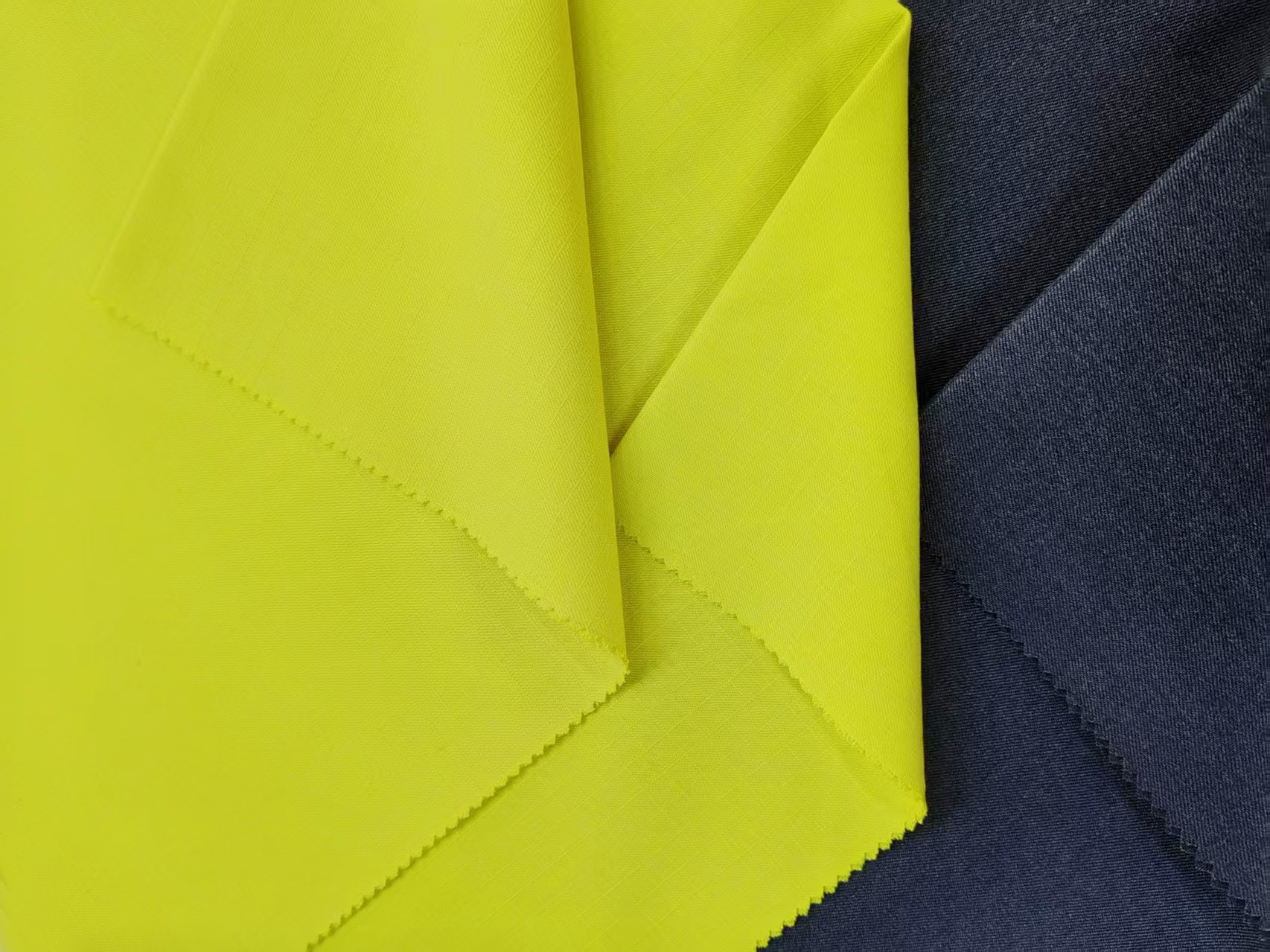
Flame resistance that's woven into the fabric itself is a different animal from topical treatments that wash away after a few cycles. This built-in protection comes from the molecular level—engineered fibers that inherently refuse to ignite or sustain a flame. It's not about adding a chemical shield; it's about selecting and modifying the polymer chains so thermal degradation leads to charring and self-extinguishing instead of melting or dripping.
Take aramid or modacrylic fibers as examples. When exposed to heat, they don't just sit there; they actively form a stable carbon layer that blocks further heat transfer. That's the magic of built-in resistance—it's a structural response. The fabric essentially chokes the fire by cutting off its oxygen supply at the surface, and because the protection is part of the fiber's DNA, it won't diminish with wear or laundering.
What often goes unnoticed is how this integrates into everyday gear without sacrificing comfort. Modern spun blends strike a balance between breathability and resilience, so workers can move freely without feeling like they're wrapped in a fire blanket. Durability, too, gets an upgrade: abrasion resistance, moisture management, and even color retention are often built into these fabrics alongside the flame resistance, simply because the base polymer is versatile enough to tick multiple boxes at once.
From Warehouse to Work Site: Scaling Protection in Bulk
Getting a single hard hat onto a worker’s head is simple. Doing it for a crew of hundreds across multiple job sites, each with their own shift schedules and specific hazards, is an entirely different operation. The pipeline from warehouse to work site has to be built for volume without losing track of details. That means barcode-scanned inventory, pre-assembled kits for different trades, and delivery schedules that sync with concrete pours and steel erection, not just office hours.
Bulk protection isn’t just about counting boxes—it’s about absorbing surges. When a project accelerates, the demand for safety gear can spike overnight. A scalable approach uses buffer stock strategically placed in regional hubs, mobile containers that can serve as on-site vending points, and real-time usage data to trigger restocks before shortages happen. The goal is to make the supply chain invisible to the people who depend on it.
The final link matters most: the handoff at the gate. Instead of leaving workers to rummage through a central cage, smart bulk systems bring pre-packed daily PPE bundles to foremen’s trailers or directly into gang boxes. This cuts wasted time, reduces loss, and keeps protection at the center of the workflow—not an afterthought miles away in a warehouse.
Inside the Fiber: What Makes Modacrylic Outlast the Heat
Modacrylic fibers owe their remarkable heat resistance to a clever bit of chemistry. Unlike standard acrylics that soften or melt under high temperatures, modacrylic is copolymerized with flame-retardant elements like chlorine, antimony, or phosphorus. These additives are built right into the polymer chain, so they don't wash out or wear off. When exposed to intense heat or flame, the fiber actually chars rather than melting—forming an insulating barrier that protects the wearer long enough to escape hazardous situations. This intrinsic protection is why you'll find modacrylic in firefighting gear, military uniforms, and industrial PPE.
What's truly fascinating is how modacrylic manages to stay comfortable despite its heavy-duty thermal properties. The fibers can be blended with natural materials like cotton or wool without losing their flame-resistant character. In fact, these blends often enhance wearability—modacrylic adds softness and resilience, while the partner fiber improves moisture management or next-to-skin feel. The result is a fabric that feels like a regular garment but responds to heat in an entirely different way. There's no stiff chemical coating or aftertreatment, which means the protective qualities remain consistent through countless wash cycles and years of hard use.
Beyond its immediate heat-blocking ability, modacrylic stands out for its long-term durability in extreme environments. The fiber resists degradation from UV rays, chemical splashes, and abrasive wear—common killers of less specialized materials. This makes it particularly valuable for professionals who work near open flames, electric arcs, or molten metals day after day. Instead of breaking down, modacrylic maintains its shape, color, and protective integrity far longer than treated fabrics. It's not just about surviving a single flash fire; it's about offering reliable, lasting safety that professionals can trust shift after shift.
Versatility Redefined: Beyond Traditional Safety Applications
When most people think of safety systems, they picture alarms, barriers, and rigid protocols designed solely to prevent accidents. But modern safety technology has quietly outgrown that narrow role. Today's solutions weave seamlessly into everyday operations, enhancing not just protection but also efficiency and user experience. For instance, the same sensors that monitor workplace hazards can also track equipment health or optimize foot traffic in a facility. It's no longer a trade-off between staying safe and staying productive—versatile design makes them complementary.
This shift is most apparent in how adaptable these systems have become across industries. A manufacturer might rely on intelligent vision systems to enforce no-go zones, while a hospital uses the same core technology to ensure patient privacy in sensitive areas. That kind of cross-context flexibility comes from architectures built on open standards and modular components. Instead of a one-size-fits-all approach, organizations can tailor safety logic to their exact needs, scaling up or modifying behavior as those needs evolve. The result is a living, responsive framework that feels less like a constraint and more like a natural extension of the workspace.
Beyond the expected use cases, the real versatility shines in unexpected places—retail floors optimizing customer flow, smart cities balancing public access with security, even creative installations where safety systems become part of the art. This expansion isn't about adding complexity; it's about stripping away assumptions. A well-designed safety platform can interface with lighting, HVAC, or inventory management without compromising its core purpose. In that sense, versatility redefined means safety that no longer stands apart, but integrates so thoroughly it becomes inseparable from the way things simply work.
Making the Case for Modacrylic Over Conventional FR Options
When safety hinges on flame resistance, not all fibers perform the same way. Modacrylic stands apart because its protection is built right into the polymer chain—it doesn’t rely on topical treatments that wash out or degrade over time. Unlike cotton treated with flame-retardant chemicals or inherently FR polyesters that can melt and drip, modacrylic maintains a soft, non-dripping char barrier even under prolonged heat exposure. That difference alone can be the deciding factor in high-risk environments where seconds count and gear failure isn’t an option.
Beyond the baseline of safety, modacrylic brings a level of comfort and practicality that often surprises those used to heavier FR workwear. The fiber feels more like natural cotton against the skin, breathes well, and resists staining and odors far better than treated cotton garments. Laundering is straightforward; there’s no need to avoid bleach or special washing procedures just to preserve flame resistance. For anyone managing inventory and uniforms, this translates into longer service life and lower replacement costs, without sacrificing wearing ease throughout long shifts.
Industries from oil and gas to electrical utilities are slowly waking up to the fact that modacrylic blends outperform many conventional FR fabrics in real-world scenarios. Arc flash protection stays consistent over time because it doesn’t depend on surface coatings that degrade. Combined with its inherent colorfastness and ability to hold vibrant dyes without compromising performance, modacrylic becomes a forward-looking choice. It answers the demand for fabrics that can handle diverse hazards—flame, arc flash, chemical splash—while still looking professional and keeping workers comfortable all day long.
FAQ
Modacrylic is a synthetic copolymer fiber made primarily from acrylonitrile combined with other monomers, giving it inherent flame resistance that doesn’t wash out or wear away over time. It’s soft, durable, and widely used in protective clothing, upholstery, and industrial applications.
Unlike chemically treated fabrics, modacrylic’s fire resistance is built into the fiber itself, so it won’t degrade with laundering or heavy use. You get consistent protection without the need for re-treatment, and it maintains a comfortable, natural feel.
It’s a go-to for sectors like firefighting, military, electrical utilities, oil and gas, and manufacturing—anywhere workers face thermal hazards. It’s also used in hospitality and healthcare for flame-retardant drapes and bedding.
Yes, it’s surprisingly soft and breathable compared to many flame-resistant materials. It wicks moisture, holds its shape, and can be blended with other fibers like cotton for even better comfort and performance in uniforms.
Most modacrylic garments can be machine washed in warm water and tumble dried on low. Avoid bleach and high heat, as those can damage the fibers. Always follow the specific care label, but generally it’s low-maintenance.
Absolutely. We provide competitive bulk pricing, and you can customize color, weight, width, and finish to meet your production needs. Minimum order quantities vary, so just reach out with your requirements for a tailored quote.
Of course. We understand the importance of feeling the material firsthand. Sample swatches are available upon request, so you can evaluate the quality, color, and performance before committing to a bulk purchase.
We source from trusted mills and maintain strict quality controls to ensure consistent flame resistance, colorfastness, and durability. Our fabric meets international safety standards and is backed by reliable customer support, so you get a product that performs as promised.
Conclusion
Modacrylic fiber quietly dominates the flame-resistant fabric landscape, not through marketing hype, but through a fundamentally different approach to protection. Unlike treated materials that can wash out or wear thin, modacrylic’s flame resistance is built directly into the polymer chain, meaning it won’t degrade with repeated industrial laundering or prolonged use. This inherent safety, combined with the ability to withstand extreme heat without melting or igniting, makes it the go-to choice for environments where reliability is non-negotiable. From the warehouse to the work site, bulk purchasing of modacrylic fabric translates into scalable, cost-effective protection that maintains consistent performance across thousands of garments—a practical advantage that conventional FR blends struggle to match.
What truly sets modacrylic apart is its versatility beyond standard safety gear. The fiber’s soft hand, wool-like aesthetics, and excellent dyeability allow it to move seamlessly into sectors like automotive interiors, home furnishings, and even fashion, where fire resistance is an added plus rather than the sole focus. Its molecular structure provides lasting thermal stability, outlasting many alternatives after repeated exposure to heat and flame. For businesses sourcing wholesale, modacrylic isn’t just a fabric purchase—it’s a long-term investment in material integrity that opens doors to diverse product lines without compromising on safety or style.
Contact Us
Contact Person: Sandy
Email: [email protected]
Tel/WhatsApp: 86150 8310 5120
Website: https://www.frdrotex.com